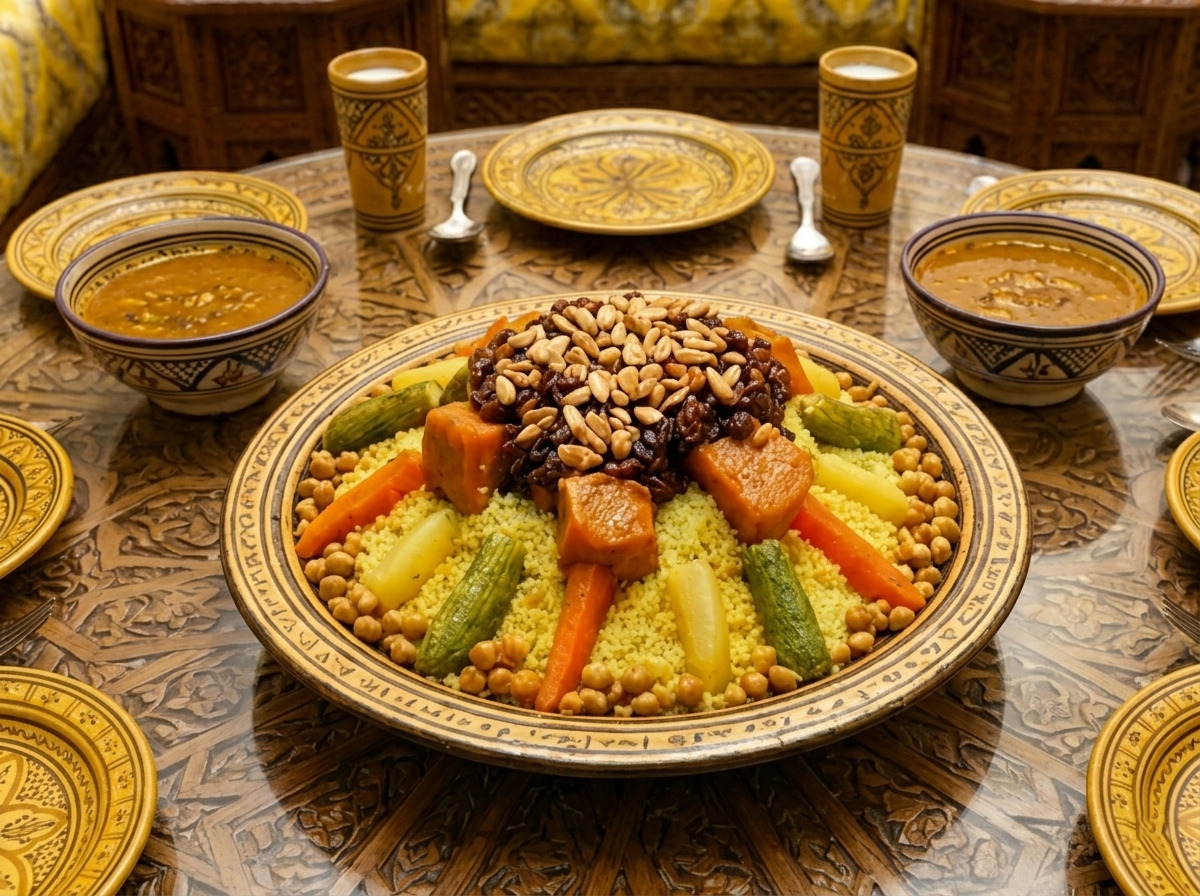
Ingredients
Equipment
Method
💠1-Couscous Steaming Instructions ( Moroccan Couscous with Meat )
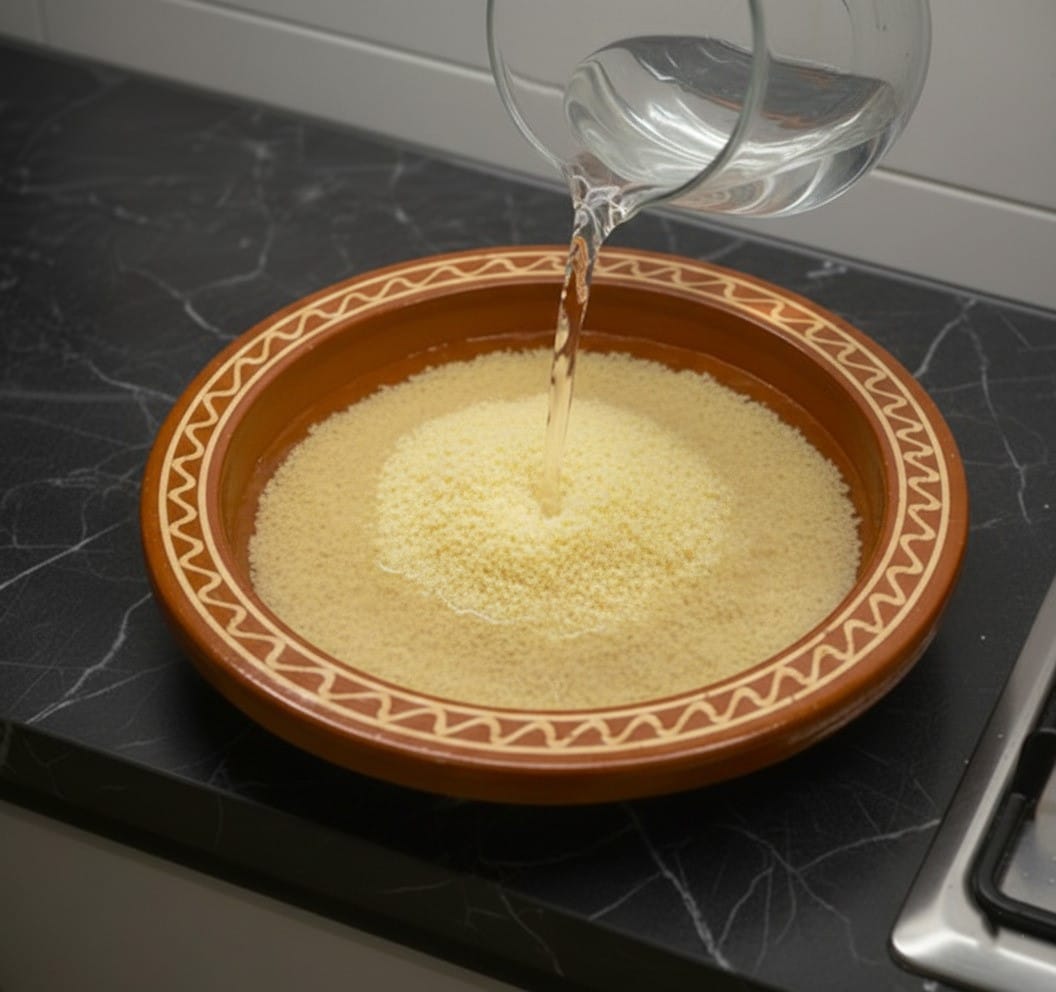
- Step 1: Hydration Rinse the couscous in a large bowl and drain gently.
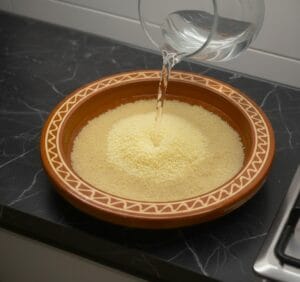
- Let it rest for 20 minutes to absorb all the water.
- Pro Tip: Use this time to start your broth.
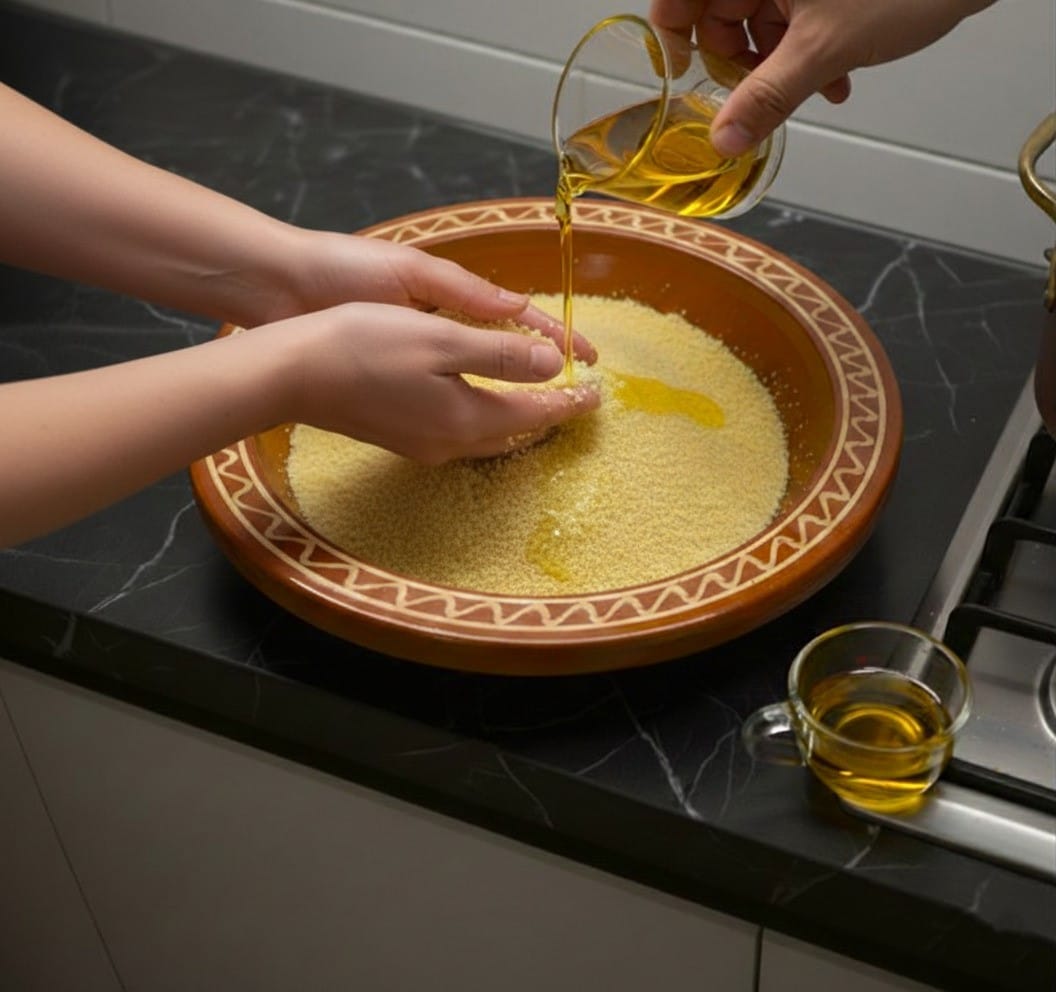
- Step 2: Oiling the Grains Add vegetable oil once the grains are dry.
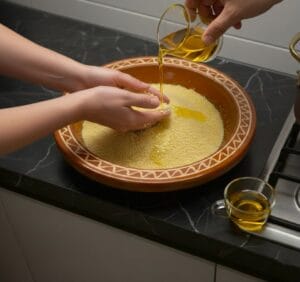
- Rub the grains between your palms to coat them evenly.
- This prevents the couscous from clumping
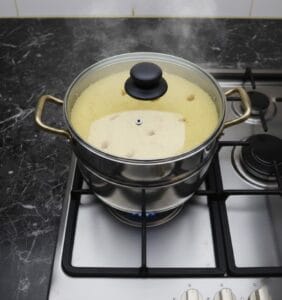
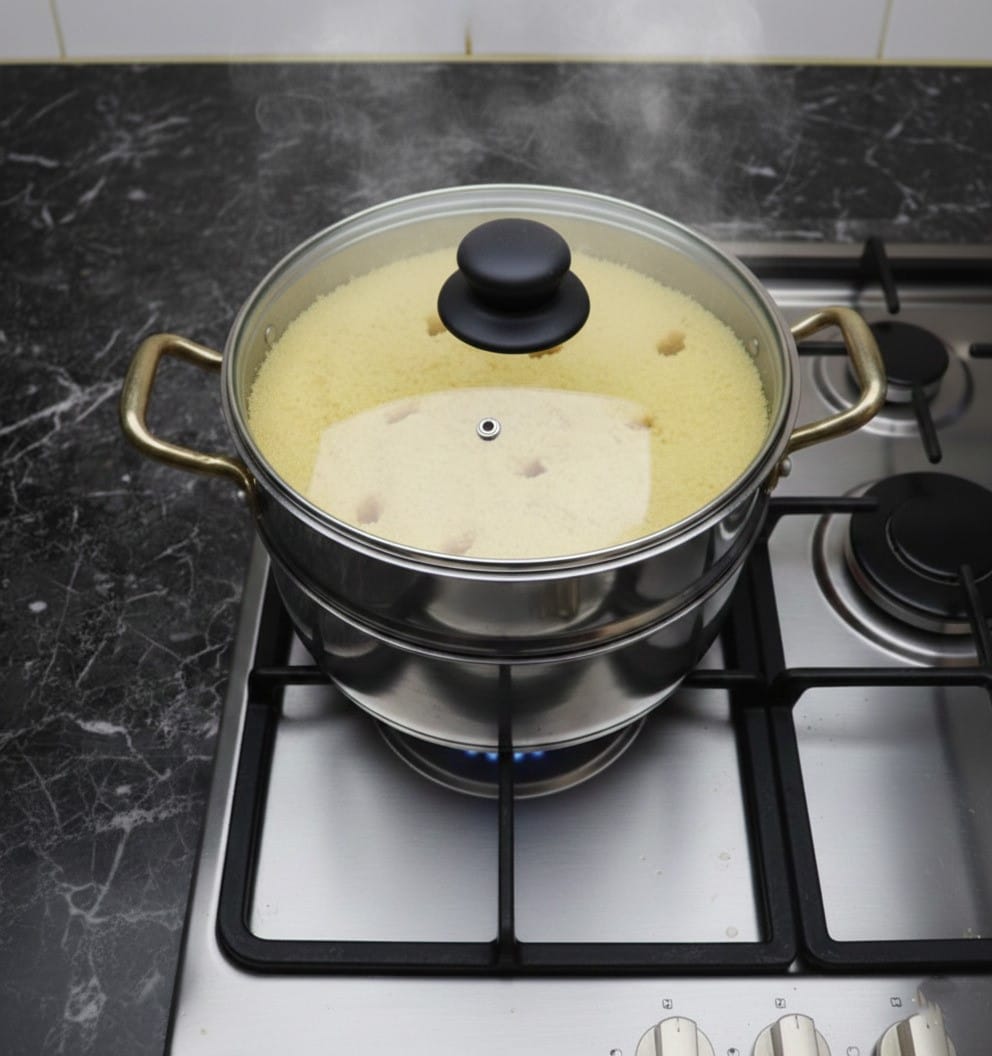
- Step 3: First Steam Transfer the grains to the steamer basket (Couscoussier).
- Cover and steam for 30 minutes over medium heat.
- Step 4: The Water & Salt Process
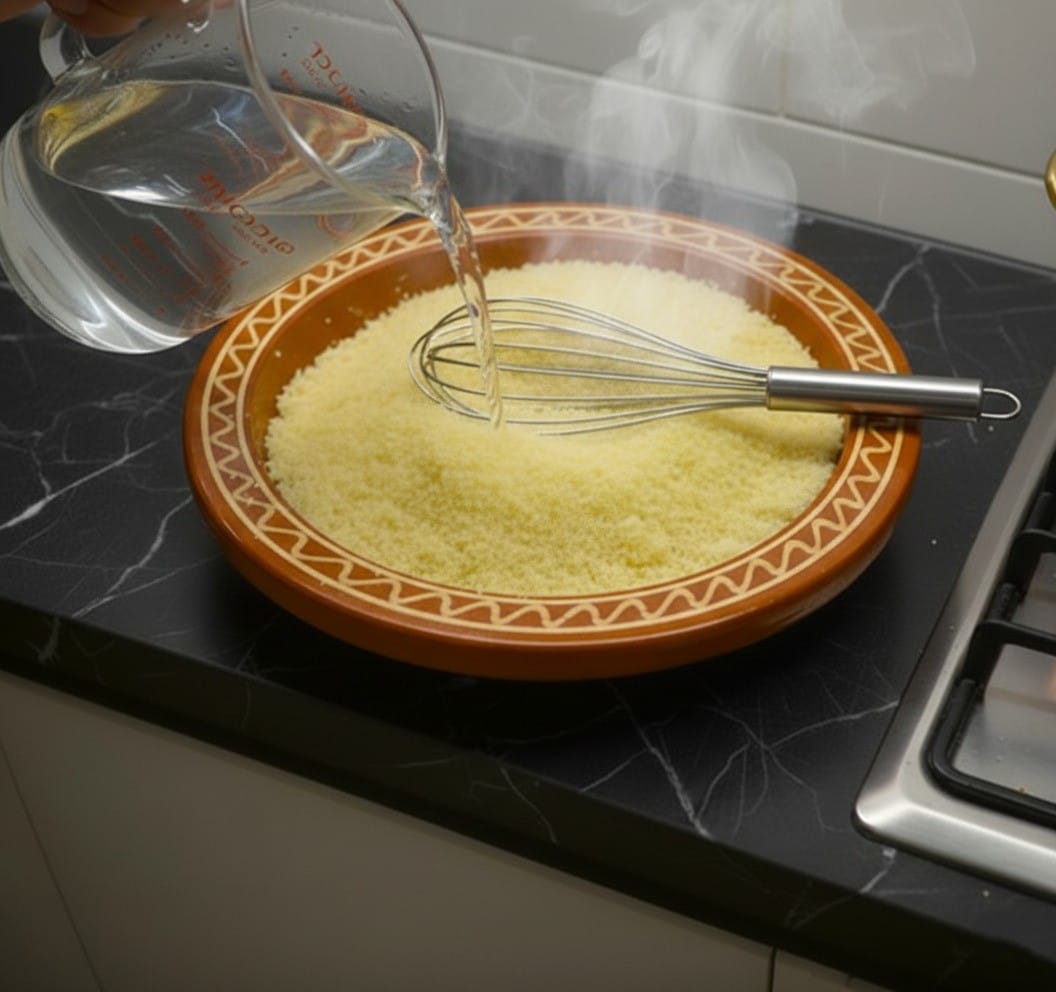
- Pour the hot couscous into a wide bowl (G قصعة).
- Gradually sprinkle 700 ml of cold water and add salt
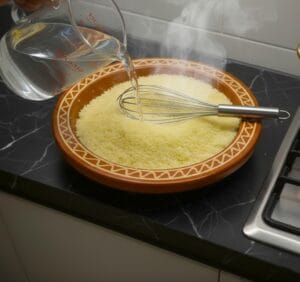
- Tip: Use a hand whisk to avoid burning your hands.
- Work quickly while the grains are hot
- Step 5: Second Rest Let it absorb the water for 20 minutes.
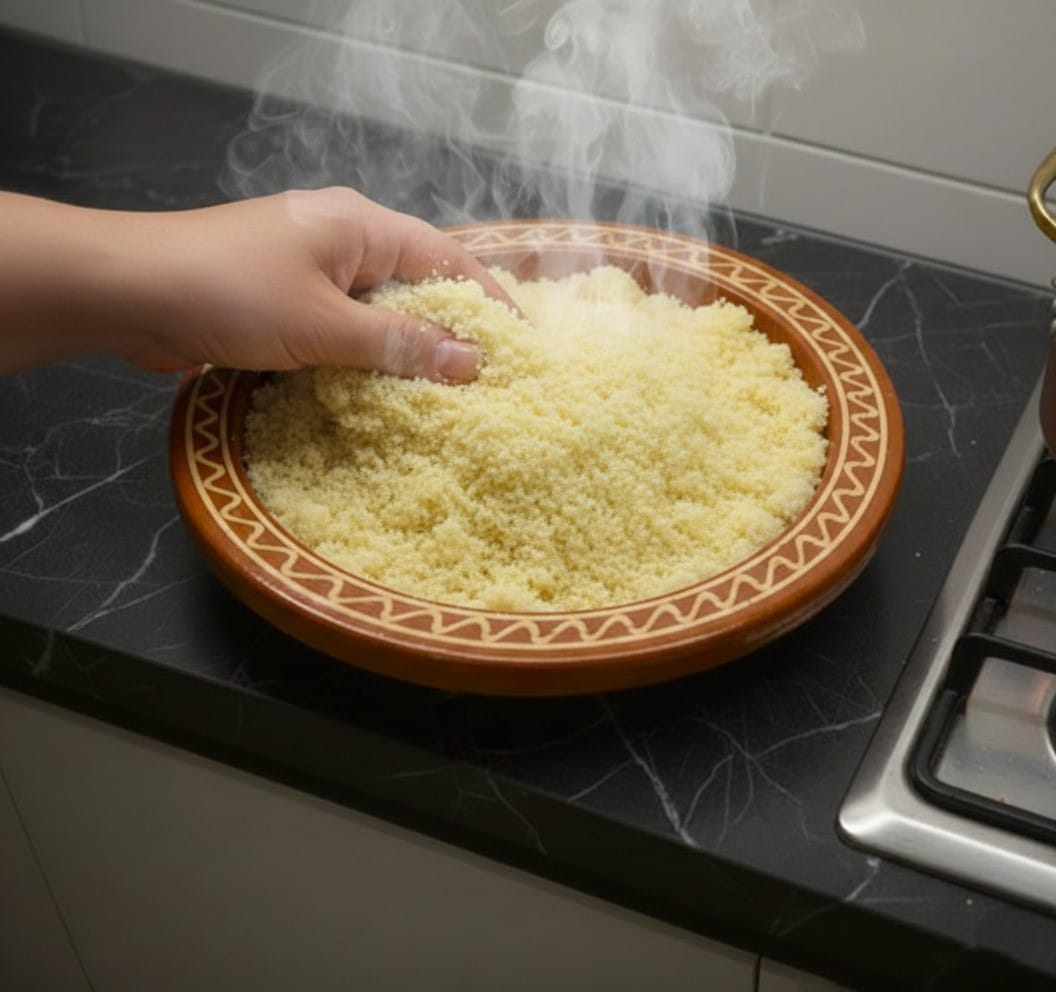
- Stir occasionally to ensure even hydration.
- Break any remaining clumps with your hands or a sieve.
- Step 6: Final Steam & Seasoning Steam for another 30 minutes until tender.
- Finally, mix in a tablespoon of quality butter or Smen
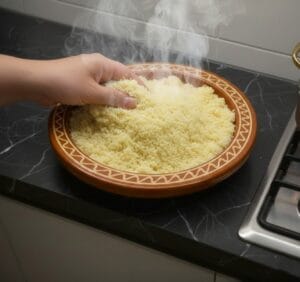
- Or serve it plain according to your preference
💠2-Meat Broth Instructions ( Moroccan Couscous with Meat )
- The Searing Stage (The Secret to Flavor):
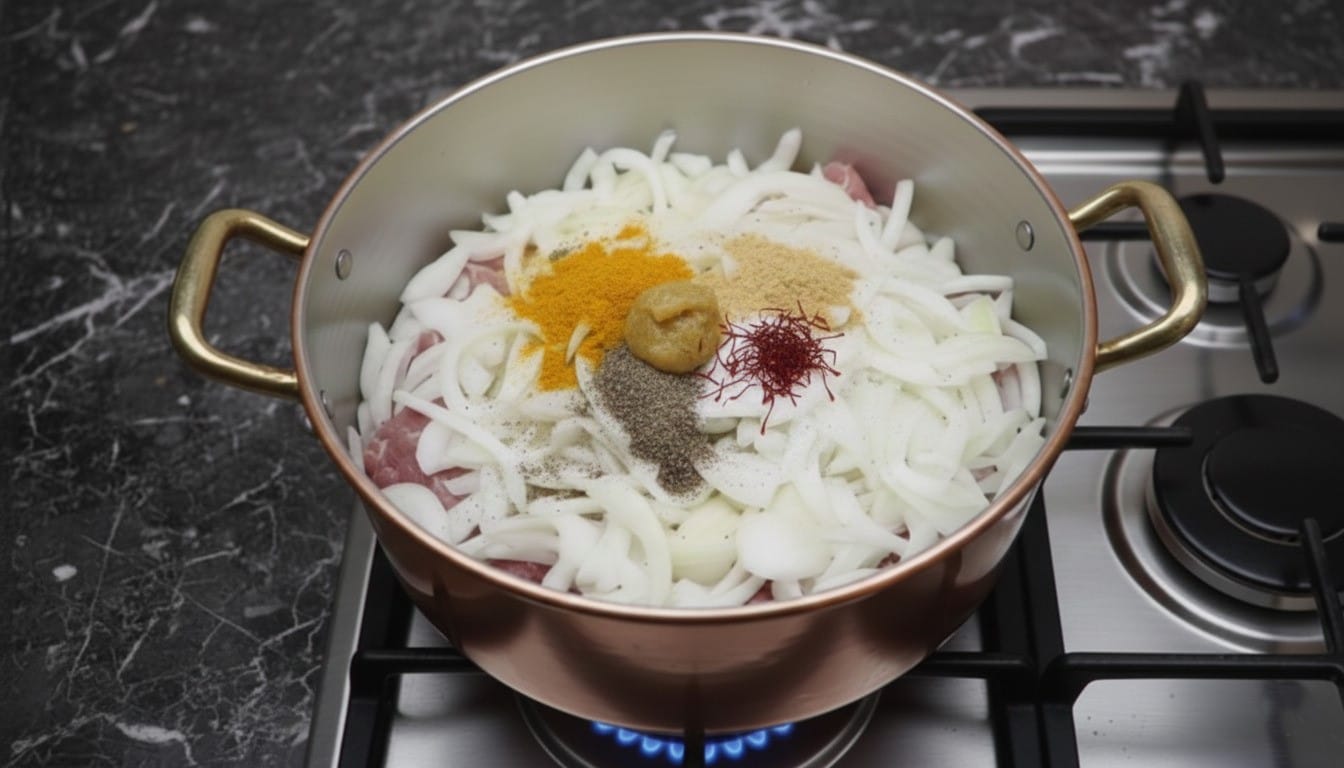
- Place the meat in a pressure cooker with oil, spices, and half of the thickly sliced onions
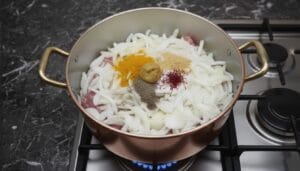
- Sauté over low heat for 20 minutes until the meat develops a beautiful golden color.
- This slow searing stage is the true secret behind the dish's deep flavor
- Adding Vegetables for the Sauce Base:
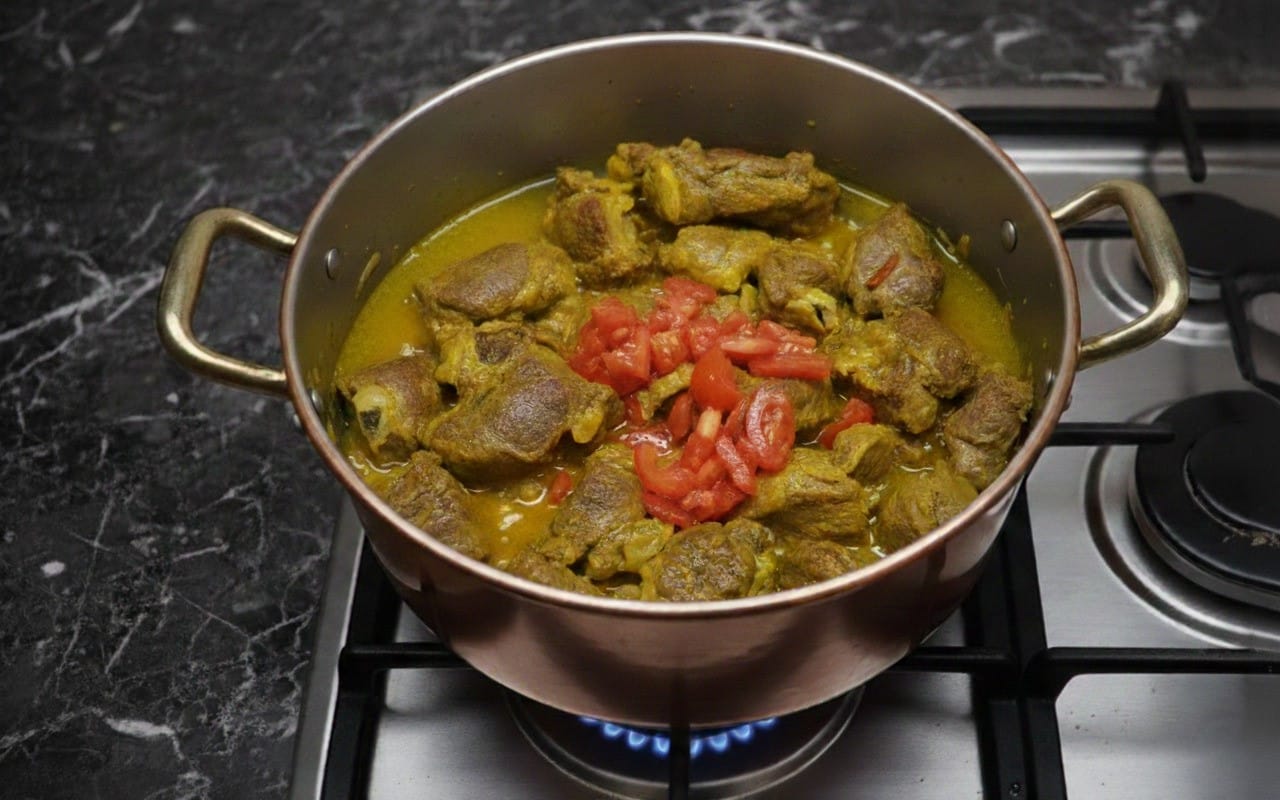
- After 20 minutes, add half of the tomatoes (cut into large cubes).
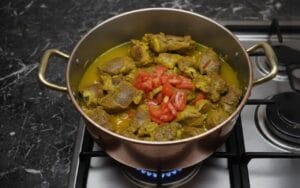
- Let the tomatoes and onions sauté with the meat for another 15 minutes until they melt completely.
- Pro Tip: Cutting onions and tomatoes into large pieces helps them melt better into the sauce
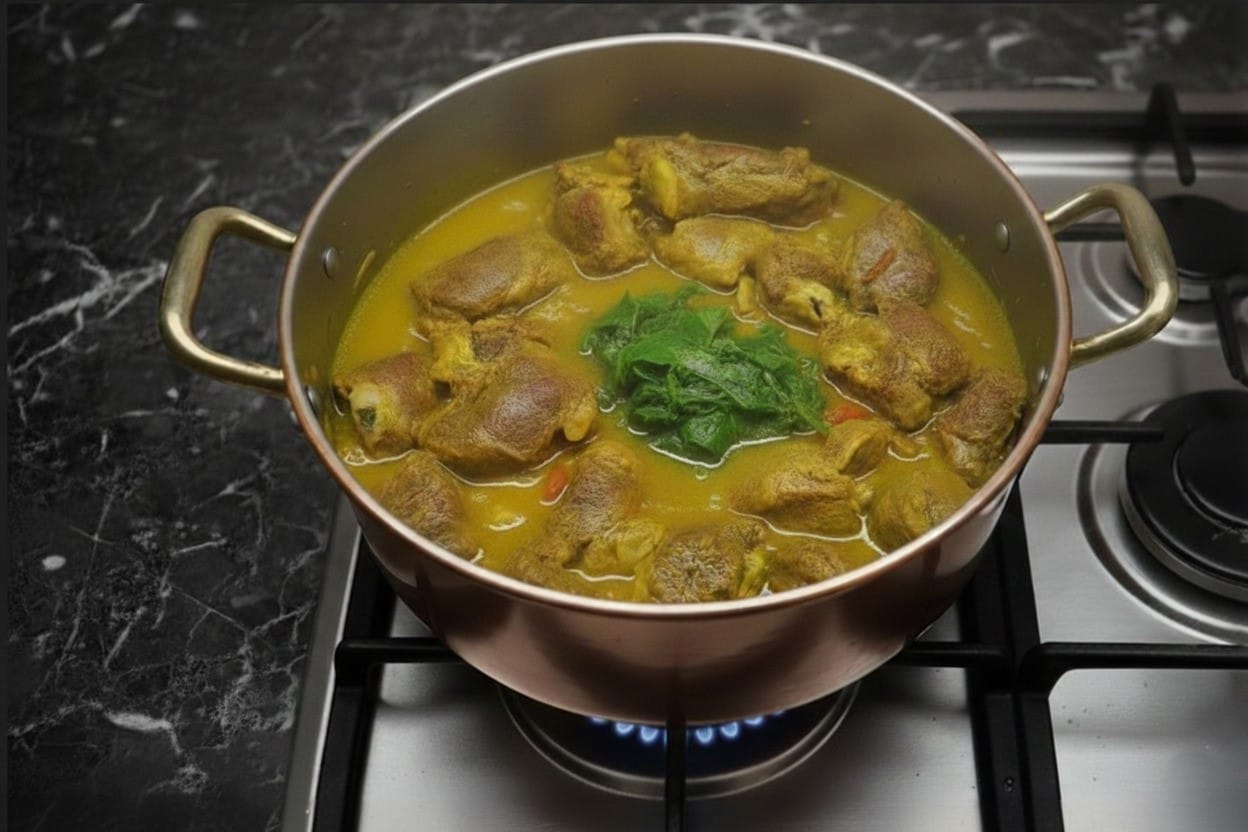
- Simmering the Broth Add one teaspoon of Smen, the herb bouquet, and 2 liters of hot water
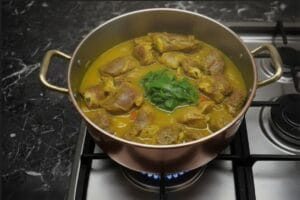
- Cover and let the meat cook for about 20 minutes.
- Refining the Broth (For a Thick Texture):
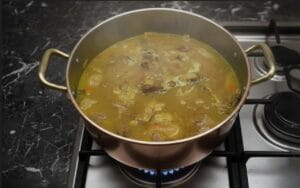
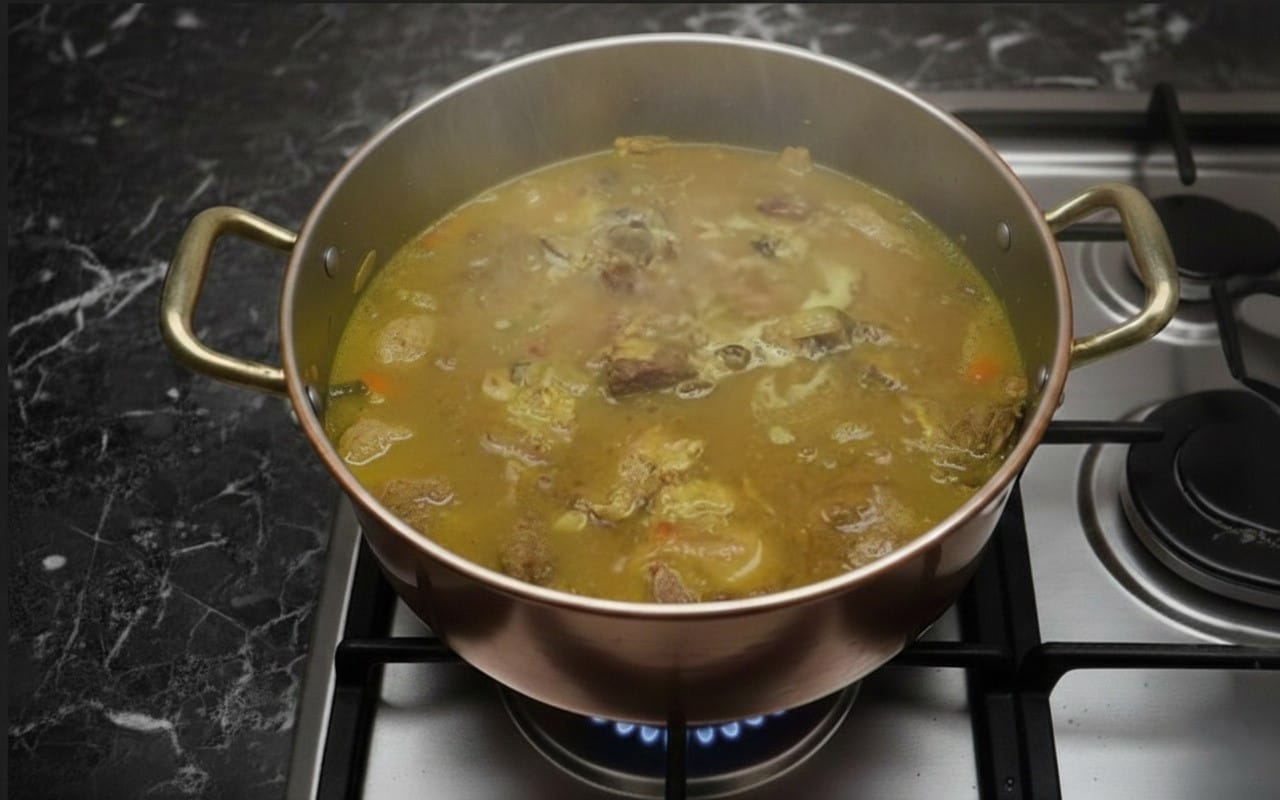
- Once the meat is cooked, remove it and set it aside in a dish with a cup of broth to reheat later
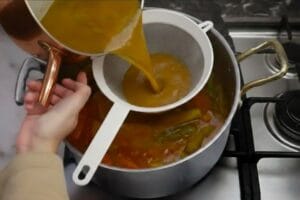
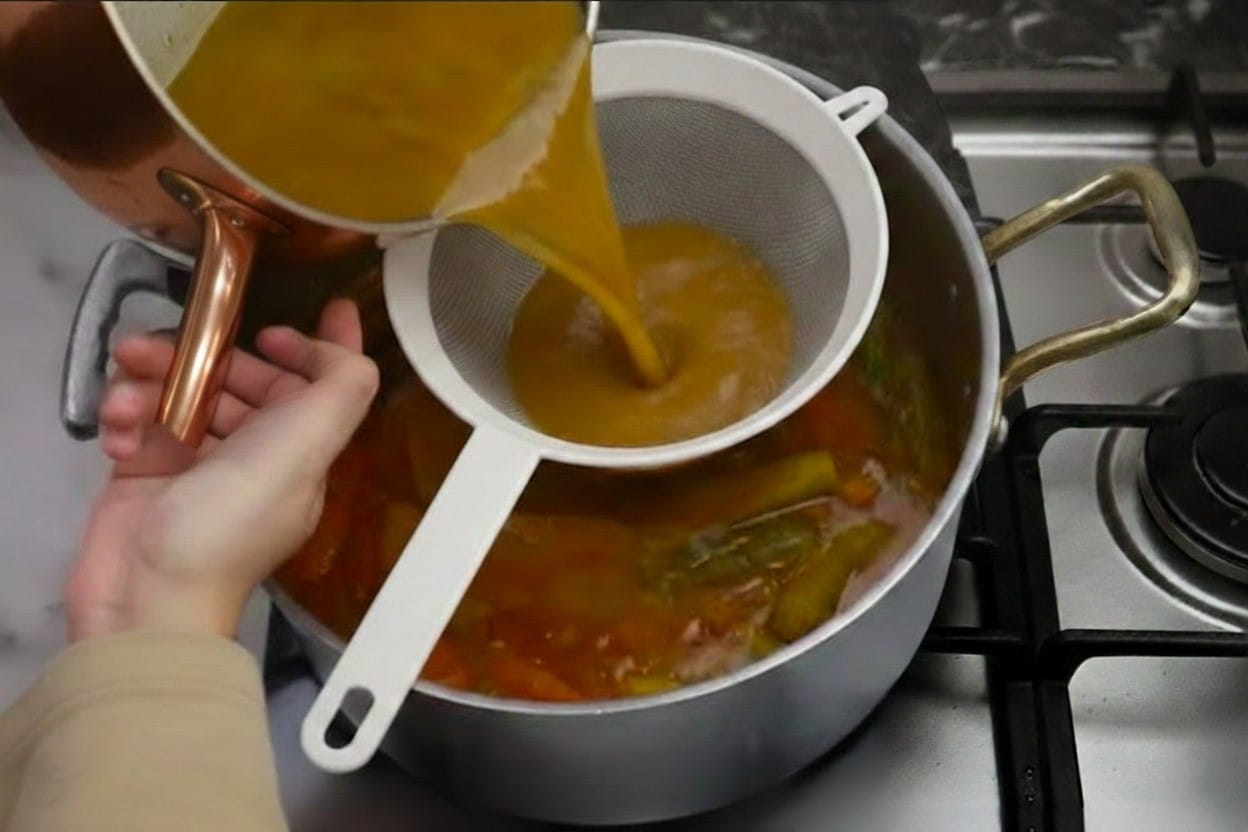
- Strain the broth through a sieve, using a spoon to press and filter all the solids
- This filtering technique creates a much thicker and richer broth compared to grating the vegetables from the start.
💠3-Vegetable Broth Instructions ( Moroccan Couscous with Meat )
- Creating the Base (The "Dagmira" Technique):
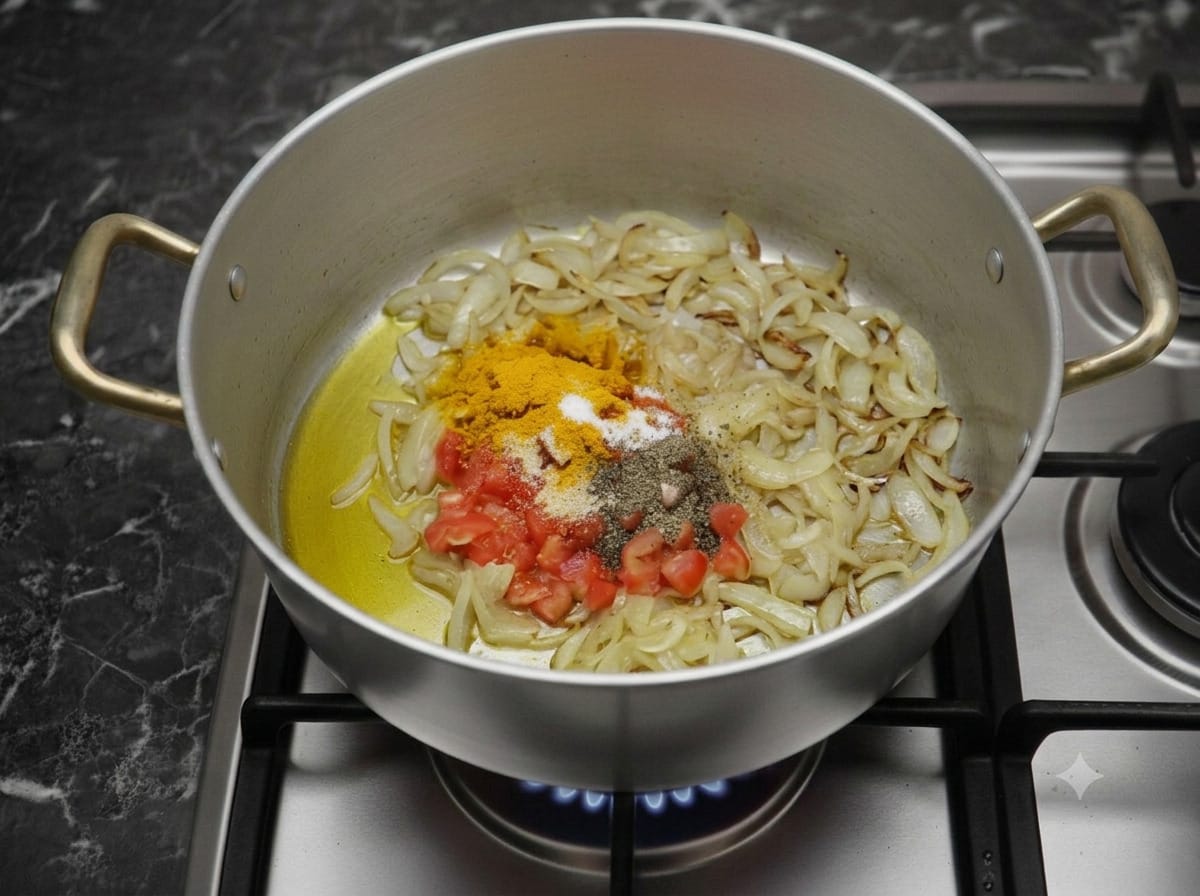
- In a separate pot, sauté the remaining onions with half a cup of olive oil.
- Let the onions soften until they turn slightly golden (about 15 minutes).
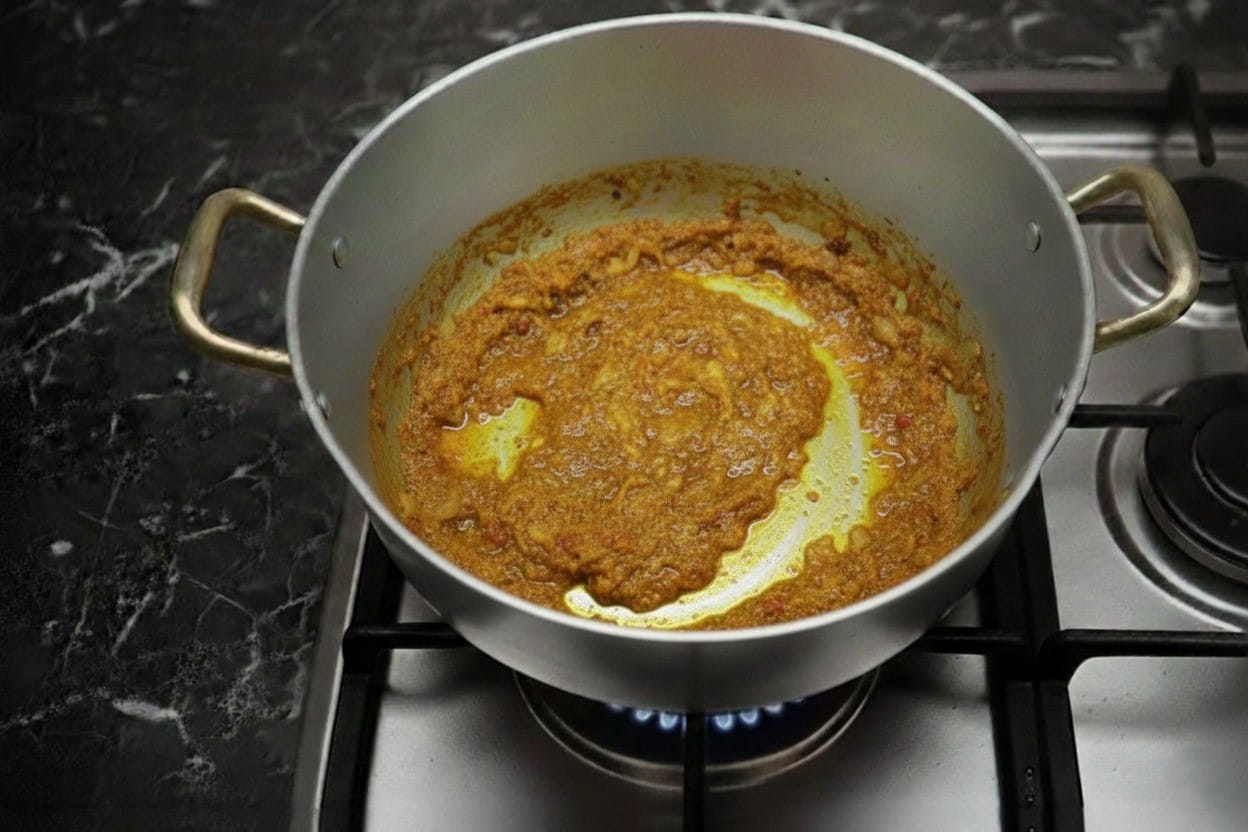
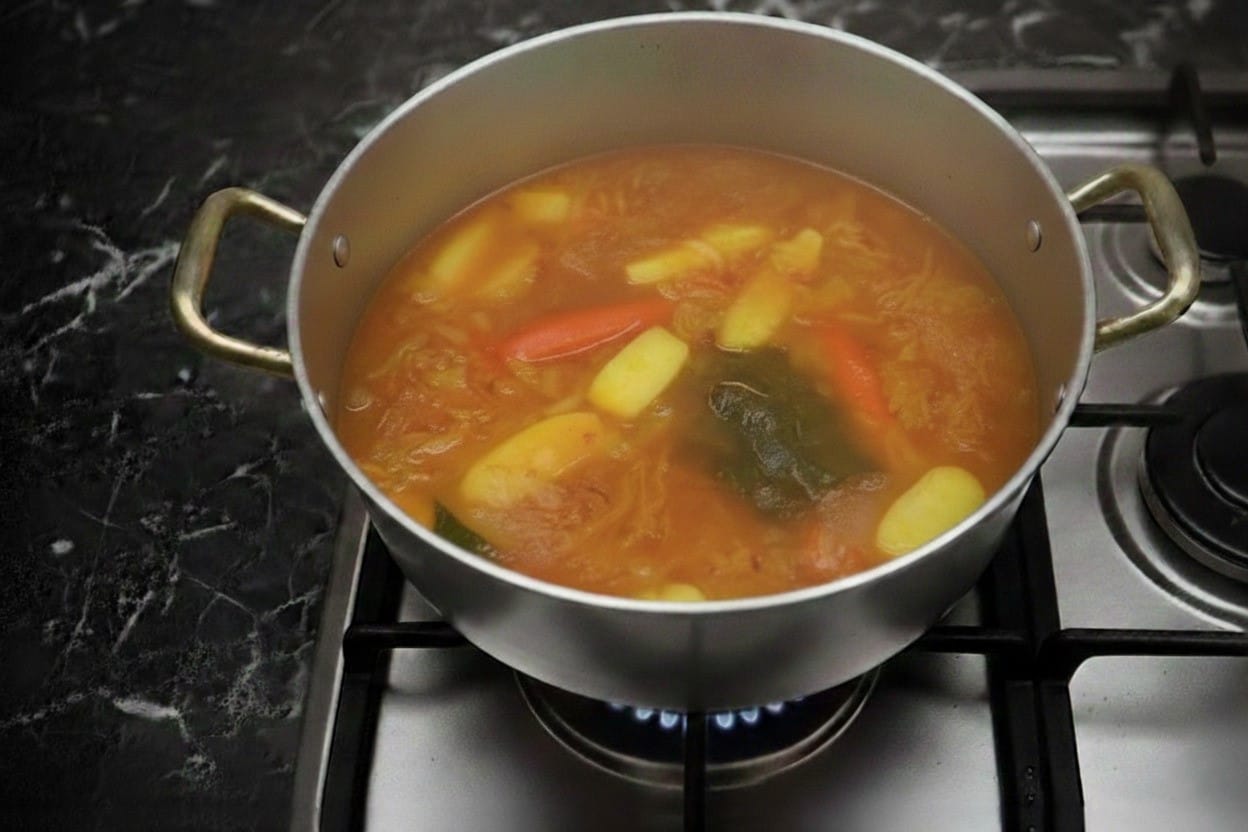
- Add the remaining tomatoes (large cubes) and sauté for another 15 minutes until they blend into a thick sauce (Dagmira).
- Pro Tip: You can use a potato masher to crush the onions and tomatoes into a smooth paste.
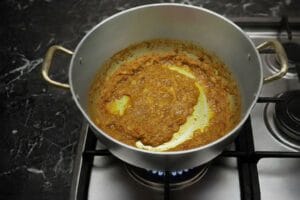
- Simmering and Hard Vegetables:
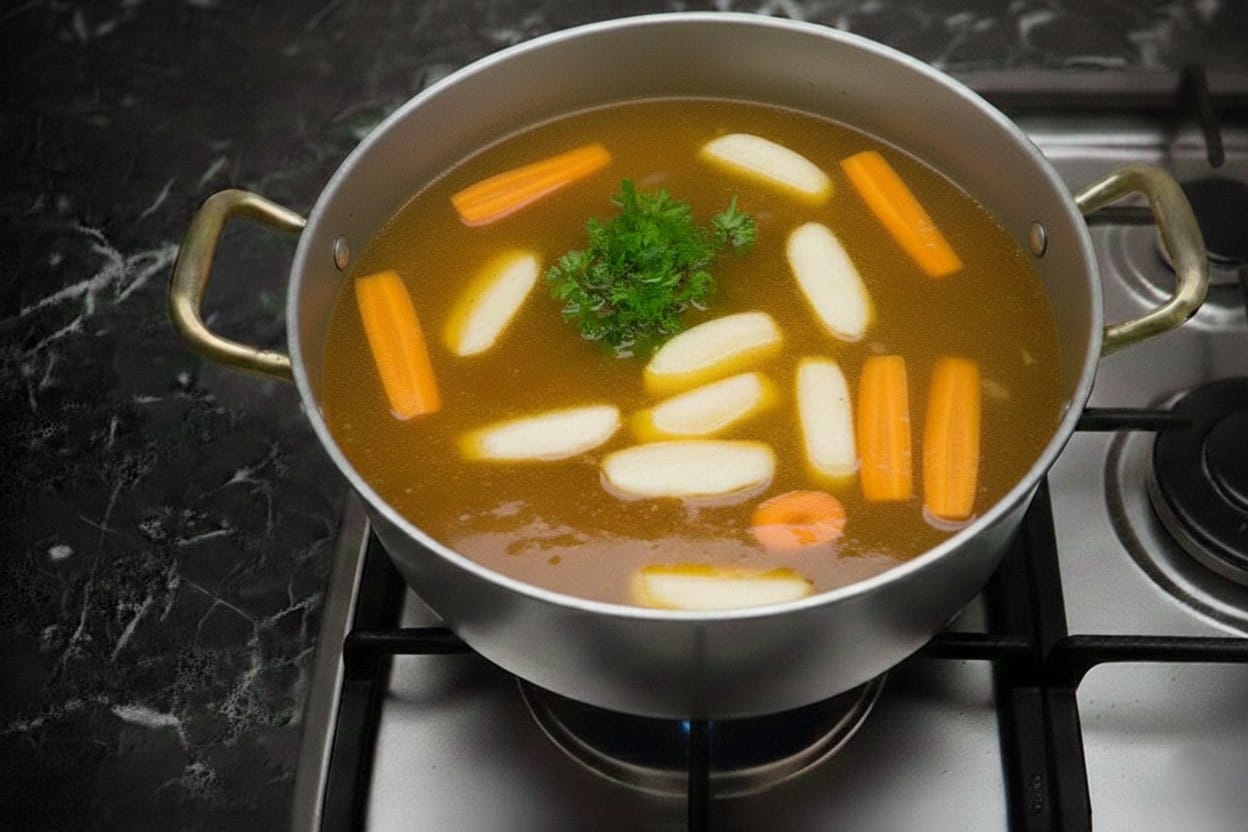
- Add the tomato paste, 3 liters of hot water, one teaspoon of Smen, and the herb bouquet.
- Add the carrots and turnips first, as they require more time to cook
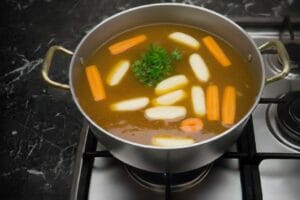
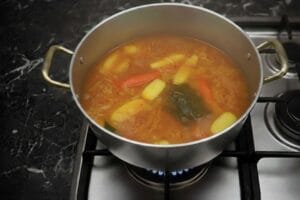
- Adding Soft Vegetables & Seasoning:
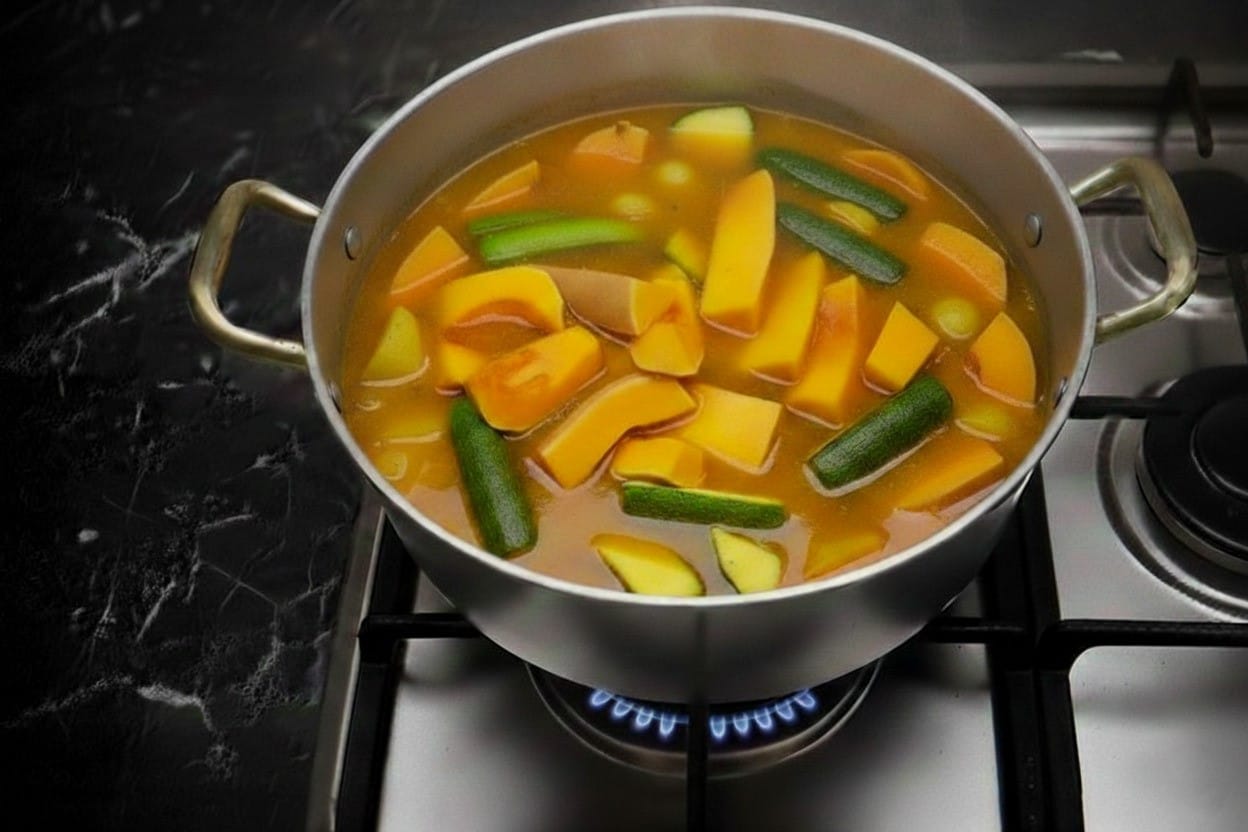
- After 20 minutes, add the zucchini and pumpkin, as they cook much faster.
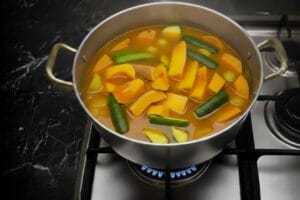
- Crucial Tip: Taste the broth now and adjust the salt; vegetables must cook in balanced salt to be flavorful.
- Adding salt only at the end will result in less tasty vegetables.
- Combining the Broths (For the Final "Texture"):
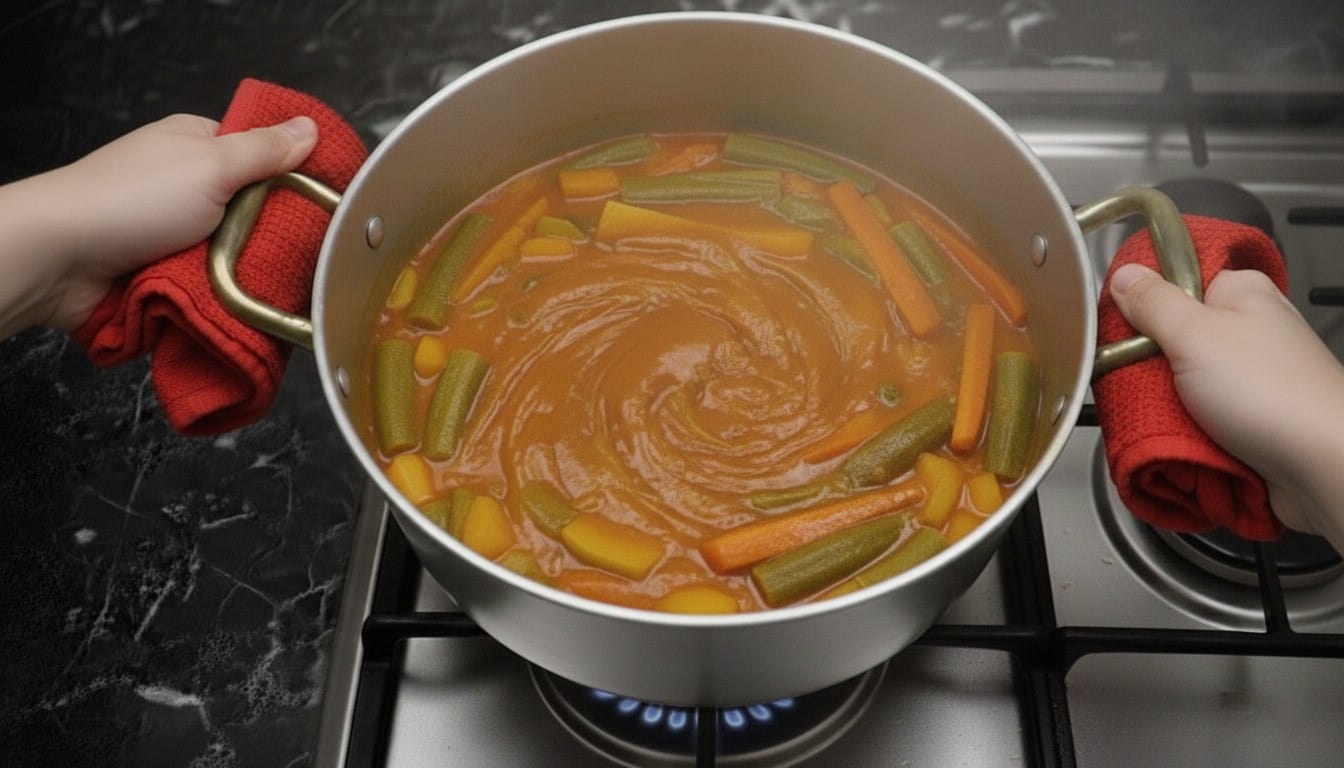
- Pour the previously strained meat broth over the vegetables
- Remove the herb bouquet, making sure to squeeze out all the trapped flavors into the pot.
- Gently shake the pot to mix the flavors; avoid using a spoon to stir, as it will break the tender vegetables.
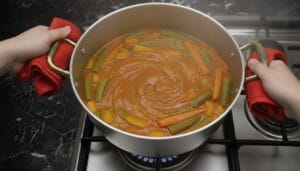
- Let the pot simmer uncovered for a few minutes until the broth is rich, thickened, and perfectly concentrated.
for Preparing Chickpeas
- Soak 200g of chickpeas in cold water overnight.
- In the morning, drain them and rinse thoroughly with fresh water.
- Option 1: The Traditional Method:
- Add the chickpeas directly to the pressure cooker with the meat.
- This allows them to cook perfectly since they require a similar cooking time to the meat
- Option 2: The Separate Pot Method (Highly Recommended):
- Place the chickpeas in a separate small pot.
- Add one cup of the meat broth, one cup of water, and half a teaspoon of each of the four spices (ginger, turmeric, black pepper, and salt).
- Cook separately until tender.
- Why Use the Separate Method?
- Easy Serving: This way, you don't have to "search" for the chickpeas inside the large pot when it's time to plate the dish.
- Flavor Control: Some people prefer to cook chickpeas separately to keep the main broth's flavor pure and unaffected by the chickpeas' distinct taste.
💠4-Serving & Presentation ( Moroccan Couscous with Meat )
- Placing the Couscous:
- Start by placing the steamed couscous in a large traditional platter
- Create a small well in the center of the grains to hold the meat.
- Arranging the Vegetables:
- Arrange the vegetables in a balanced and organized pattern around the meat.
- Ensure each guest has a variety of vegetables directly in front of them for easy access.
- Scatter the chickpeas evenly across the entire dish.
- Adding the Sweet Touch (Tfaya):
- Place the caramelized onions and raisins (Tfaya) directly on top of the meat.
- Alternatively, you can serve the Tfaya in small side bowls for guests to add as they wish.
- Drizzling the Broth:
- Pour a small amount of broth over the couscous grains to moisten them.
- Avoid over-soaking the dish, as some guests prefer their couscous less saturated.
- Serve the remaining broth in separate bowls with a dedicated ladle to keep it clean and accessible for everyone.
- The Final Tradition:
- Never forget to serve a cold glass of Lben (buttermilk) alongside the meal to complete the authentic experience.
Notes
- Avoid Margarine: Never use margarine in this recipe; only high-quality natural butter or Smen should be used for the best flavor.
- Meat vs. Chicken: For Couscous with vegetables and Tfaya, I highly recommend using meat instead of chicken, especially when hosting guests.
- Cabbage Tip: When preparing Couscous with Tfaya, it is better to omit cabbage from the vegetable mix.
- Preventing Dry Meat: If you finish cooking early, set the meat aside with a cup of broth; use this broth to reheat the meat later so it stays juicy and tender.
- Cooking Meat Separately: Cooking the meat alone ensures a concentrated, rich flavor and a thick sauce, which is ideal for large gatherings as it provides plenty of delicious broth.
- Cooking Vegetables Individually: For a refined result, you can cook specific vegetables separately by adding a cup of broth, a cup of water, and a dash of spices to a small pot.
- Handling Cabbage: It is best to cook cabbage separately because its strong flavor and high water content can alter the texture and taste of the main broth.
- Essential Vegetables: While carrots, turnips, zucchini, onions, and tomatoes are essential, other vegetables are optional but add a unique touch each time.
- Expert Cutting: Always cut vegetables into equal, uniform sizes; this ensures even cooking and reflects your mastery of the kitchen.
- Serving Traditions: Traditionally, we share one large platter, with everyone eating from their side. For international guests, you can serve individual plates with a portion of couscous, meat, and vegetables.
- Extra Broth & Veggies: When serving individually, place extra broth in small bowls and put the vegetables in a large side dish for guests to help themselves.
- No Canned Chickpeas: For an authentic taste, avoid using canned chickpeas; always use dried chickpeas soaked overnight.