Moroccan Couscous with Meat – Authentic Recipe
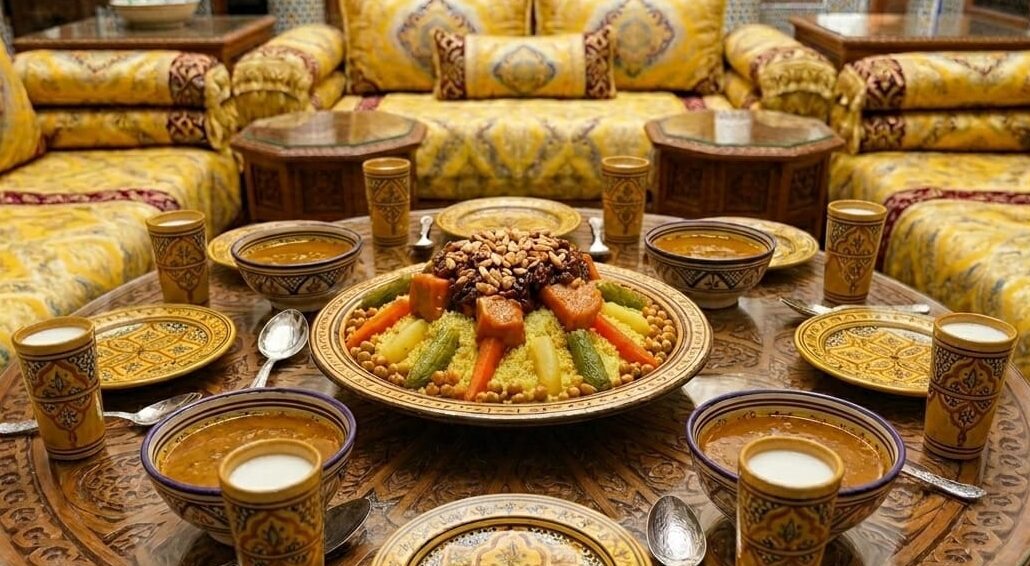
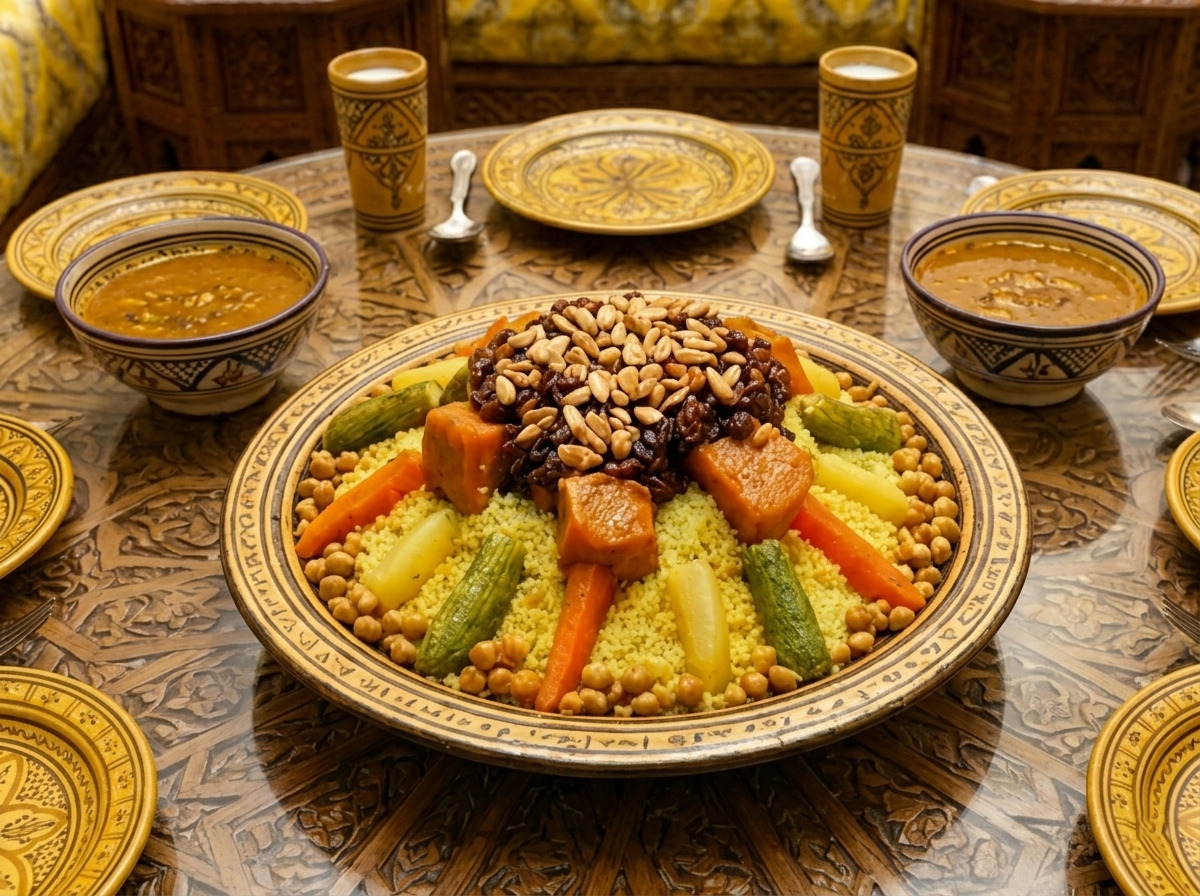
Couscous with Meat and tfaya
Moroccan Couscous has been the ultimate symbol of Moroccan culture for thousands of years. Traditionally prepared for formal occasions and rural weddings, it can be crafted with either succulent meat or chicken, embodying the heart of Moroccan hospitality.
Ingredients
Equipment
Method
💠1-Couscous Steaming Instructions ( Moroccan Couscous with Meat )
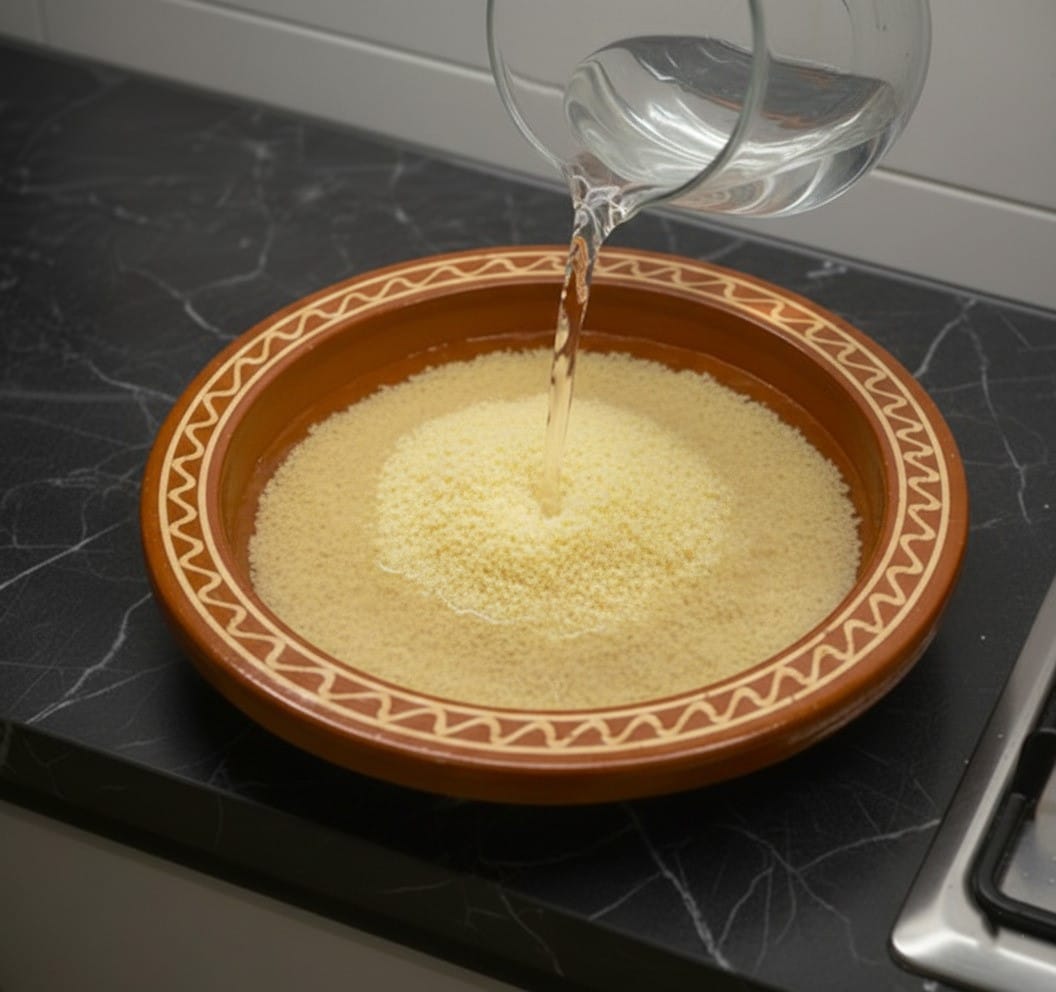
- Step 1: Hydration Rinse the couscous in a large bowl and drain gently.

- Let it rest for 20 minutes to absorb all the water.
- Pro Tip: Use this time to start your broth.
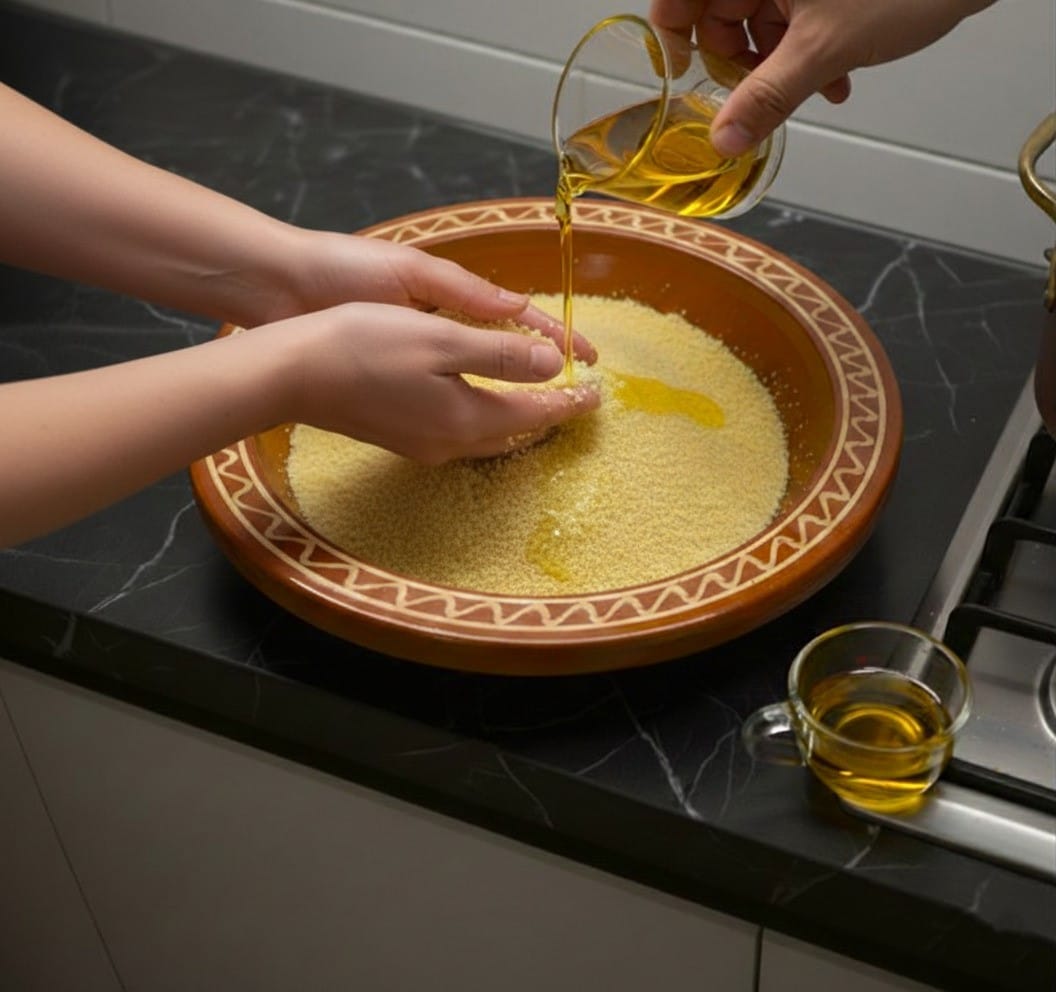
- Step 2: Oiling the Grains Add vegetable oil once the grains are dry.
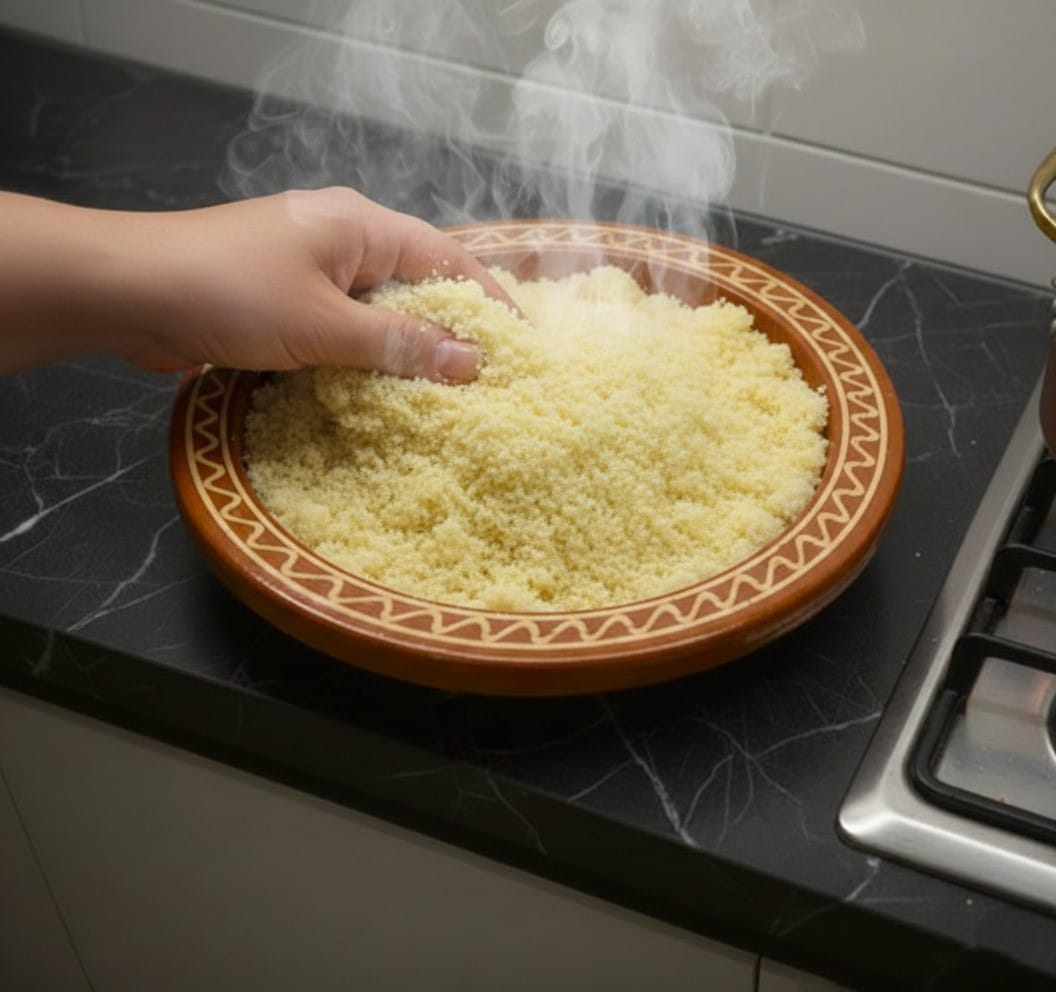
- Rub the grains between your palms to coat them evenly.
- This prevents the couscous from clumping
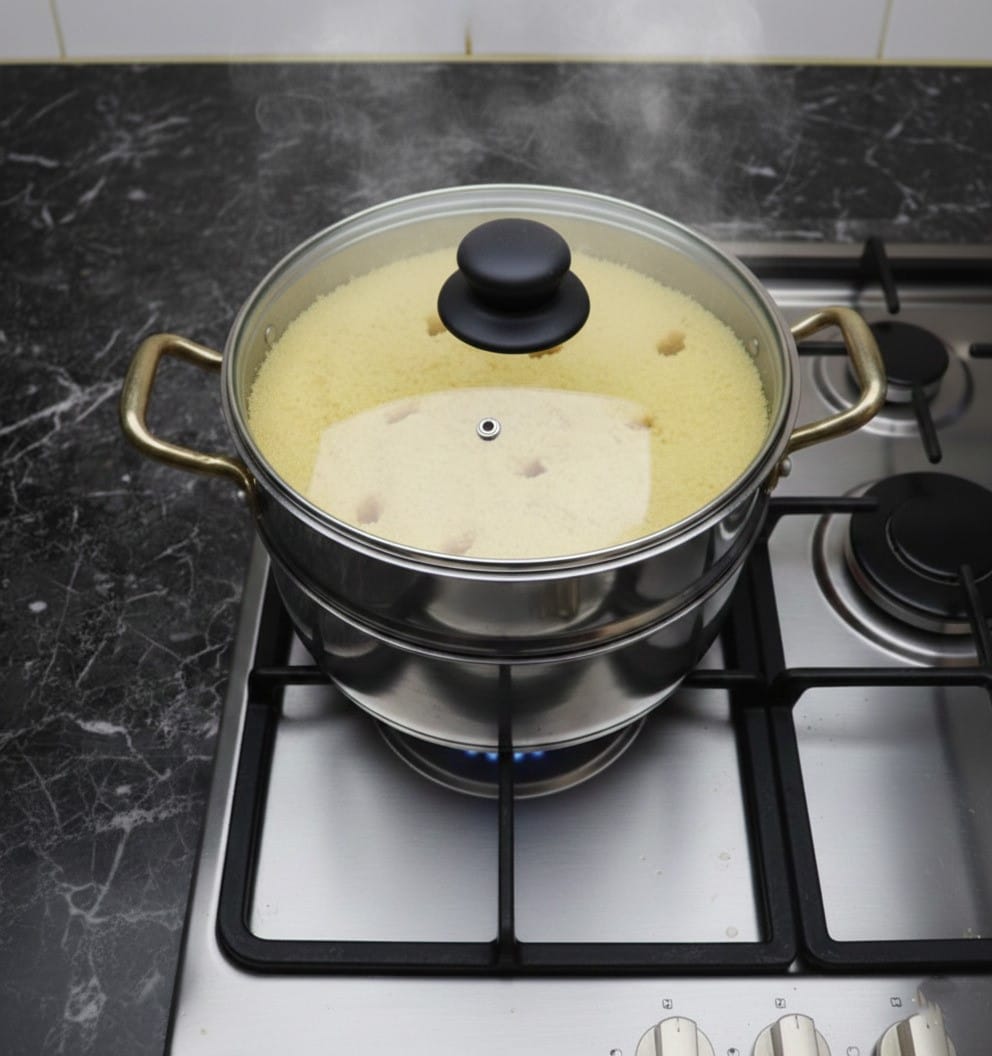
- Step 3: First Steam Transfer the grains to the steamer basket (Couscoussier).
- Cover and steam for 30 minutes over medium heat.

- Step 4: The Water & Salt Process
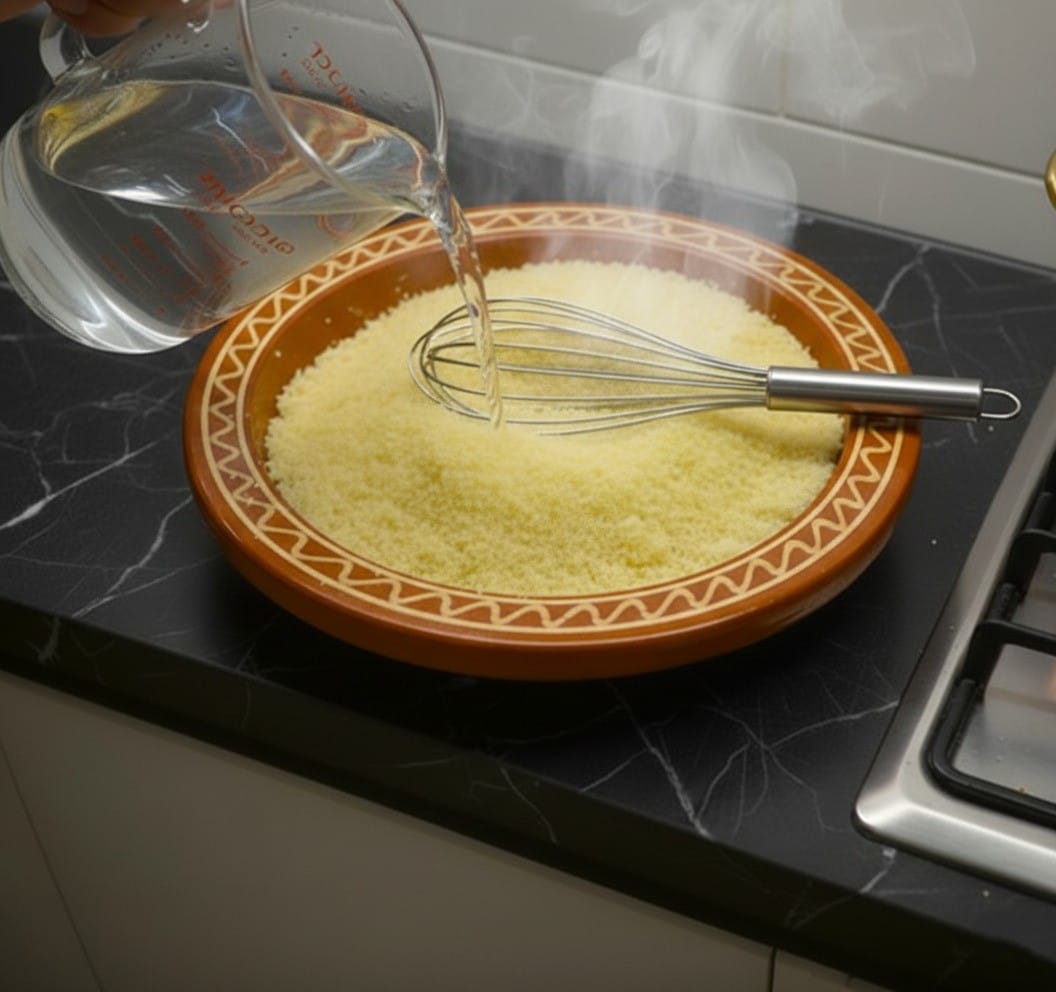
- Pour the hot couscous into a wide bowl (G قصعة).
- Gradually sprinkle 700 ml of cold water and add salt
- Tip: Use a hand whisk to avoid burning your hands.
- Work quickly while the grains are hot
- Step 5: Second Rest Let it absorb the water for 20 minutes.
- Stir occasionally to ensure even hydration.
- Break any remaining clumps with your hands or a sieve.
- Step 6: Final Steam & Seasoning Steam for another 30 minutes until tender.
- Finally, mix in a tablespoon of quality butter or Smen
- Or serve it plain according to your preference
💠2-Meat Broth Instructions ( Moroccan Couscous with Meat )
- The Searing Stage (The Secret to Flavor):
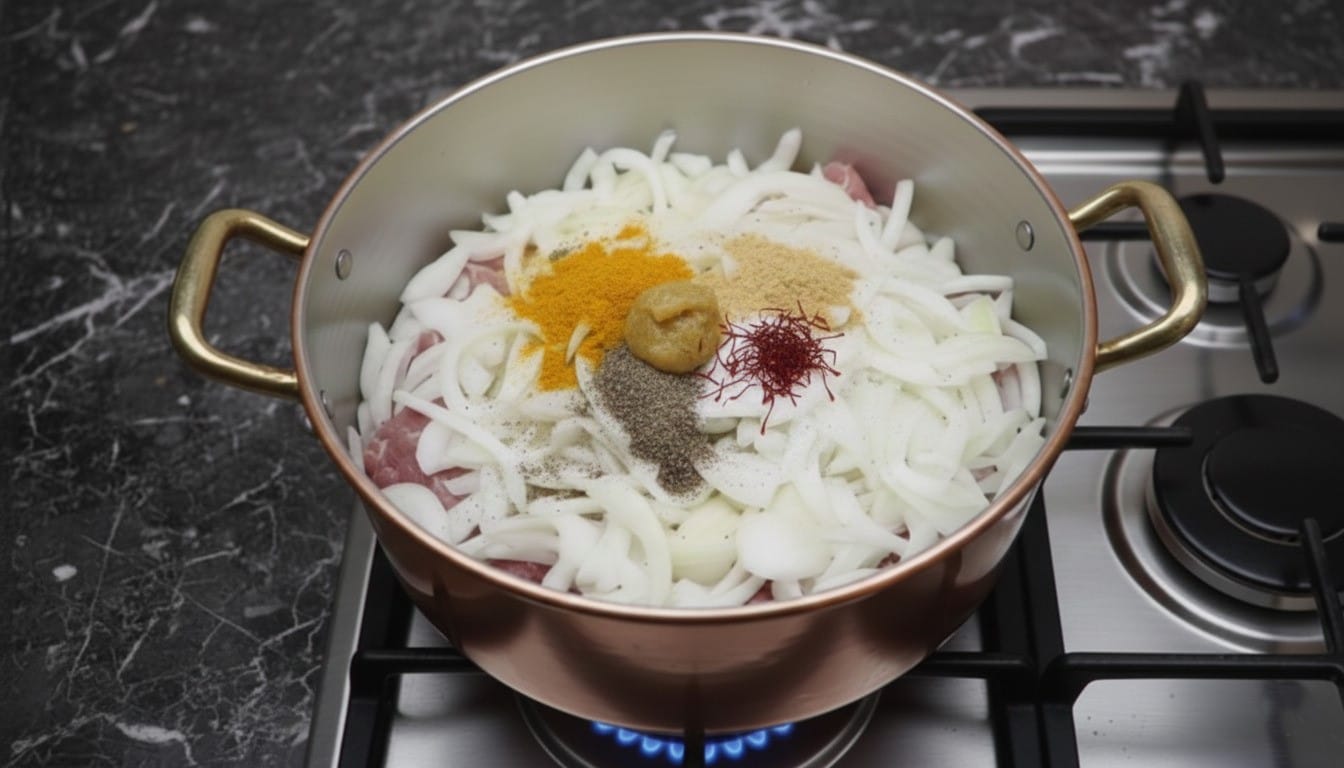
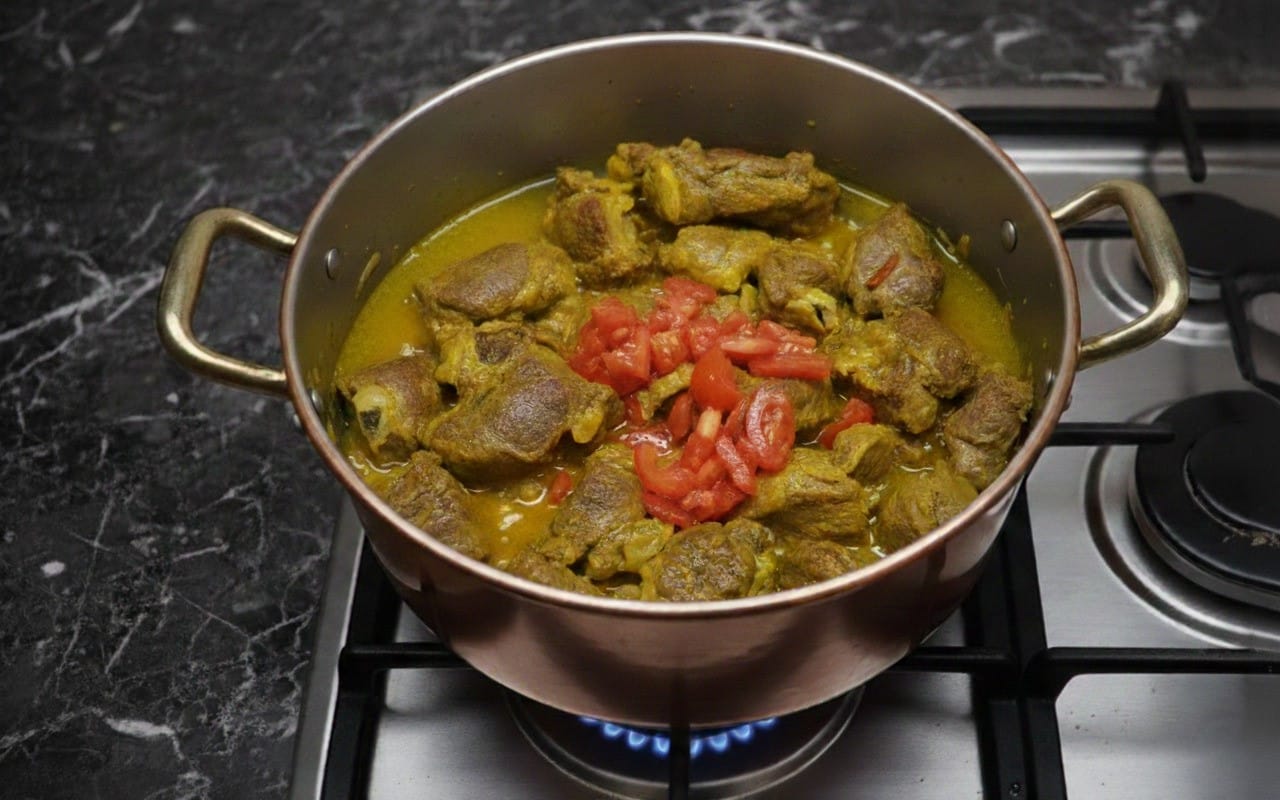
- Place the meat in a pressure cooker with oil, spices, and half of the thickly sliced onions

- Sauté over low heat for 20 minutes until the meat develops a beautiful golden color.
- This slow searing stage is the true secret behind the dish's deep flavor
- Adding Vegetables for the Sauce Base:
- After 20 minutes, add half of the tomatoes (cut into large cubes).

- Let the tomatoes and onions sauté with the meat for another 15 minutes until they melt completely.
- Pro Tip: Cutting onions and tomatoes into large pieces helps them melt better into the sauce
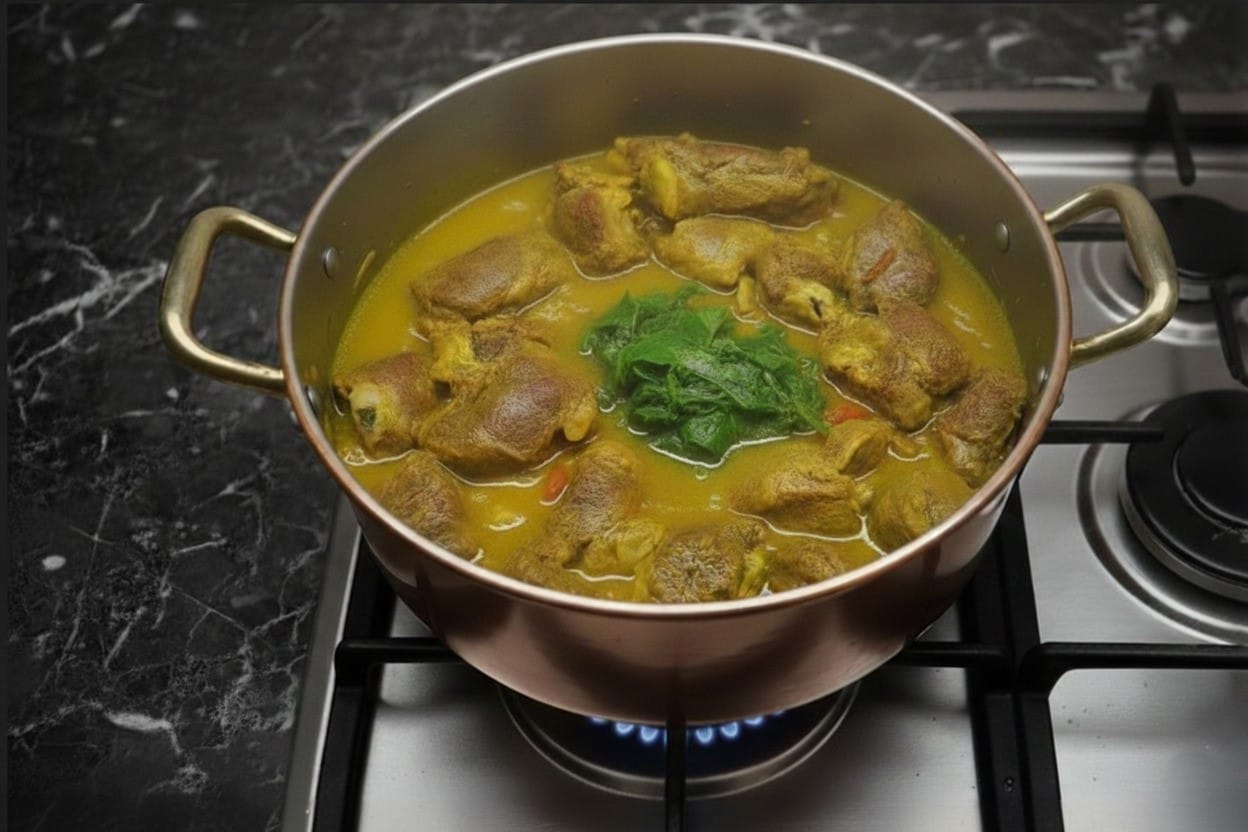
- Simmering the Broth Add one teaspoon of Smen, the herb bouquet, and 2 liters of hot water

- Cover and let the meat cook for about 20 minutes.
- Refining the Broth (For a Thick Texture):
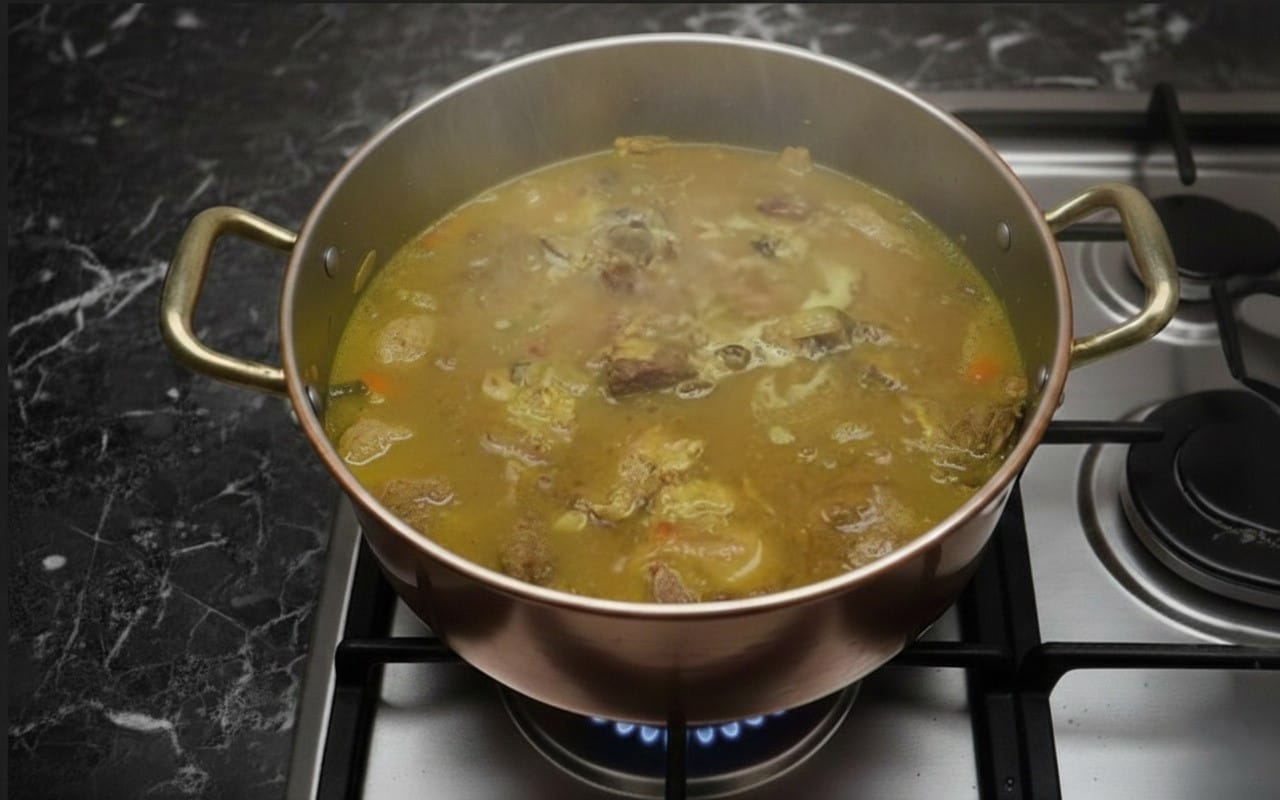
- Once the meat is cooked, remove it and set it aside in a dish with a cup of broth to reheat later
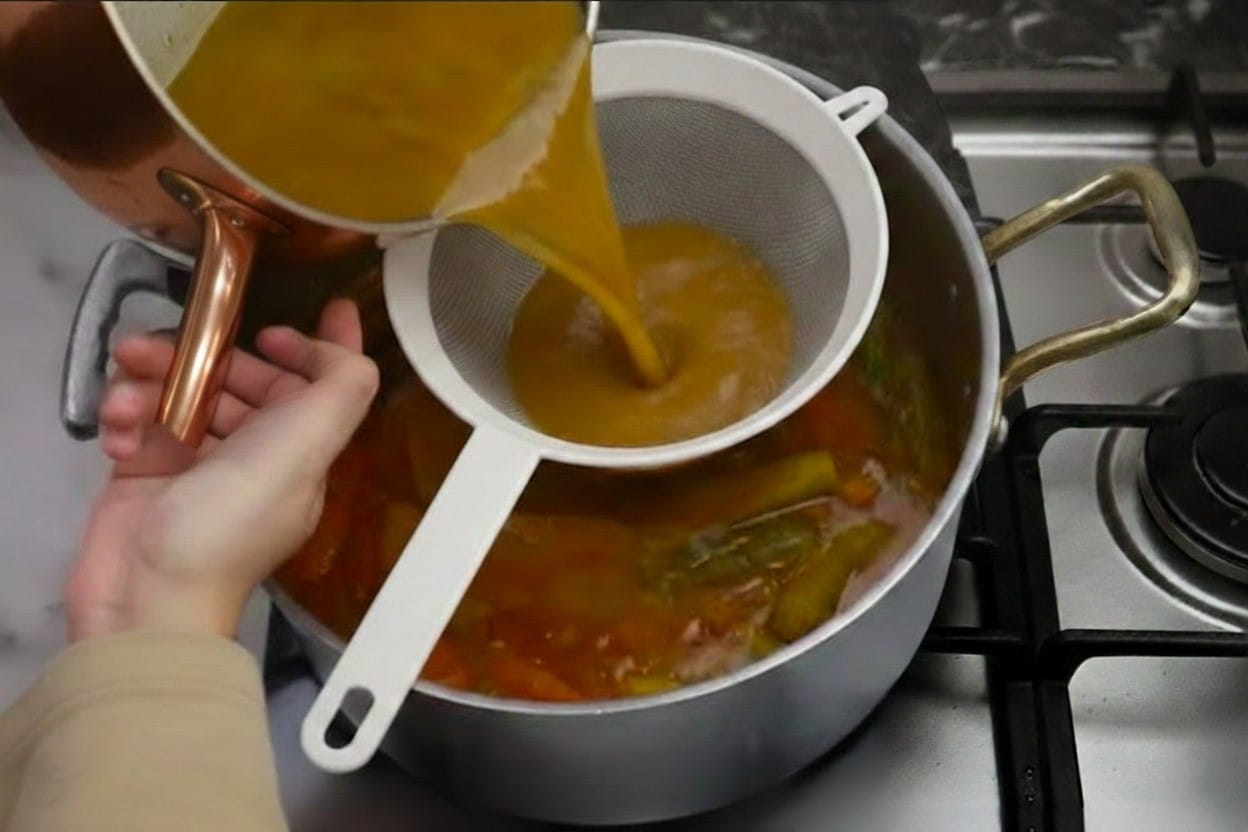
- Strain the broth through a sieve, using a spoon to press and filter all the solids
- This filtering technique creates a much thicker and richer broth compared to grating the vegetables from the start.
💠3-Vegetable Broth Instructions ( Moroccan Couscous with Meat )
- Creating the Base (The "Dagmira" Technique):
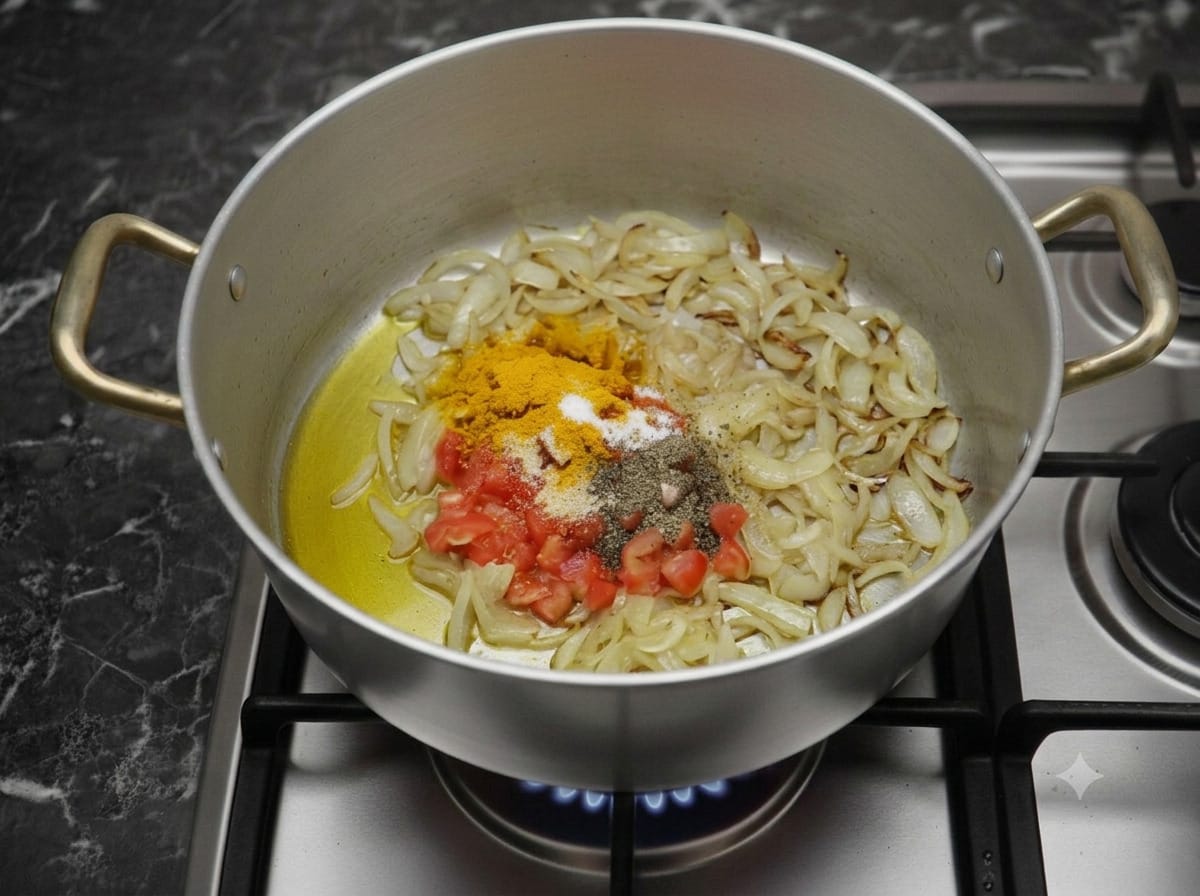
- In a separate pot, sauté the remaining onions with half a cup of olive oil.
- Let the onions soften until they turn slightly golden (about 15 minutes).
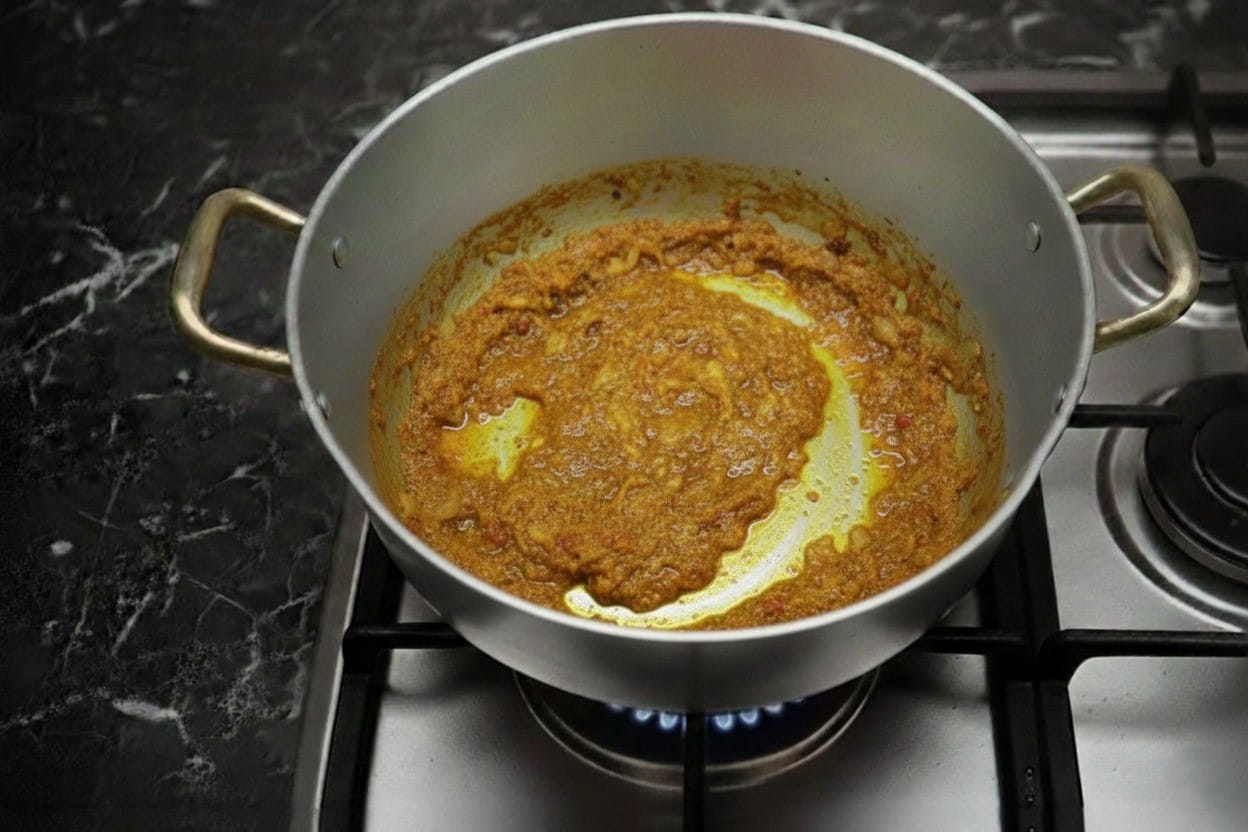
- Add the remaining tomatoes (large cubes) and sauté for another 15 minutes until they blend into a thick sauce (Dagmira).

- Pro Tip: You can use a potato masher to crush the onions and tomatoes into a smooth paste.
- Simmering and Hard Vegetables:
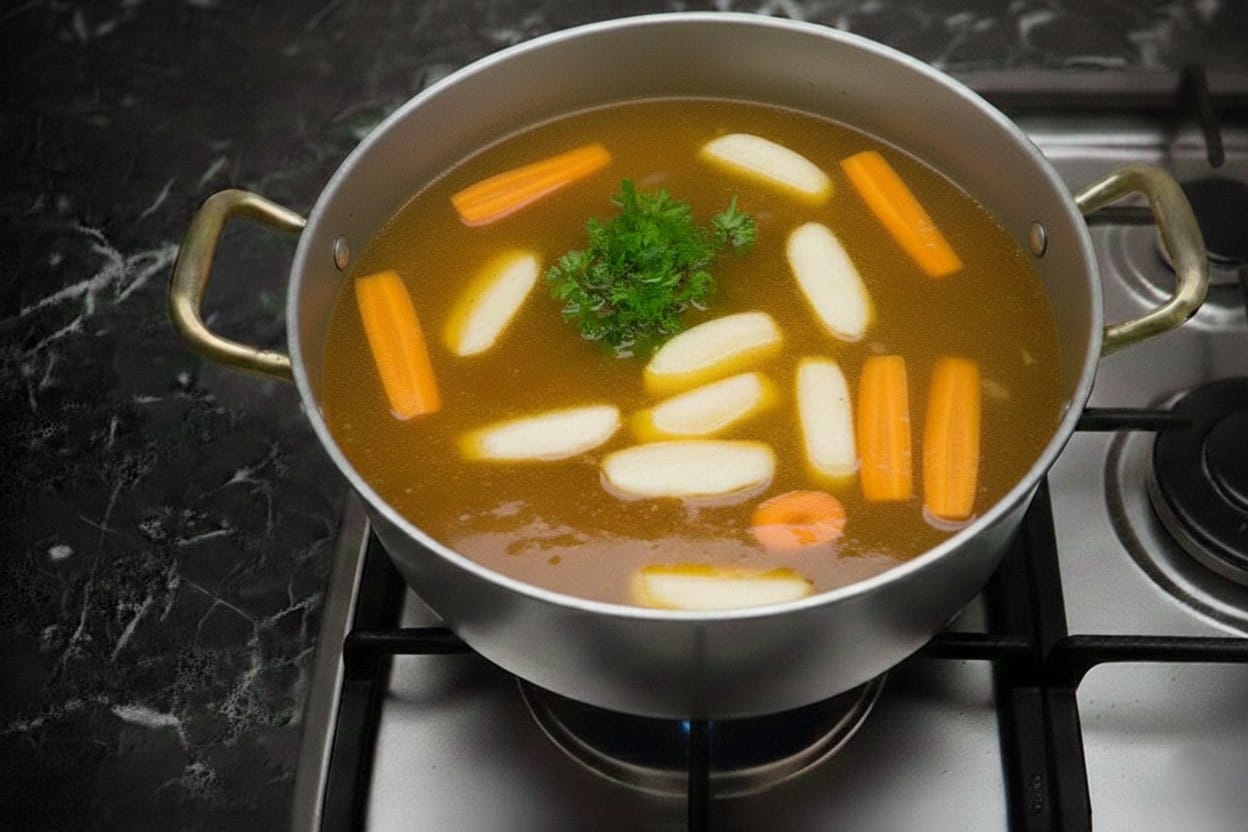
- Add the tomato paste, 3 liters of hot water, one teaspoon of Smen, and the herb bouquet.
- Add the carrots and turnips first, as they require more time to cook
- Adding Soft Vegetables & Seasoning:
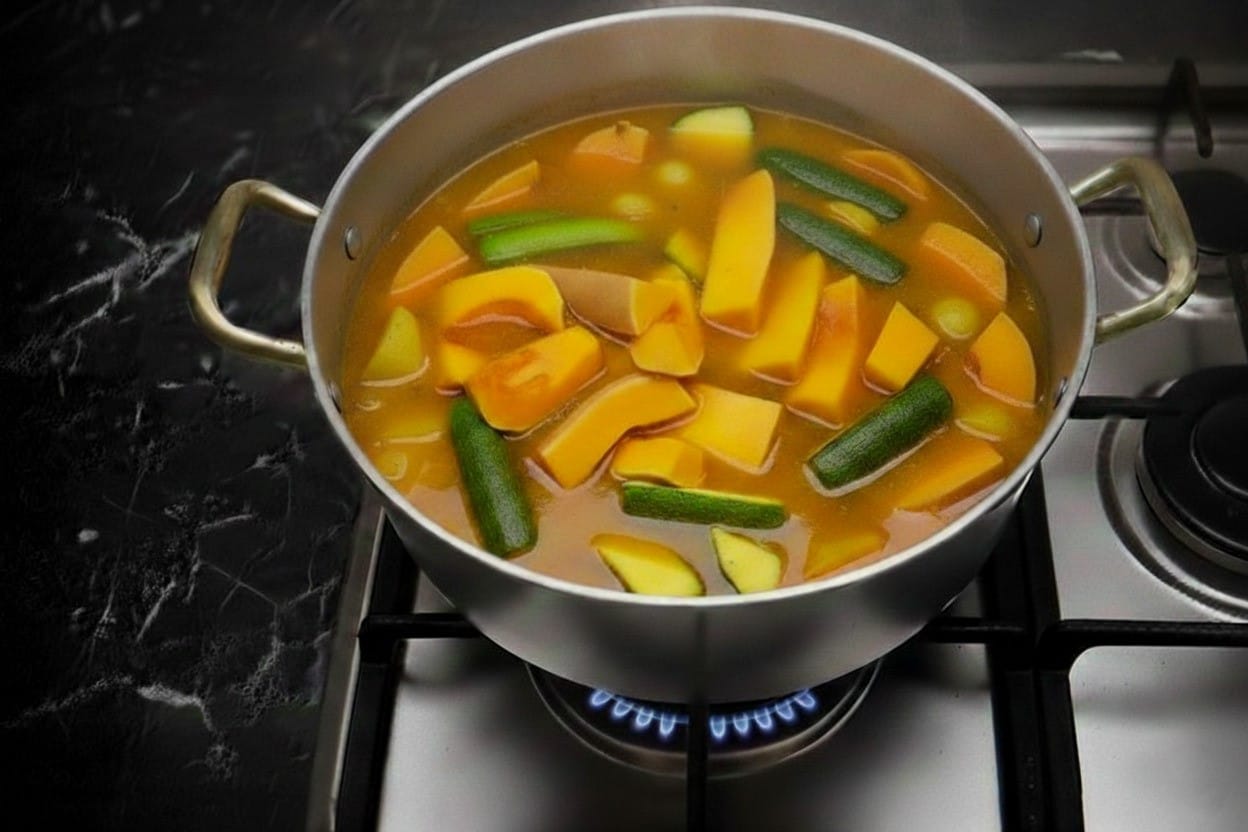
- After 20 minutes, add the zucchini and pumpkin, as they cook much faster.
- Crucial Tip: Taste the broth now and adjust the salt; vegetables must cook in balanced salt to be flavorful.
- Adding salt only at the end will result in less tasty vegetables.
- Combining the Broths (For the Final "Texture"):
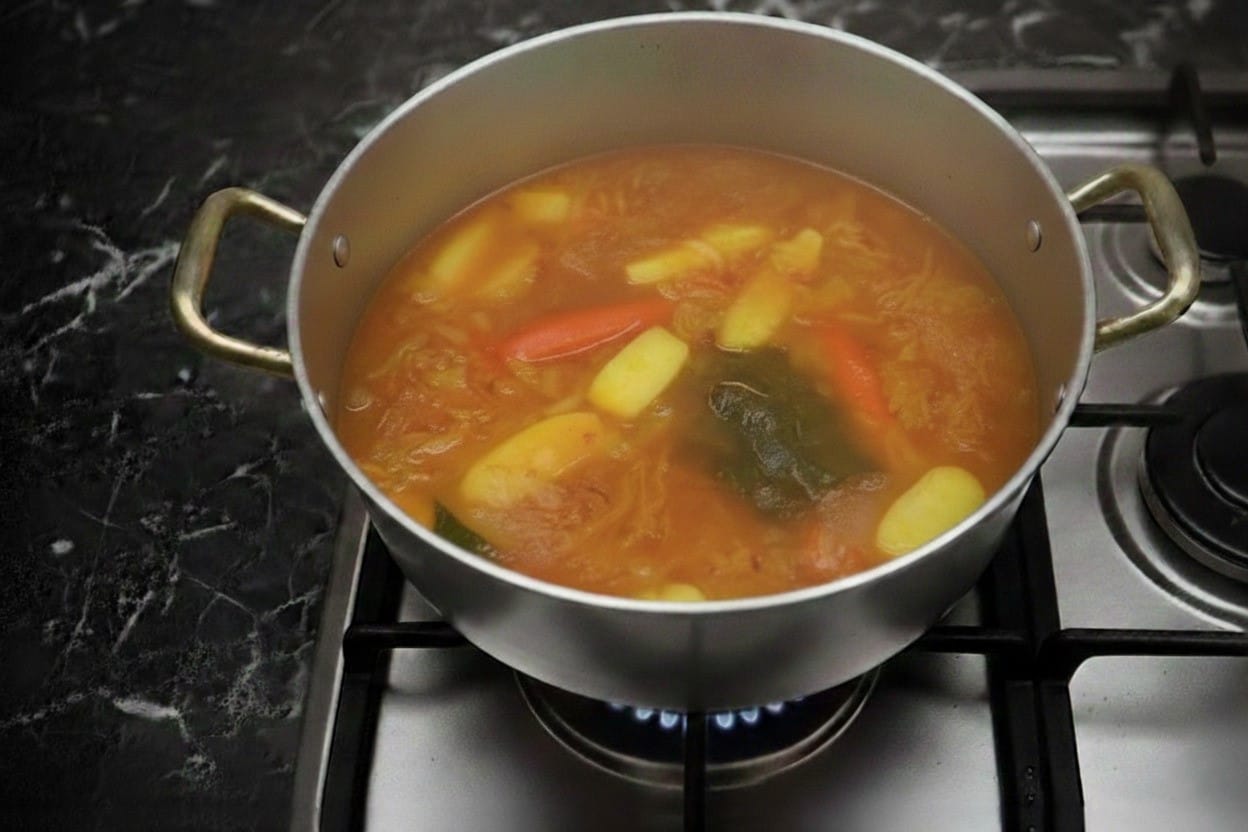
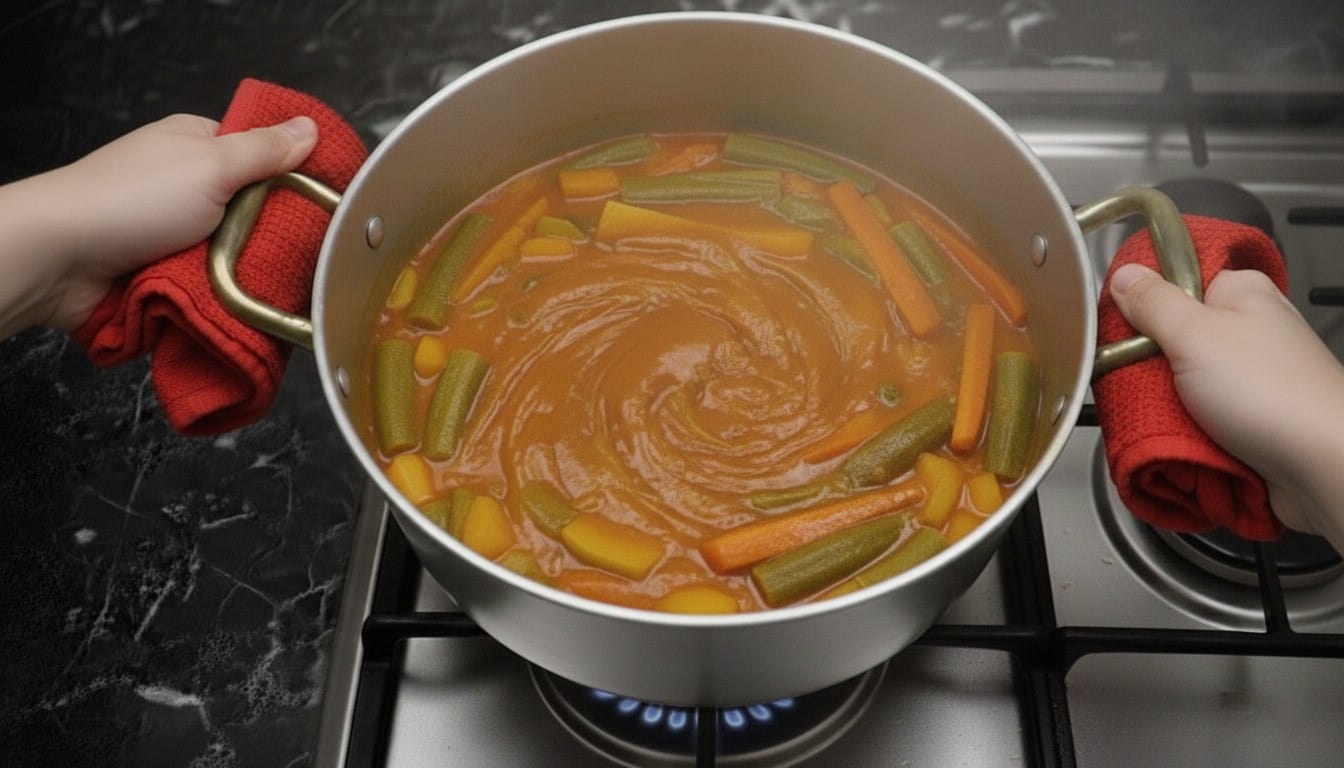
- Pour the previously strained meat broth over the vegetables
- Remove the herb bouquet, making sure to squeeze out all the trapped flavors into the pot.
- Gently shake the pot to mix the flavors; avoid using a spoon to stir, as it will break the tender vegetables.
- Let the pot simmer uncovered for a few minutes until the broth is rich, thickened, and perfectly concentrated.
for Preparing Chickpeas
- Soak 200g of chickpeas in cold water overnight.
- In the morning, drain them and rinse thoroughly with fresh water.
- Option 1: The Traditional Method:
- Add the chickpeas directly to the pressure cooker with the meat.
- This allows them to cook perfectly since they require a similar cooking time to the meat
- Option 2: The Separate Pot Method (Highly Recommended):
- Place the chickpeas in a separate small pot.
- Add one cup of the meat broth, one cup of water, and half a teaspoon of each of the four spices (ginger, turmeric, black pepper, and salt).
- Cook separately until tender.
- Why Use the Separate Method?
- Easy Serving: This way, you don't have to "search" for the chickpeas inside the large pot when it's time to plate the dish.
- Flavor Control: Some people prefer to cook chickpeas separately to keep the main broth's flavor pure and unaffected by the chickpeas' distinct taste.
💠4-Serving & Presentation ( Moroccan Couscous with Meat )
- Placing the Couscous:
- Start by placing the steamed couscous in a large traditional platter
- Create a small well in the center of the grains to hold the meat.
- Arranging the Vegetables:
- Arrange the vegetables in a balanced and organized pattern around the meat.
- Ensure each guest has a variety of vegetables directly in front of them for easy access.
- Scatter the chickpeas evenly across the entire dish.
- Adding the Sweet Touch (Tfaya):
- Place the caramelized onions and raisins (Tfaya) directly on top of the meat.
- Alternatively, you can serve the Tfaya in small side bowls for guests to add as they wish.
- Drizzling the Broth:
- Pour a small amount of broth over the couscous grains to moisten them.
- Avoid over-soaking the dish, as some guests prefer their couscous less saturated.
- Serve the remaining broth in separate bowls with a dedicated ladle to keep it clean and accessible for everyone.
- The Final Tradition:
- Never forget to serve a cold glass of Lben (buttermilk) alongside the meal to complete the authentic experience.
Notes
- Avoid Margarine: Never use margarine in this recipe; only high-quality natural butter or Smen should be used for the best flavor.
- Meat vs. Chicken: For Couscous with vegetables and Tfaya, I highly recommend using meat instead of chicken, especially when hosting guests.
- Cabbage Tip: When preparing Couscous with Tfaya, it is better to omit cabbage from the vegetable mix.
- Preventing Dry Meat: If you finish cooking early, set the meat aside with a cup of broth; use this broth to reheat the meat later so it stays juicy and tender.
- Cooking Meat Separately: Cooking the meat alone ensures a concentrated, rich flavor and a thick sauce, which is ideal for large gatherings as it provides plenty of delicious broth.
- Cooking Vegetables Individually: For a refined result, you can cook specific vegetables separately by adding a cup of broth, a cup of water, and a dash of spices to a small pot.
- Handling Cabbage: It is best to cook cabbage separately because its strong flavor and high water content can alter the texture and taste of the main broth.
- Essential Vegetables: While carrots, turnips, zucchini, onions, and tomatoes are essential, other vegetables are optional but add a unique touch each time.
- Expert Cutting: Always cut vegetables into equal, uniform sizes; this ensures even cooking and reflects your mastery of the kitchen.
- Serving Traditions: Traditionally, we share one large platter, with everyone eating from their side. For international guests, you can serve individual plates with a portion of couscous, meat, and vegetables.
- Extra Broth & Veggies: When serving individually, place extra broth in small bowls and put the vegetables in a large side dish for guests to help themselves.
- No Canned Chickpeas: For an authentic taste, avoid using canned chickpeas; always use dried chickpeas soaked overnight.
 Additional Insights:
- Moroccan Couscous is renowned for its perfectly balanced taste, enriched with traditional spices like ginger, turmeric, and black pepper. The dish is topped with an array of fresh vegetables and a savory, aromatic broth that is poured over the tender grains just before serving
- More than just a meal, Couscous is a cornerstone of Moroccan cultural and social identity. It is the star of family gatherings, religious holidays, and weddings. Most importantly, it is the sacred tradition of Friday lunch for every Moroccan family. It is also served during funerals as a form of “Sadaqa” (charity) for the deceased. In Moroccan culture, hospitality is paramount; since family members often travel long distances to attend gatherings, serving a generous platter of Couscous is a way to honor them and ensure no guest stays hungry.
- There are many variations of this iconic dish, but this specific recipe is the most popular and requested due to its rich flavor and high nutritional value. While it is enjoyed year-round, it is especially comforting during the winter season. This recipe can be prepared with chicken or meat, and for a deeper flavor, some prefer to mix fresh meat with traditional Moroccan dried meat (Gueddid).
- The true “hero” of this recipe is the turnip (Lfit); many believe the dish isn’t authentic without its unique earthy flavor. For those who enjoy a touch of sweetness, it can be served with Tfaya—a delicious garnish of caramelized onions and raisins. To complete the experience, a cold glass of Lben (buttermilk) is always present on the table.
Enjoy your meal—Bon Appétit!
2 Comments