4-French Potato Gratin: (Dauphinois, Savoyard & Lyonnais )
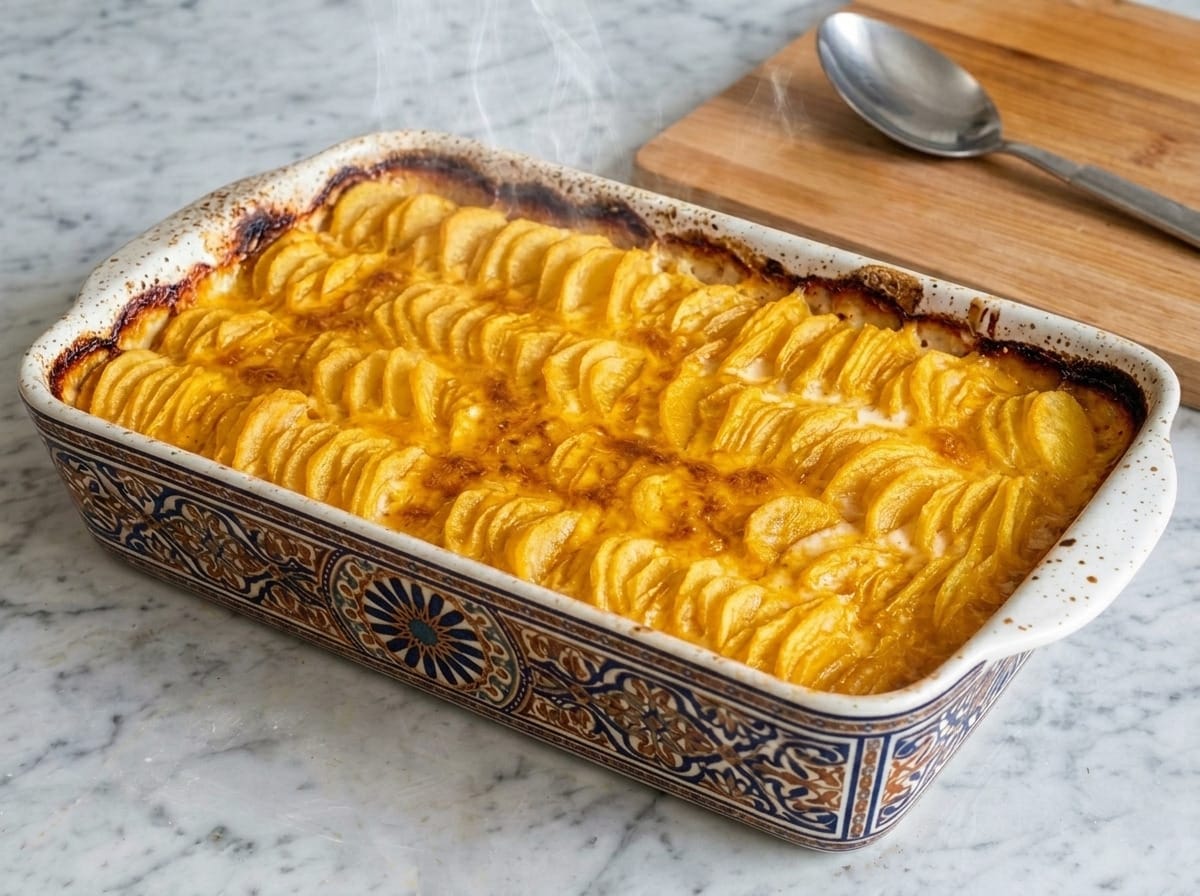
French Potato Gratin (Dauphinois
Spread the love

French Potato Gratin: (Dauphinois, Savoyard & Lyonnais )

French Potato Gratin (Dauphinois

Authentic Classic French Potato Gratin Recipes

If you are looking for a warm and light French lunch or dinner, or if you are preparing a table for a special occasion, you can prepare Gratin Dauphinois in its three versions as a main dish or as a side dish alongside a refreshing green salad with mustard, as it is the luxurious partner for roasted chicken or grilled meats.
Composed of potatoes, milk, and cream, it is named and prepared in different ways relative to the place it originates from, where onions, meat broth, or cheese are added. Additional information will be detailed at the end of the article.
Prep Time 15 minutes
Cook Time 1 hour 30 minutes
Total Time 1 hour 45 minutes
Servings: 6
Course: Side Dish
Cuisine: French

Ingredients
  

💠1- Gratin Dauphinois Ingredients
  • 1 kg white starchy potatoes
  • 700 ml cooking cream
  • 1 tsp salt
  • ½ tsp black pepper
  • ½ tsp nutmeg
  • ½ clove garlic (to rub the baking dish)
  • 2 tbsp butter
💠2- Gratin Lyonnais Ingredients with Caramelized Onion
  • 2 large onions (cut into wings/very thin slices)
  • 3 tbsp butter (to caramelize the onions, grease the baking dish, and for the top of the gratin)
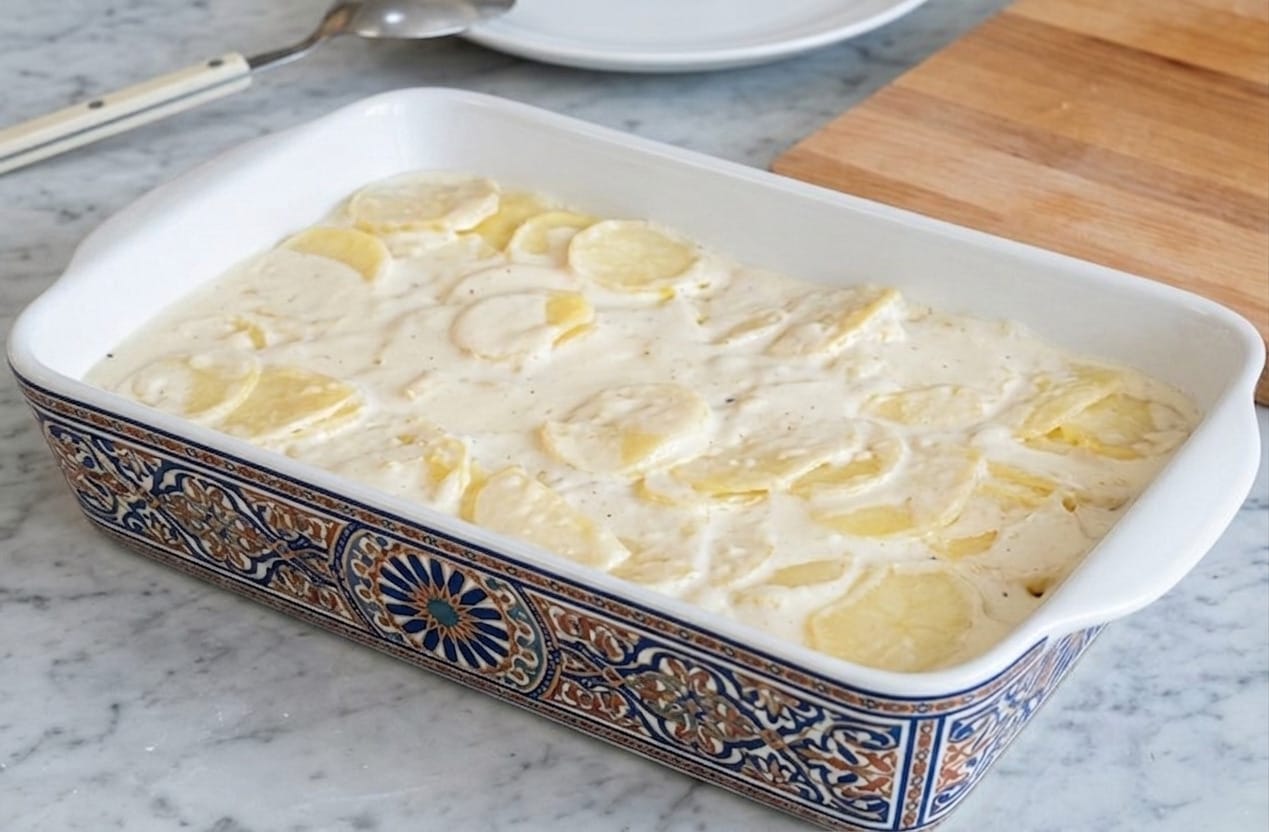
💠3- Gratin Savoyard Original Ingredients (The Cheesy Version)
  • 1 kg potatoes, the royal choice: "Yukon Gold" or "Monalisa
  • 600 ml clarified beef or chicken broth
  • 200 g grated Swiss or French Gruyère cheese
  • ½ clove garlic (to rub the baking dish)
  • 1 tsp salt
  • ½ tsp black pepper
  • ½ tsp nutmeg
  • 2 tbsp animal butter

Method
 

💠1- To Prepare the Authentic French Potato Gratin: (Dauphinois
  1. The Second Original Method
  2. Step 1: Wash, peel, and slice the potatoes into thin rounds using either a mandoline slicer or a sharp knife.
  3. (Avoid washing the slices after cutting to preserve the surface starch)
  4. Step 2: Preheat your oven to 150°C (300°F)
  5. Step 3: Rub the inside and sides of the baking dish with the garlic clove;
  6. this infuses the dish with a beautiful garlic aroma and flavor without leaving actual pieces that might bother someone while eating.
  7. Then, grease the dish with butter.
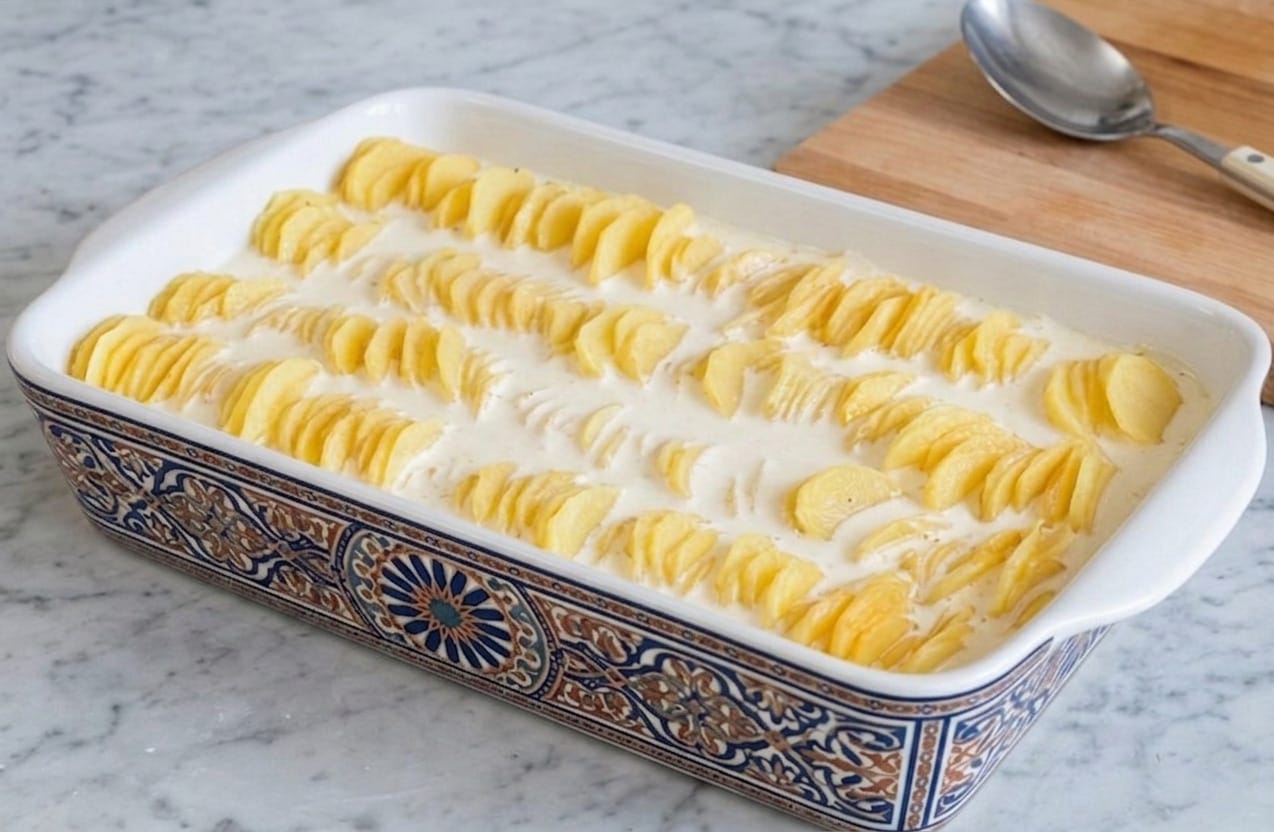
  8. Step 4: Arrange the raw potato slices in the baking dish in elegant, overlapping layers or neat rows
    French Potato Gratin (Dauphinois
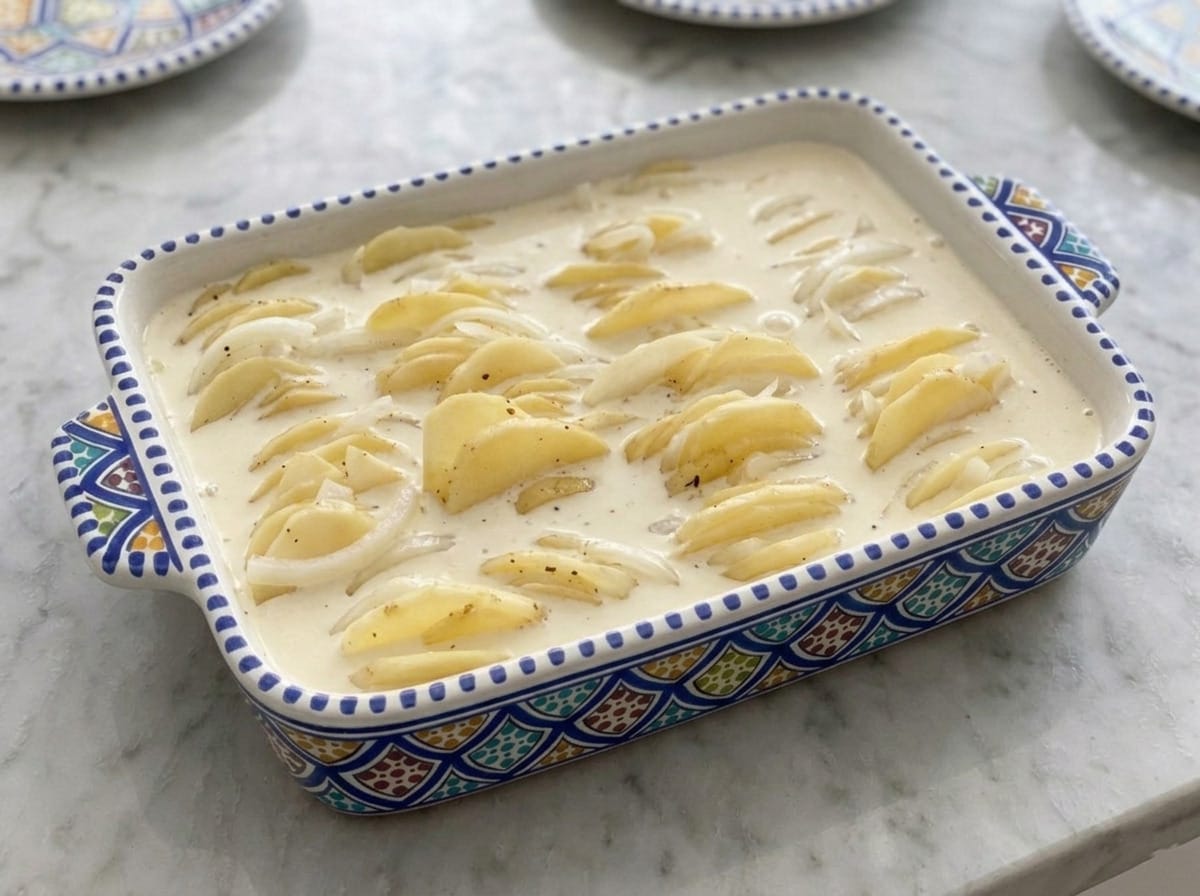
  9. Step 5: In a small saucepan, combine the cooking cream with the spices and heat it until it is just warm or slightly hot
  10. (do not let it reach a rolling boil). Pour the warm cream directly over the baking dish, ensuring it seeps into all the spaces and almost completely submerges the layers
  11. 💡 Note: Pouring cold cream straight from the fridge into a hot oven can cause a thermal shock, leading the fat to separate from the liquid during the long baking process.
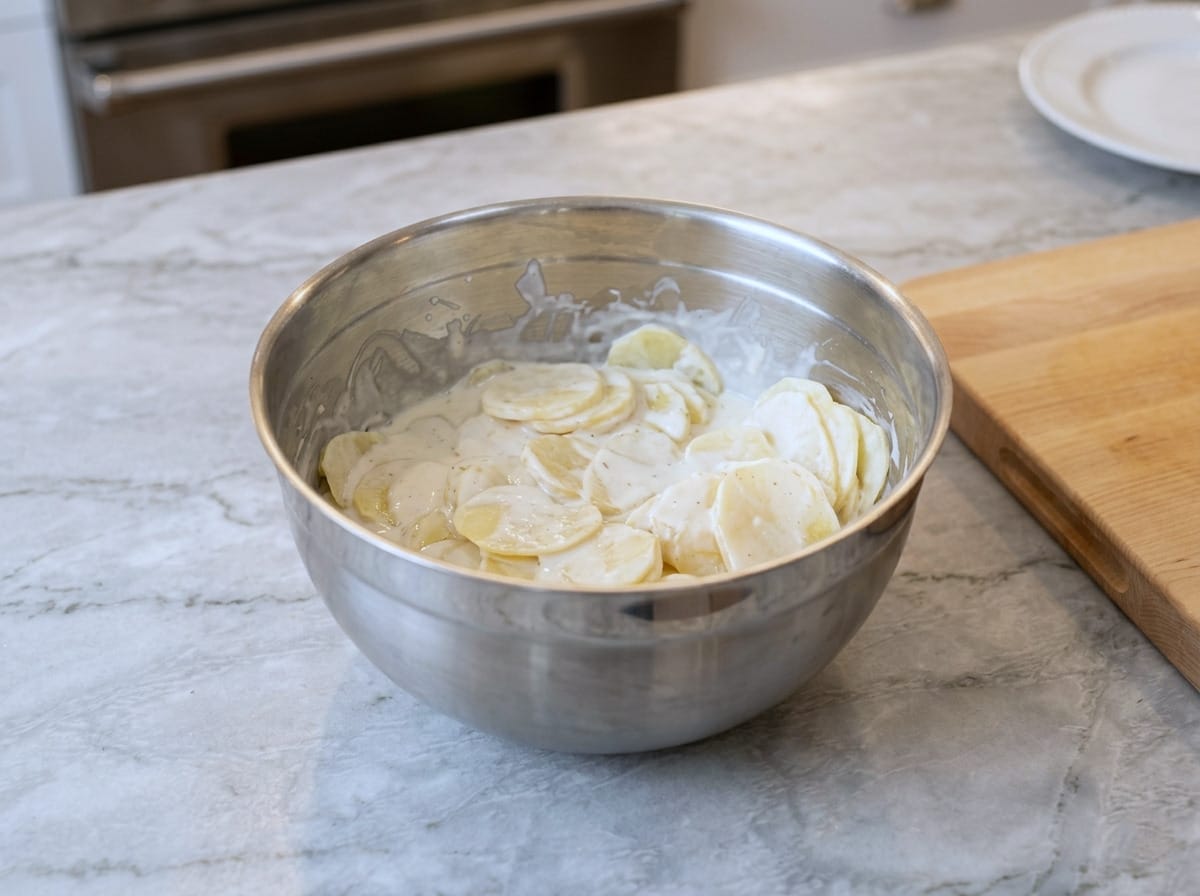
  12. Alternative Step 5: Alternatively, you can place the potato slices in a bowl with the warm cream, salt, pepper, and nutmeg.
    French Potato Gratin (Dauphinois
  13. Toss gently but thoroughly until every slice is well-coated with the cream, then arrange them nicely in the baking dish.
  14. Step 6: Dot the top of the gratin with small pieces of butter, then cover the dish securely with aluminum foil.
  15. Step 7: Bake in the preheated oven at 150°C (300°F) for one hour. Let it cook slowly so the starch from the potatoes naturally thickens the sauce into a rich, creamy texture, making the potatoes incredibly tender.
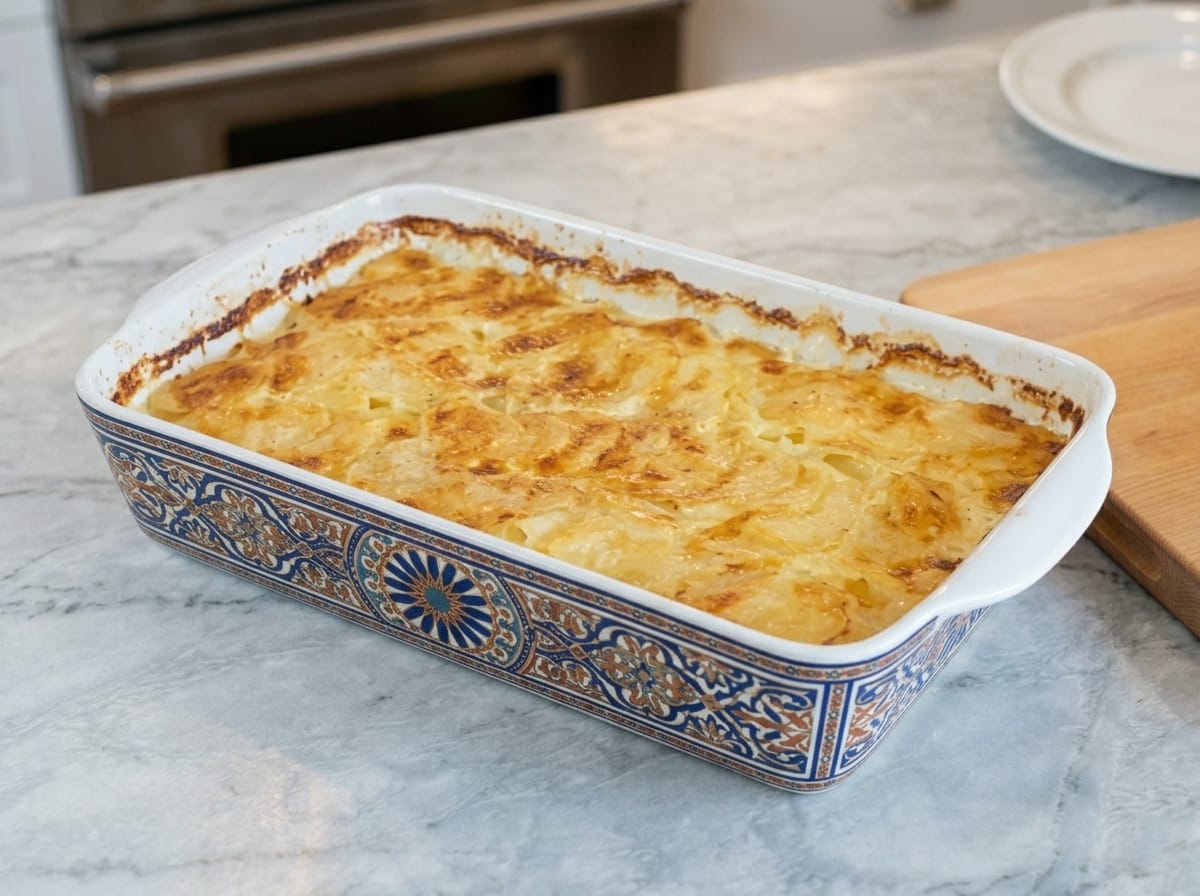
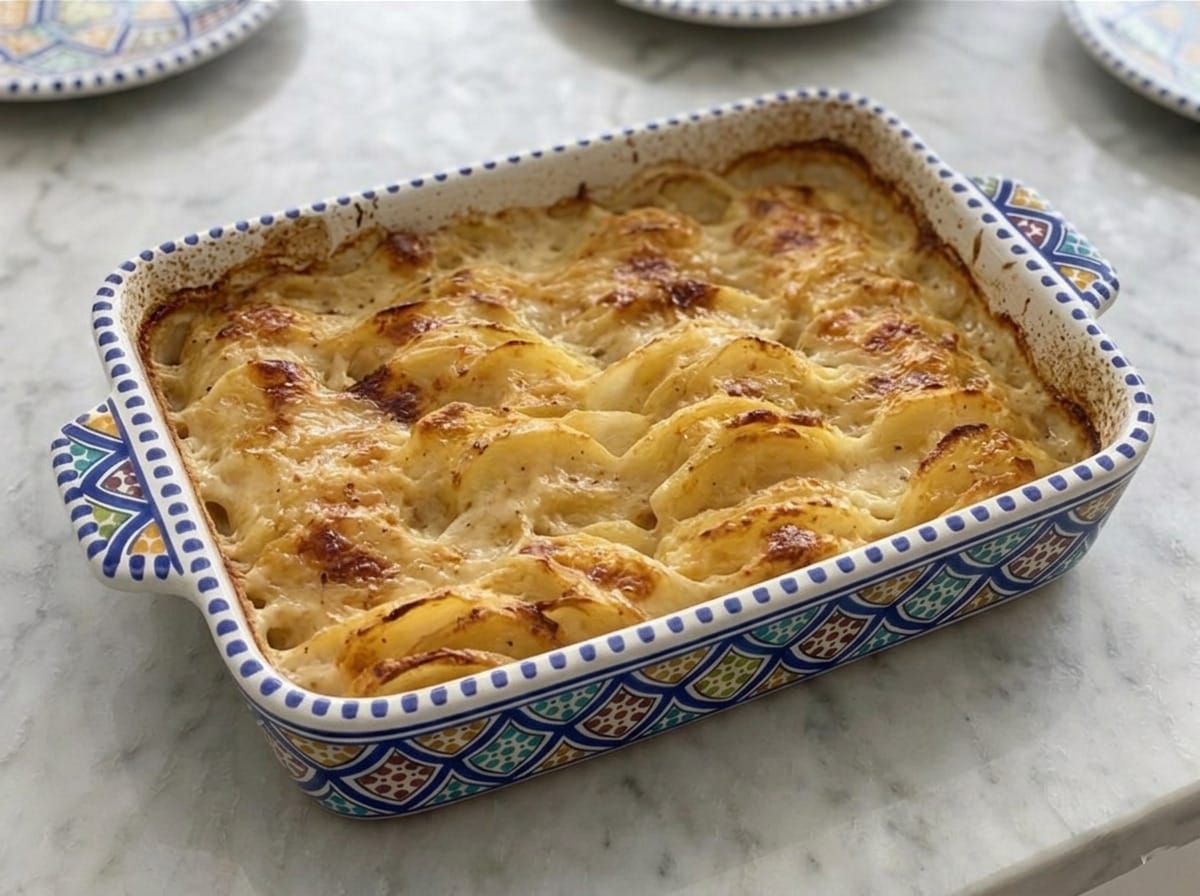
  16. Step 8: Remove the aluminum foil and turn on the upper broiler. Let it broil for 15 to 20 minutes until the butter and cream on top become beautifully golden-brown and bubbly.
    French Potato Gratin (Dauphinois
  17. 💠2-The Second Method
  18. 2 To prepare this version, the same basic Gratin Dauphinois ingredients mentioned above are used, with the addition of the following ingredients
  19. This is the preferred method among top chefs because it ensures the release of starch and thickens the cream quickly and smoothly,
  20. making the cream step the foundation of the cooking process.
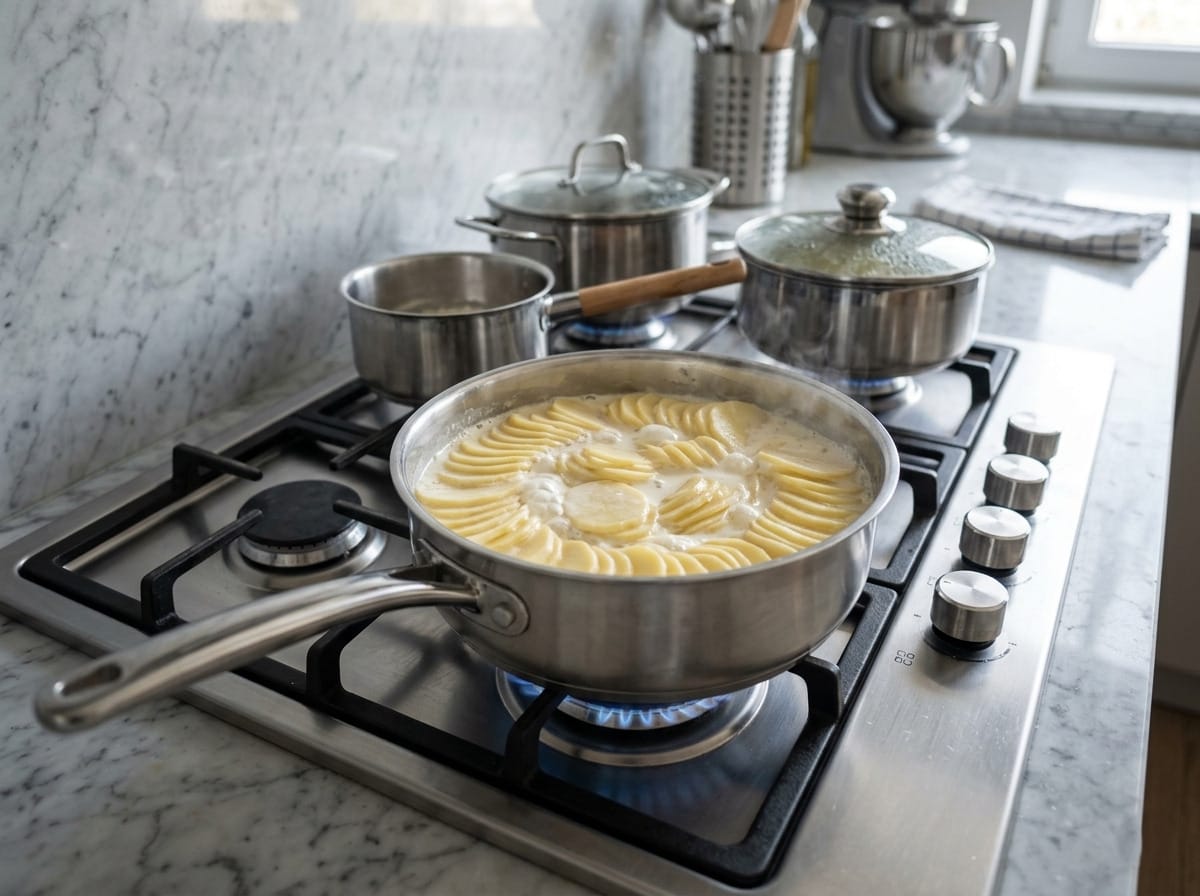
  21. Step 1: Pour the cooking cream (700 ml) directly into a wide pot on the stovetop.
  22. Step 2: Add the salt, black pepper, and nutmeg, then stir over medium heat until the cream is hot and begins to steam (without letting it reach a rolling boil).
  23. Step 3: Add the raw potato slices directly into the hot cream inside the pot.
    French Potato Gratin (Dauphinois
  24. Step 4: Let the potatoes absorb the cream and cook on very low heat for 10 to 15 minutes, stirring very gently with a wooden spoon so you do not break the slices.
  25. Step 5: You will notice here that the cream has started to thicken and become very rich due to the starch from the potatoes.
  26. Step 6: Pour the potatoes along with all the thickened cream directly into the baking dish
    French Potato Gratin (Dauphinois
  27. Step 7: Bake in the oven for only 40 to 45 minutes at 180°C (350°F) until the top is beautifully browned and the potatoes are completely tender and cooked through.
    French Potato Gratin (Dauphinois
💠2- Preparing Gratin Lyonnais with Caramelized Onions:
  1. The First Method: With Caramelized Onions
  2. 🧅 The Caramelized Onion Step:
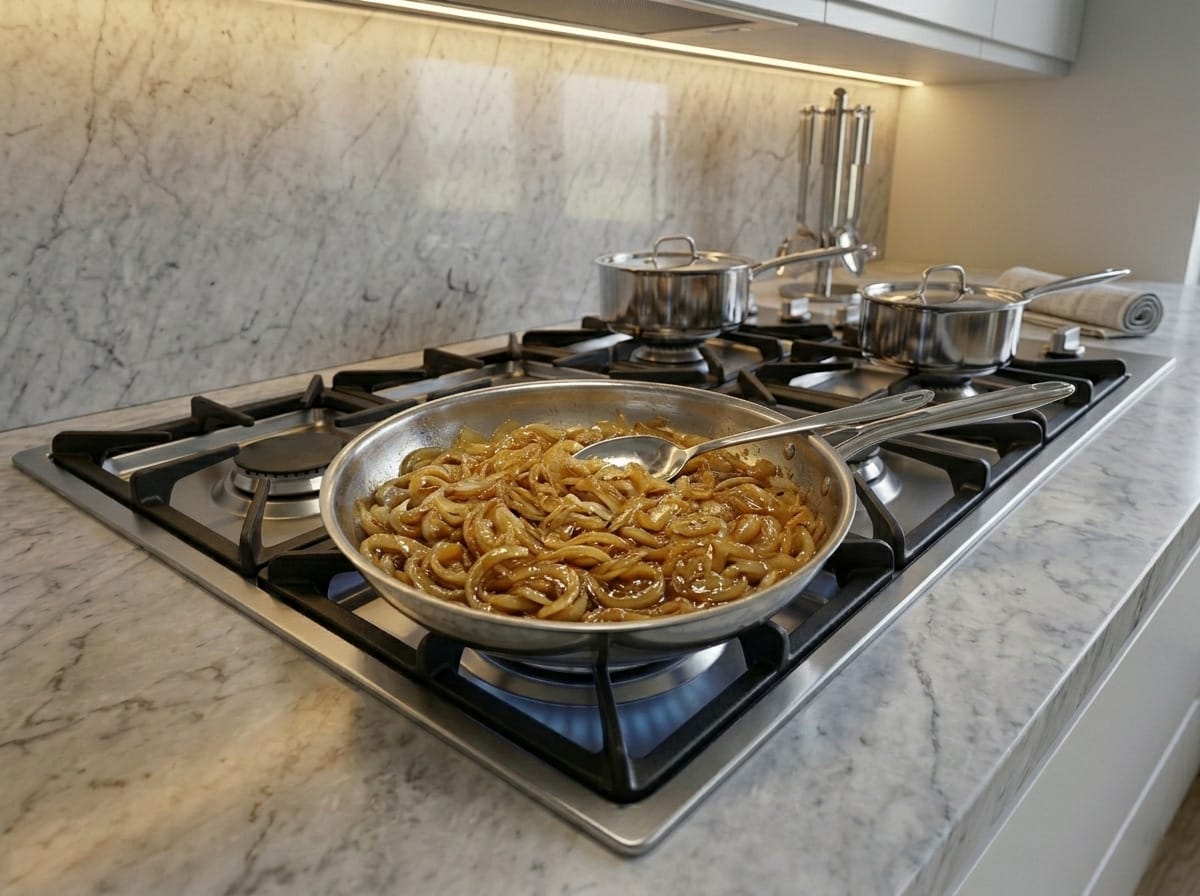
  3. Step 1: In a pan over low heat, melt two tablespoons of butter and add the thin onion slices (wings) along with a very small pinch of salt
  4. Step 2: Cook the onions slowly, stirring continuously for 15 to 20 minutes until they completely soften and turn into a warm, golden-caramel color (without burning).
    French Potato Gratin (Dauphinois
  5. Then, remove from the heat and set aside
  6. 🥛 The Warm Cream Step:
  7. Step 3: In a small saucepan, gently warm the cooking cream along with the spices (salt, black pepper, and nutmeg) over low heat without letting it boil.
  8. Remove from heat so it is ready to be poured while warm.
  9. 🍽️ The Elegant Layering Technique:
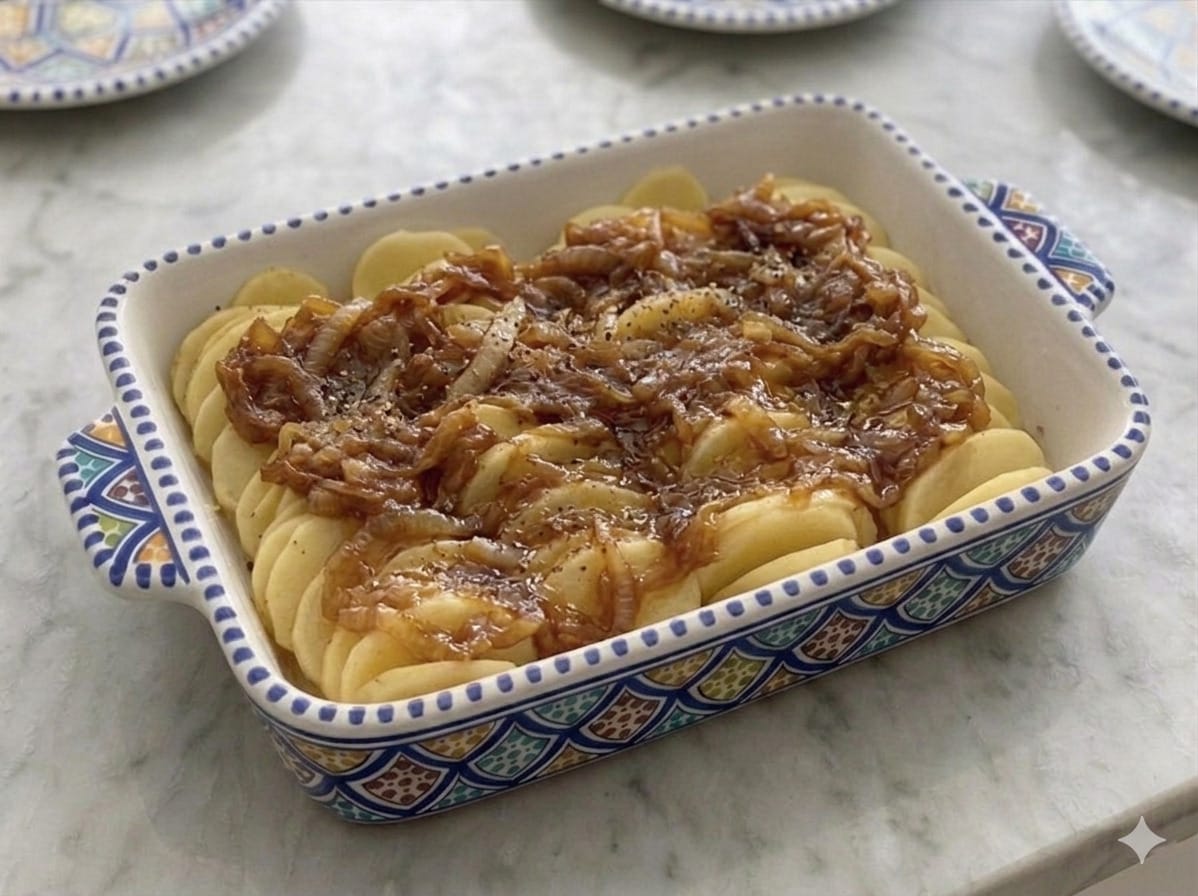
  10. Step 4: In the baking dish (which has been rubbed with garlic and greased with butter), arrange half of the potato slices to create an elegant first layer.
  11. Step 5: Evenly distribute all of the warm caramelized onions in the middle as a central layer.
    French Potato Gratin (Dauphinois
  12. Step 6: Cover the onions completely with the second and final layer of the remaining potato slices; this protects the onions from burning during baking.
  13. ✨ The Final Touch:
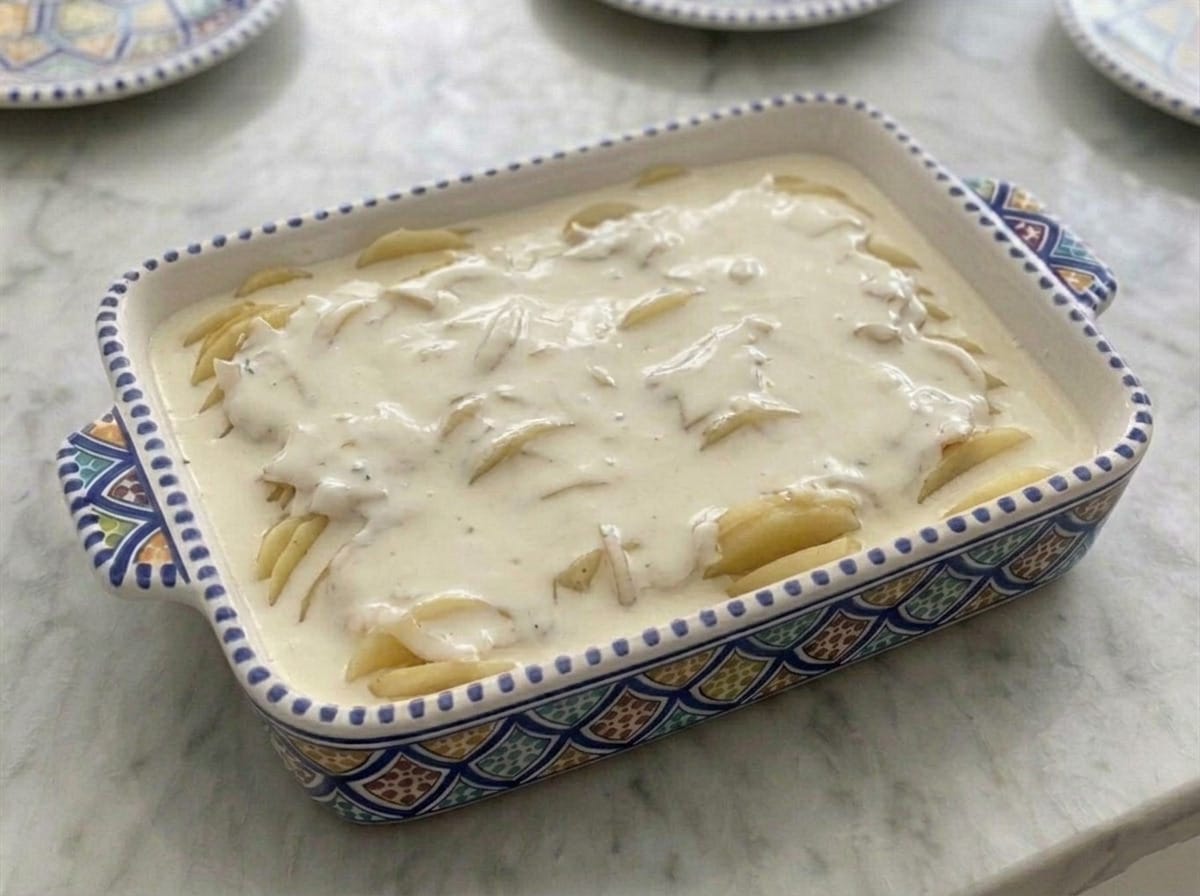
  14. Step 7: Slowly pour the spiced warm cream over the baking dish, ensuring it seeps between the layers and almost completely submerges the potatoes.
    French Potato Gratin (Dauphinois
  15. Step 8: Dot the top with small butter cubes, then cover the dish securely with aluminum foil, making it ready for the oven.
  16. The Second Method: With Raw Onions
  17. Step 1: Arrange an elegant layer of raw potato slices at the bottom of the baking dish
  18. Step 2: Distribute a light, even sprinkle of the thin raw onion slices (wings) over the potatoes.
  19. Step 3: Repeat the process by creating alternating layers (potatoes, then onions, then potatoes), always making sure that the final top layer consists entirely of potatoes to protect the raw onions from burning.
  20. Step 4: Very slowly pour the spiced warm cream over the baking dish, ensuring it seeps between the gaps of the potatoes and onions and almost completely submerges the ingredients.
    French Potato Gratin (Dauphinois
  21. Step 5: Dot the top of the gratin with small pieces of butter, then cover the dish securely with aluminum foil.
  22. (Trapping the steam here is crucial so that the raw onions soften completely and become tender like jam).
  23. Step 6: Bake in the oven at 150°C (300°F) for one hour to an hour and a quarter, until the potatoes absorb the liquids and the sauce naturally thickens due to the starch.
  24. Step 7: Finally, remove the aluminum foil and turn on the upper broiler for 15 to 20 minutes until the top layer takes on a rich golden color and a delicious appearance.
    French Potato Gratin (Dauphinois
  25. ⚠️ Important Alert for a Successful Dish
  26. Heating the cream (or at least warming it up well) with the spices is a mandatory step before pouring it over the layers of potatoes and caramelized onions.
  27. Pouring it warm prevents the fat in the butter and cream from separating during cooking, ensuring a homogenous gratin with a velvety texture and a professional appearance, without any greasy oil layer.
  28. Completely avoid pouring cold cream straight from the fridge over the caramelized onions to prevent clumping and separation during baking.
💠3- The Original Method for Preparing Gratin Savoyard (The Broth and Mountain Cheese Technique)
  1. 🌡️ Oven and Dish Preparation:
  2. Step 1: Preheat your oven to 180°C (350°F).
  3. Step 2: Rub the baking dish with half a garlic clove to infuse it with aroma, then grease it with one tablespoon of butter.
  4. 🥔 Potato Preparation:
  5. Step 3: Slice the potatoes into thin rounds using a mandoline slicer. (Avoid washing the slices to preserve the starch that will bind the broth).
  6. 🧀 Layering and Texture Building:
  7. Step 4: Arrange an elegant layer of potato slices at the bottom of the baking dish.
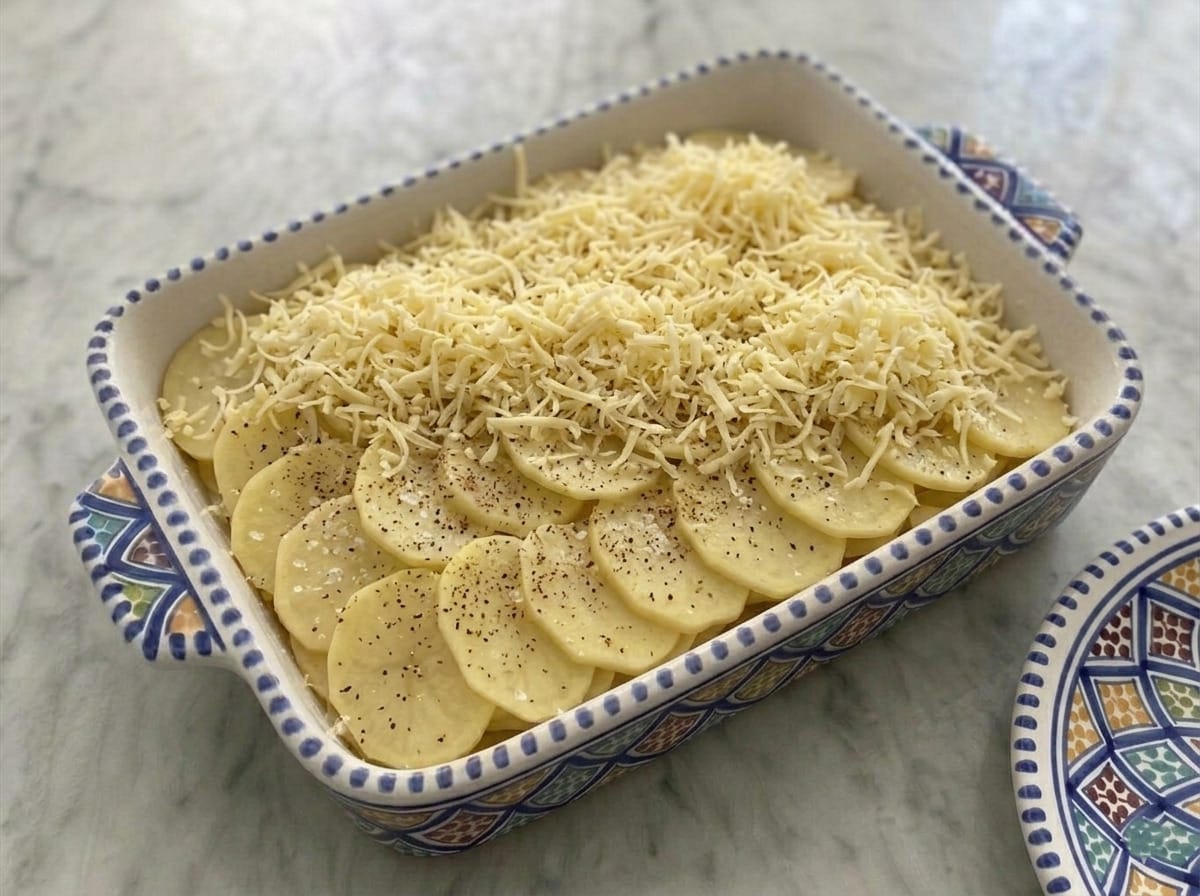
  8. Step 5: Distribute a pinch of salt, black pepper, and nutmeg over the potatoes, followed by a generous sprinkle of grated Gruyère cheese.
    French Potato Gratin (Dauphinois
  9. Step 6: Repeat the process (potatoes, then cheese) until all the components are used, making sure to reserve a good amount of cheese to place on the surface at the end.
  10. 🍲 Pouring the Hot Broth:
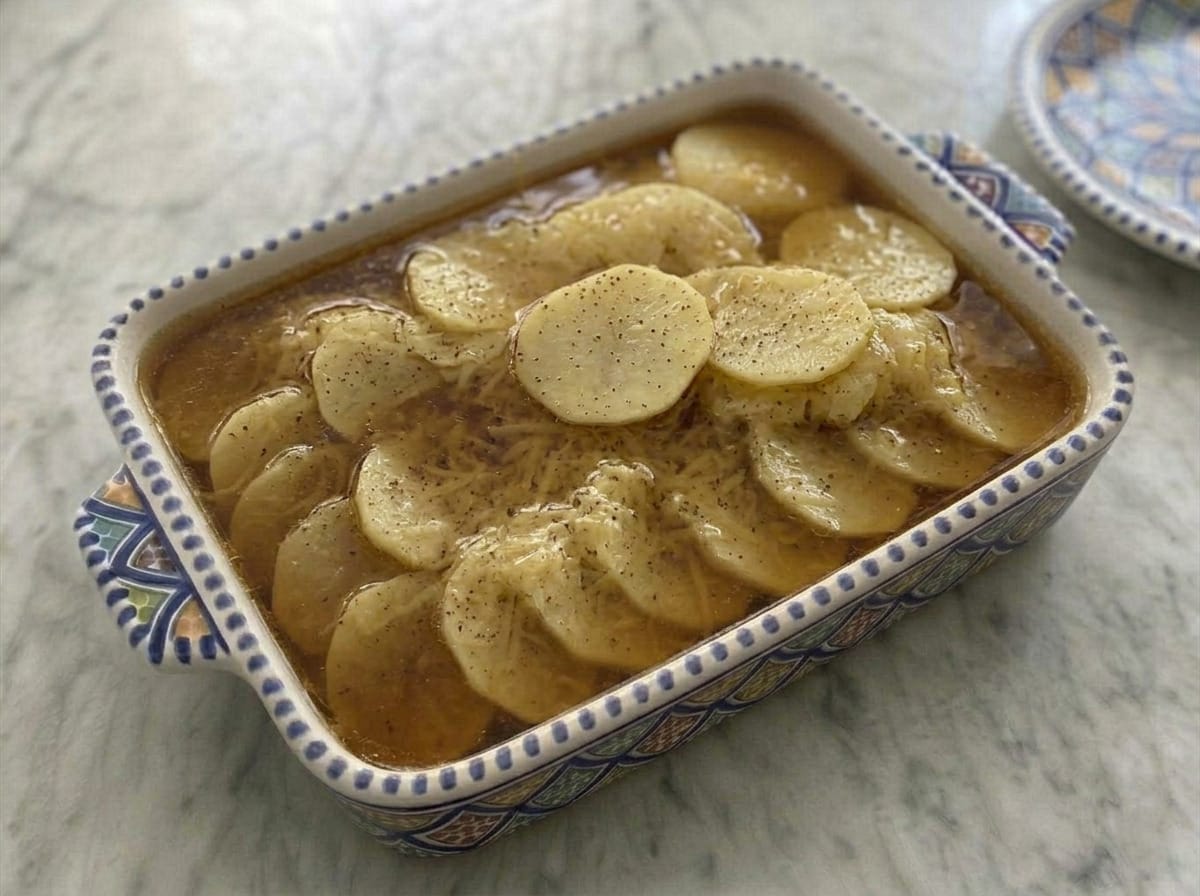
  11. Step 7: Slowly pour the hot beef or chicken broth along the sides of the baking dish so it seeps between the gaps, reaching the level of the top potato layer without completely submerging it.
    French Potato Gratin (Dauphinois
  12. 🔥 Baking and Browning:
  13. Step 8: Distribute the remaining small pieces of butter on top along with the rest of the grated cheese.
  14. Step 9: Cover the dish securely with aluminum foil and bake in the oven for 40 minutes, allowing the potatoes to absorb the broth and release their starch.
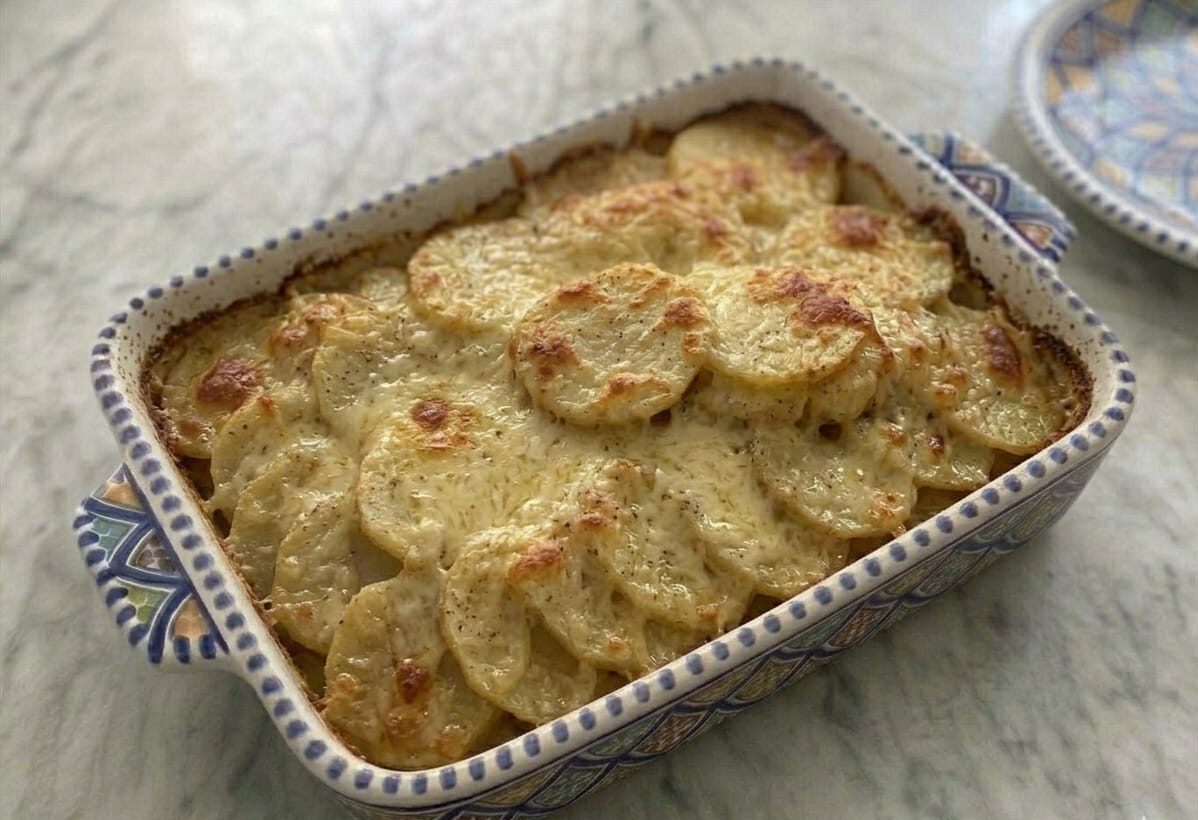
  15. Step 10: After that, remove the aluminum foil and leave it for an additional 15 minutes under the upper broiler until the cheese completely melts and browns, turning into a crispy golden crust.
    French Potato Gratin (Dauphinois

Notes

💡 Important Culinary Notes & Chef's Secrets
  • White Potato Skin: White potatoes feature a very thin and smooth skin; therefore, you can leave them unpeeled if desired, after washing them thoroughly with a vegetable brush.
  • The Most Crucial Warning (Avoid Washing the Slices): Never wash the potato slices with water after cutting them! The surface starch is the ultimate secret that reacts with the cream to give us that rich, "velvety thickened" texture that naturally binds the dish together.
  • Advance Preparation Secret for Gatherings: To ease your workload on cooking day, bake the gratin on the first day for one hour only, then let it cool completely and store it in the fridge. On the day of serving, take it out, add half a cup of liquid cooking cream over the entire surface, and bake it for an additional 40 minutes to absorb, finish cooking, and brown beautifully.
  • Protecting the Caramelized Onions: Never place caramelized onions on the top layer (surface). Because they contain natural sugars, they will char and burn instantly under the broiler, giving the dish a bitter taste and ruining its appearance.
  • Fine Dining Secret (Michelin Stars): Mixing milk and cream (such as 400 ml cream and 300 ml milk) gives you the rustic, simple version. However, using pure cream alone is the secret behind the velvety texture found in international restaurants, making sure to cook it at a low temperature so it does not separate or overflow in the oven.
French Potato Gratin: (Dauphinois, Savoyard & Lyonnais )

♨️Additional Information

1- Serving Guide and Perfect Pairings for Gratin

  • Although many French restaurants serve gratin as a standalone, light dinner right in its own baking dish alongside a simple salad, in my opinion, it remains a luxurious side dish par excellence; potato-based dishes alone may not be fully satiating.
  • Therefore, here are the best ways to serve it as a premium side dish for lunches, formal dinners, or family weekend gatherings:

🥩 The Perfect Companion for Proteins

  • The blending of meat juices with the creamy gratin sauce creates an irresistible flavor. Therefore, it is highly recommended to serve it alongside:
  • Grilled or Roasted Red Meats: Such as beef steak slices, or a roasted leg of lamb in the oven.

  • Classic Roasted Chicken: Where the flavor of the roasted chicken harmonizes beautifully with the richness of the cream.

  • Quick Grilled Meats: Such as grilled Kofta skewers (Kafta brochettes) to switch up your daily meal routine.

🥗 The Required Balance (Side Salads)

  • Since gratin is inherently a rich and heavy dish due to the cream, milk, and potatoes, it is rarely served alone on a plate. To break this richness and add a touch of freshness and lightness, it is always accompanied by:
  • A Simple Green Salad: Dressed with a classic vinaigrette, making it a complete and stomach-friendly dinner before bed.
    • A Fresh Greek Salad: Which is also an excellent option that brings a wonderful balance to the table thanks to its refreshing flavors.

2- Ideas and Suggestions for Companion Salads

  • Because balance is the secret behind the success of French dishes, here are some inspiring suggestions and ideas to pair the perfect salad with your favorite version of gratin. These options remain merely suggestions to enhance flavor harmony, and you have complete freedom to choose what best suits your taste and table:
  • 1- Mesclun Salad with Vinaigrette: Considered the royal and traditional companion to the original classic version (Gratin Dauphinois); its lightness breaks the richness of the cream perfectly.
  • 2- Lettuce Salad with Walnuts: This crunchy version pairs phenomenally with the modern, cheese-rich version; the walnuts add a wonderful texture that harmonizes beautifully with the gooey, melted cheese.
  • 3- Frisée Salad with Vinaigrette: The ideal partner for the version containing caramelized onions (The Lyonnais version); its mild bitterness balances the sweetness of the caramelized onions to perfection.
  • 4- Marinated Tomato Salad with Herbes de Provence: A wonderful option that lends a refreshing summer touch to the gratin dish, breaking the richness of the ingredients with its tangy and fresh flavor.

3- The Ultimate Guide to Choosing the Perfect Potato Variety for Gratin

  • The success of a gratin and its creamy texture depends primarily on the variety of potato used. The goal is to choose potatoes that absorb the liquids while maintaining their beautiful round shape, without breaking down or turning into a mushy mash. While all starchy varieties share the ability to release starch that naturally thickens the cream and milk, top chefs prefer specific named varieties and never choose blindly.
  • Here are the best international and local varieties suited for each version:

1- Classic French Varieties (The Gold Standard)

  • Bintje Potatoes: This is the traditional queen of gratin in French cuisine. Categorized as a perfectly starchy and highly balanced potato, it lends a velvety, thickened texture to the sauce. Yet, its mandoline-sliced rounds remain intact and silky smooth even after an hour and a half in the oven. It is ideal for Gratin Dauphinois and Gratin Lyonnais.

  • Monalisa Potatoes: An excellent and widely available variety. It is characterized by its high tolerance for long baking times. It contains a good starch content that helps the cream bind, while its natural moisture prevents it from falling apart. This makes it a wonderful choice for Gratin Lyonnais, Gratin Dauphinois, and even the Savoyard version.

2- High-Starch Varieties (For an Ultra-Thick Sauce)

  • Russet Potatoes: This famous American potato is highly starchy and low in moisture. The slices absorb the milk and cream like a sponge, helping the sauce thicken and become naturally rich without needing to add flour. It is particularly well-suited for Gratin Dauphinois and Gratin Lyonnais.

3- All-Purpose Potatoes (The Royal Choice)

  • Yukon Gold: This potato reigns as the global king for gratin recipes, especially Gratin Savoyard (the broth-cooked version). Its greatest advantage is that it sits perfectly in the middle with a medium-starch, medium-waxy texture. This incredible balance yields a buttery consistency that combines the tenderness and creaminess of starchy varieties (without turning into a mushy paste) with the firmness and hold of waxy varieties (without resisting liquid absorption). The result is elegant slices that retain their shape beautifully while absorbing flavors to perfection, all while showcasing a warm yellow color that gives the dish an irresistible, delicious appearance.

💡 Chef’s Tip: Generally, medium-textured white or yellow potatoes (All-Purpose) are the easiest and most reliable choices for beginners to achieve a successful, authentic French gratin.

  • 📌 Summary for a Successful Dish
  • Scientifically speaking, all starchy varieties will succeed in thickening the milk and cream. However, if the starch content is excessively high without enough moisture—such as potato varieties exclusively meant for deep-frying or mashing (like Russets)—and cooked without care, you will lose the elegant, distinct geometric look of the layers..

4- How Many Versions of This Recipe Exist?

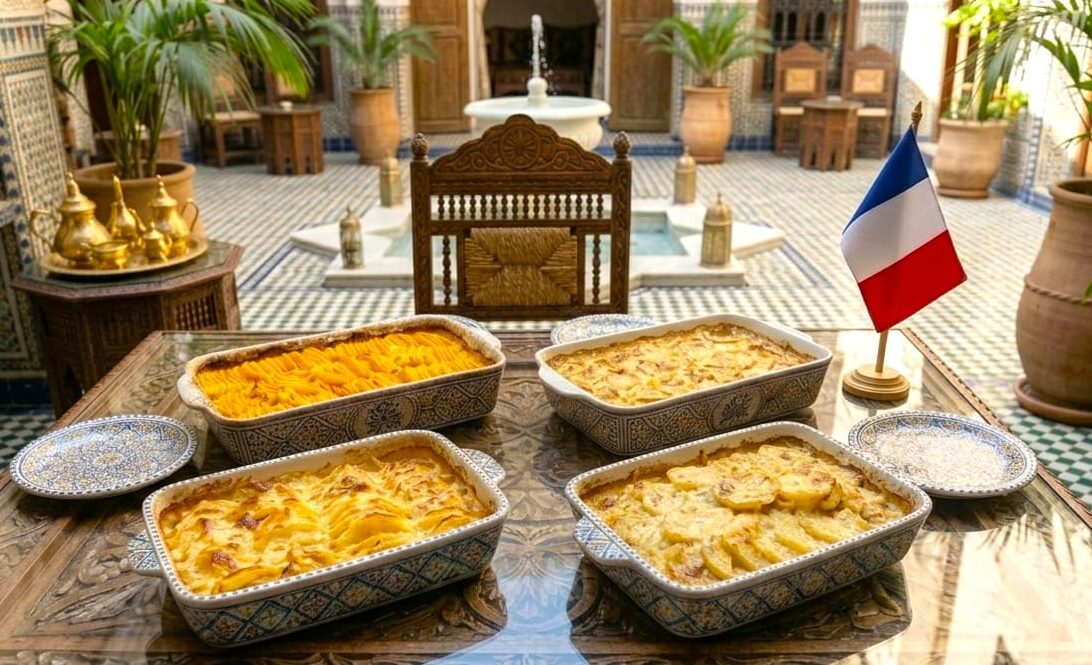
  • In traditional French cuisine, there are 3 authentic and famous versions of potato gratin. However, the crown always goes to Gratin Dauphinois, the most renowned of them all. The irony here is that many people are unaware of the differences between these methods and often confuse them, adding onions or various types of cheese to their gratin while believing it to be an “authentic Dauphinois.” This confusion stems from a general unfamiliarity with the core differences between the original classic methods and modern, innovative touches. In reality, every single addition changes the dish’s name and its classic identity.

1- Gratin Dauphinois: The Authentic, Creamy, and Elegant Classic

  • If you look into strict, classic French culinary books, you will find that the authentic Gratin Dauphinois is historically baked without a single drop of cheese. Instead, it relies entirely on natural potato starch and rich cream to achieve its signature silky texture. Named after the Dauphiné region in southeastern France, this dish is a celebration of simplicity and sophistication.
  • The Core Identity: Potatoes + Milk + Cooking Cream + Garlic + Nutmeg.

  • The Texture: The sauce naturally thickens and becomes velvety due to the starch released by the potatoes.

  • The Garlic Secret: Rubbing the inside of the baking dish with a garlic clove allows the dish to be beautifully infused with a subtle garlic aroma and flavor without leaving any actual pieces behind, keeping the texture perfectly smooth and creamy.

  • ⚠️ What to Avoid: In strictly traditional recipes, adding minced or crushed garlic directly into the mixture is considered a departure from tradition. Many French chefs feel that doing so alters the true, delicate flavor profile of the original dish.

2- Gratin Lyonnais: The Onion Twist

  • This is the version enriched with the rich sweetness of caramelized onions cooked in butter. The people of Lyon, known for their love of rich and bold flavors, decided to elevate the classic gratin by adding onions.
  • Once the onions are softened in butter and layered between the potato slices, the dish technically changes its name to Lyonnais, named after the city of Lyon, which is historically famous for heavily incorporating onions into its traditional cuisine.
  • The Core Identity: Potatoes + Caramelized Onions + Milk + Cooking Cream + Butter + Nutmeg + Garlic (rubbed in the baking dish).

  • The Focus: This version focuses strictly on the harmony between onions and potatoes, with no cheese allowed.

3- Gratin Savoyard: The Premium, Mountain-Cheese Version

  • The ultimate favorite for melted cheese lovers! This dish takes us on a culinary journey to the Savoy region (Savoie), a magical mountainous area located in the French Alps on the border with Switzerland and Italy. Globally renowned for its freezing winters, heavy snow, and the exceptional quality of premium cheeses produced by mountain cows, the dishes of this region are all about energy, warmth, and gooey, melted cheese.
  • The Historical Secret: The very old, original version of this recipe did not use any milk or cream at all! Historically, milk was fully reserved for producing precious cheeses. Instead, they cooked the potato rounds in a rich beef or chicken broth, placing generous amounts of grated Gruyère cheese between the layers and over the top.

  • The Texture: The combination of the hot broth, potato starch, and melted cheese interacts beautifully to create an incredibly gooey, savory, and rich sauce (“un gâteau de pommes de terre” style).

  • The Core Identity: Potatoes + Beef or Chicken Broth + Gruyère Cheese.

📝 Note: There are other modern and innovative versions that are popular for their quick preparation and combined ingredients; we will cover those in a separate article.