
Ingredients
Method
💠1- Cleaning Instructions
- You can ask the fishmonger to clean it for you, do it yourself, or simply use ready-made frozen calamari rings.
- To Clean the Calamari:
- Separating the Head and Tentacles from the Body: Hold the calamari body (the tube) with one hand and the head with the other. Gently pull the head outward while twisting it slightly; the internal organs (viscera) deep inside the body will come out with it.
- Removing the Internal Quill (The Backbone): Reach your fingers inside the empty calamari tube. You will feel a long, transparent plastic-like piece that resembles glass or a feather. Grip it and pull it out completely, then discard it.
- Peeling the Outer Skin (Spotted Skin): Start scraping the thin, purple or spotted outer skin from the edge of the tube. Pull it off like a sock until it is completely removed and the calamari body turns pure white.
Cleaning the Head and Tentacles:
- Removing the Ink: While handling the organs, be careful not to puncture the small black ink sac (unless you want to save it for making the famous squid-ink sauce).
- Cutting the Eyes: Using a sharp knife, cut off the eye section entirely from the head and discard it, keeping the tentacles clean.
- Removing the Beak (The Teeth): Press with your fingertips at the center where the tentacles meet from the inside. The hard "beak" (which feels like a small hard ball) will pop out; remove and discard it.
- Final Washing and Cutting: Wash the inside of the calamari tube thoroughly under running water to ensure it is completely free of any remaining organs or sand. You can also separate the side "wings" of the calamari and peel their skin, as they are perfectly edible and ready to cook.
- The Secret to Tenderness and Removing Fishiness: Soak the calamari pieces in a little lemon juice for 15 minutes before cooking. This guarantees a very tender texture and prevents it from becoming rubbery during cooking.
- Cutting: Slice the tube into rings (circles) or open it up and score it with light diagonal cuts, depending on your recipe (Tajine, fried, or stuffed).
💠2-Cooking Instructions
- Method 1: Calamari in Tomato Sauce
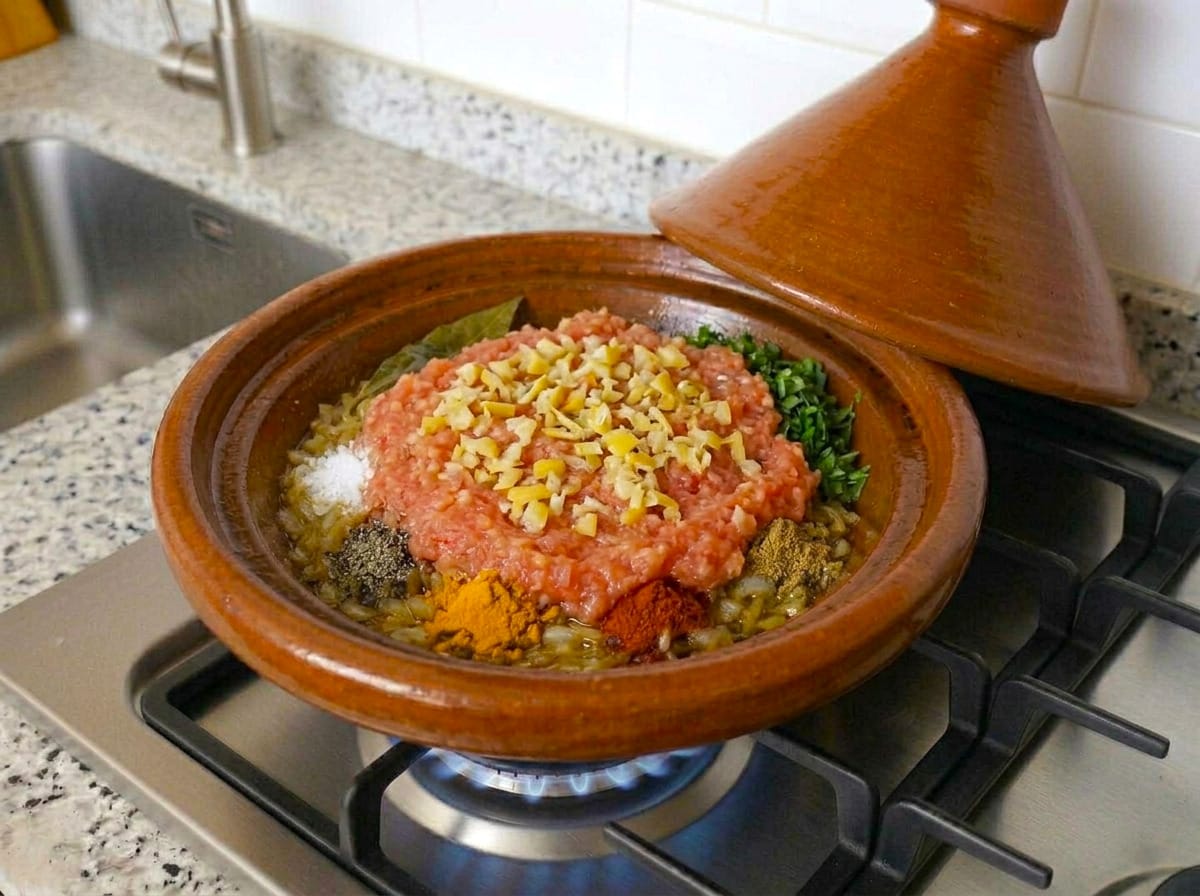
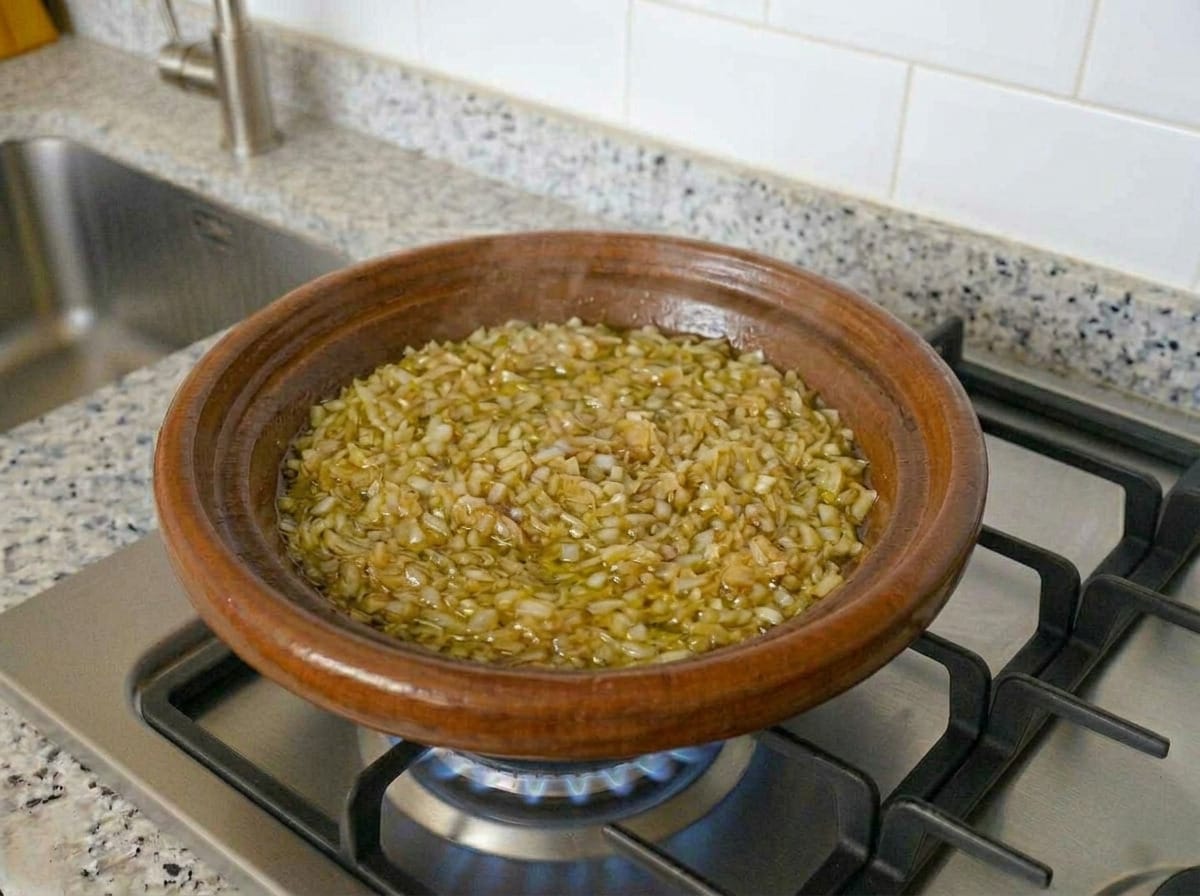
- Sautéing the aromatics: In a pan, add a quarter cup of olive oil, the finely chopped onion, garlic, and the bay leaf. Cook over medium-low heat until softened and lightly golden, about 15 minutes.
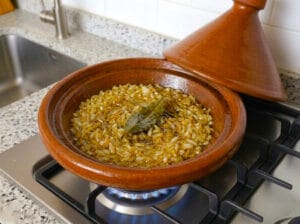
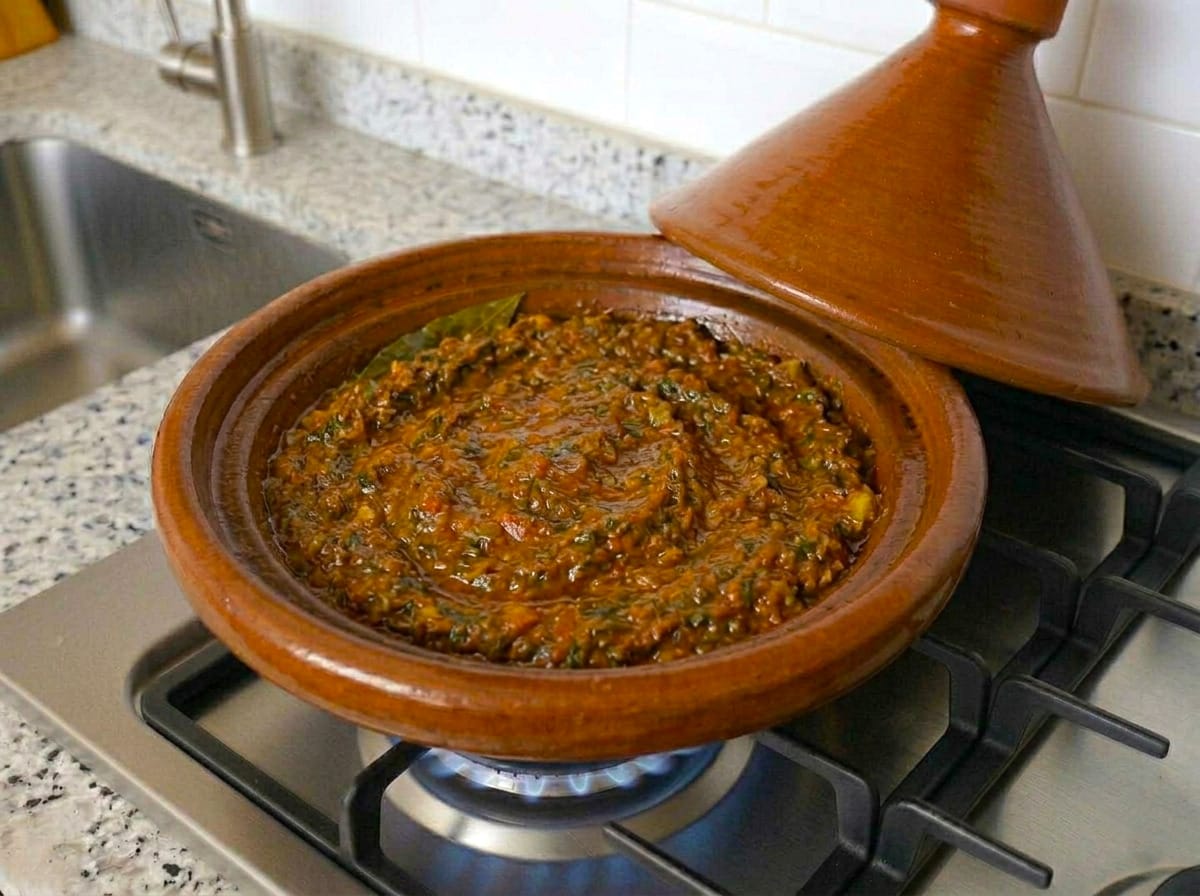
- Making the sauce: Add the grated tomatoes, chopped coriander, and all the spices.
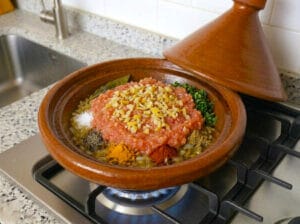
- Let the sauce simmer and cook down for approximately 20 minutes.

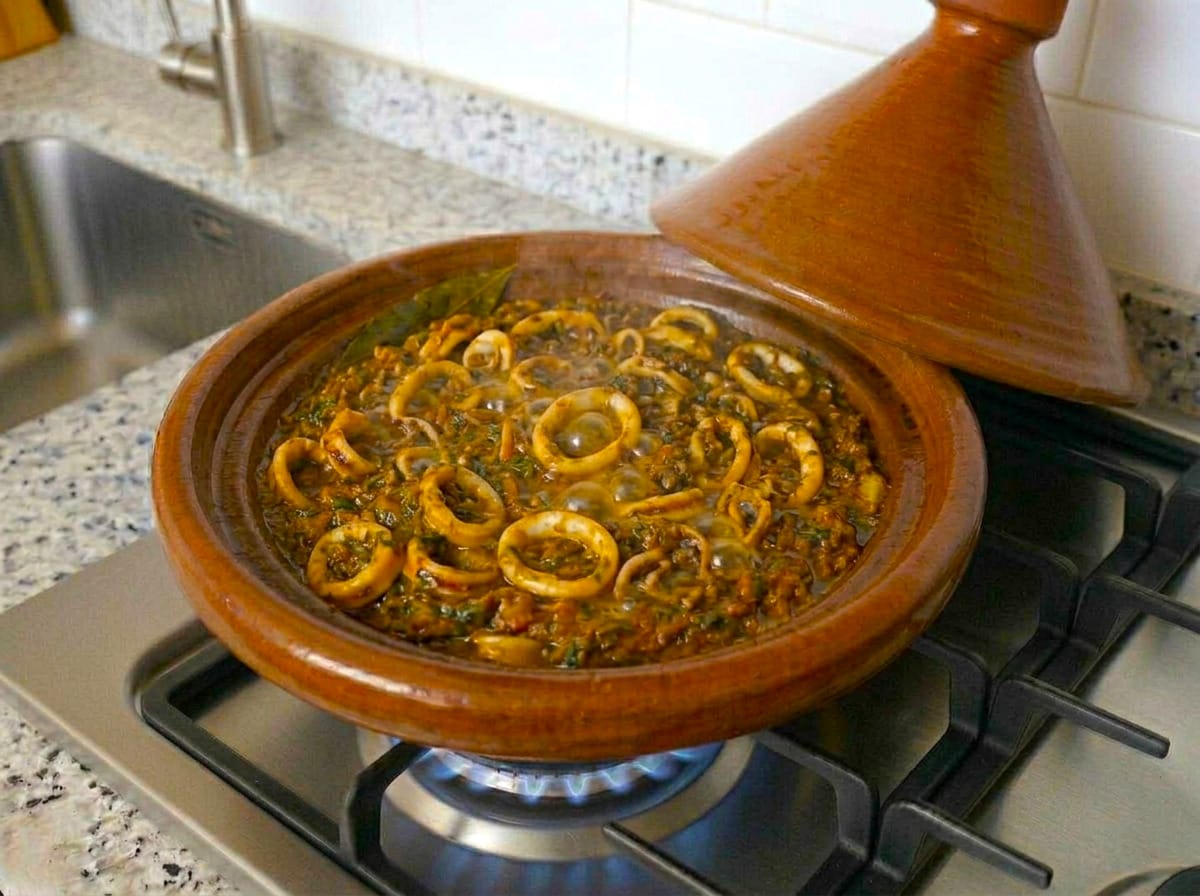
- Adding the seafood: Stir in the calamari rings. Depending on your preference, you can also add mussels, shrimp, or both. If needed, pour in a quarter cup of water, keeping in mind that seafood naturally releases its own juices.
- Final simmer: Cook for another 15 minutes until the calamari is tender, then serve immediately while hot.
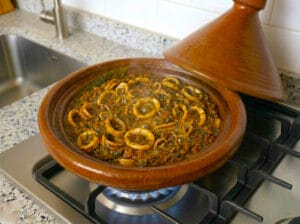
- Method 2: Calamari with Onions (Without Tomatoes)
- This method uses the same ingredients as the first, except for the tomatoes, resulting in a completely different and delicious flavor profile.
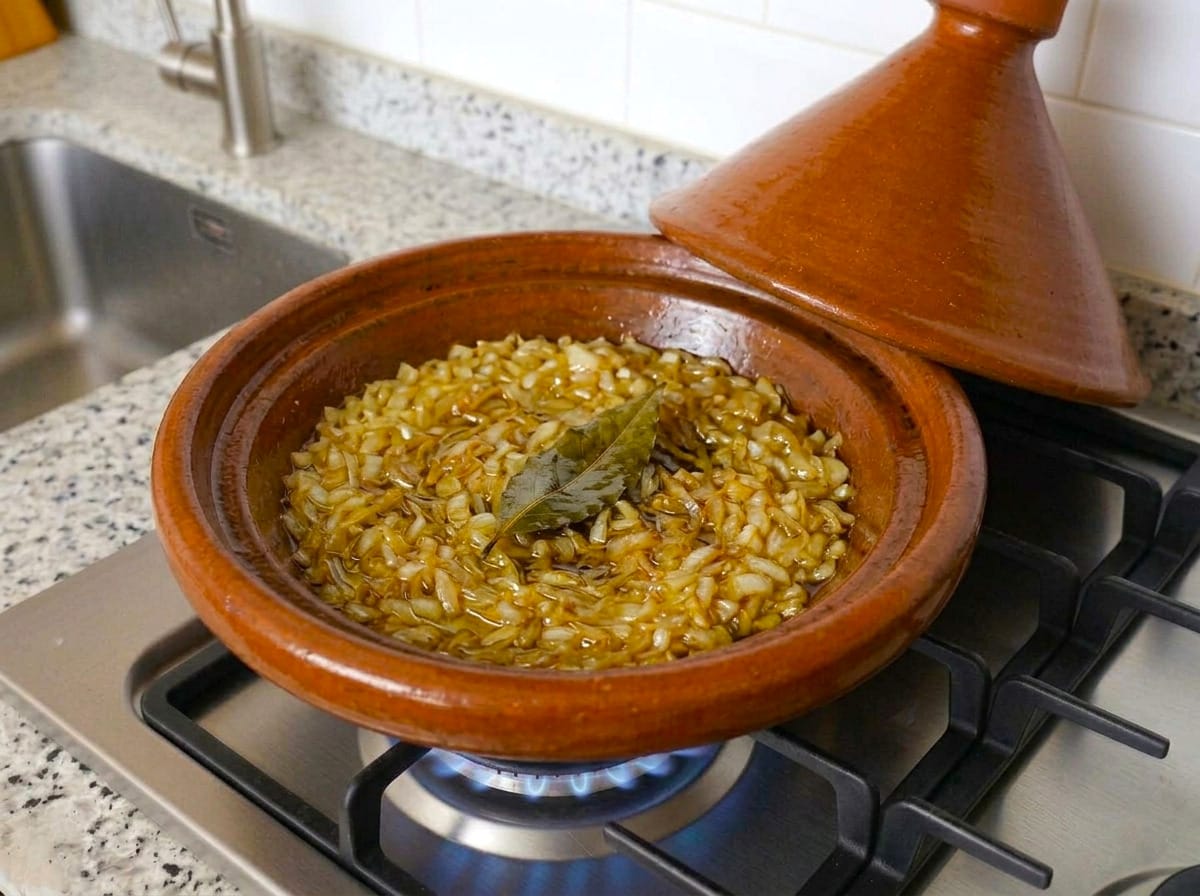
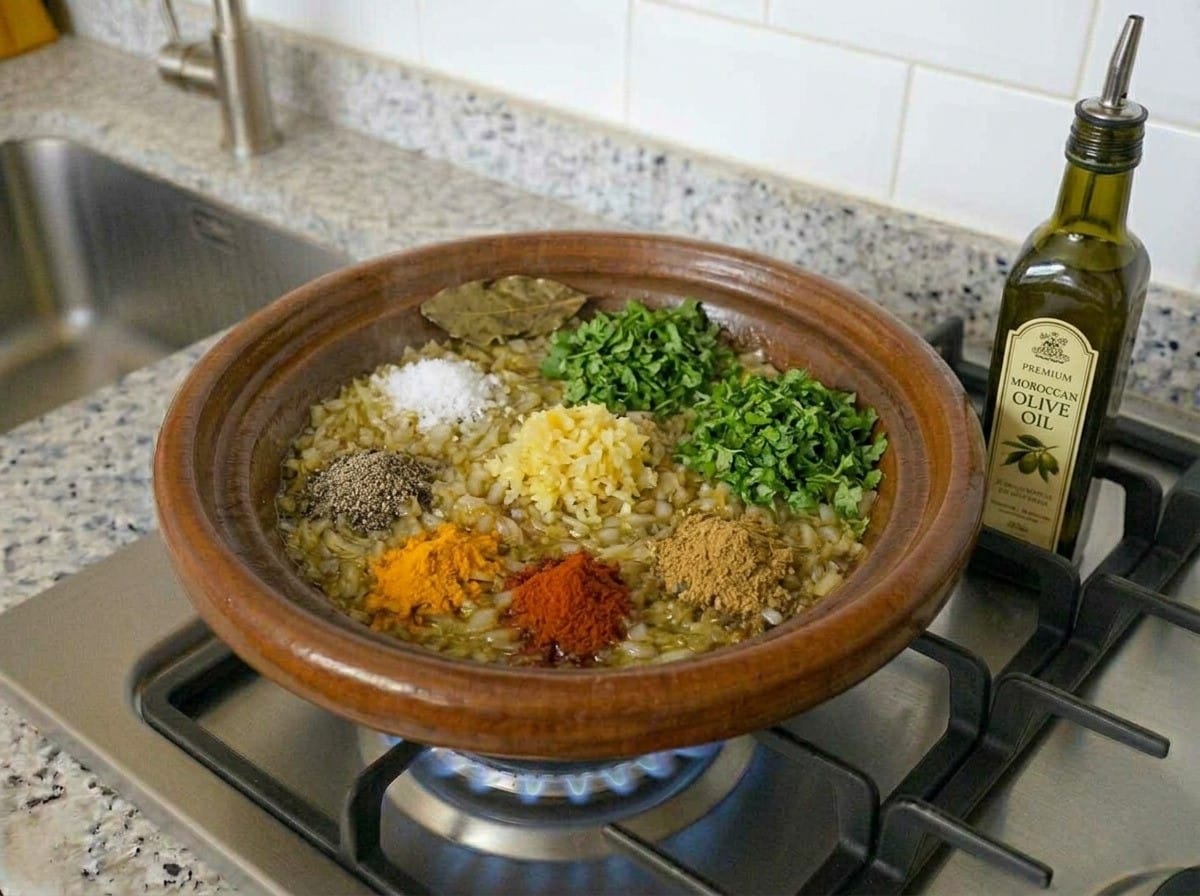
- Sweating the onions: In a traditional clay tajine or a pan, add the oil, finely chopped onion, garlic, and bay leaf. Let it cook on low heat until soft and golden, about 15 to 20 minutes.
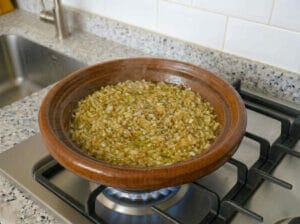
- Combining ingredients: Add the spices, chopped coriander, and the sliced calamari rings.
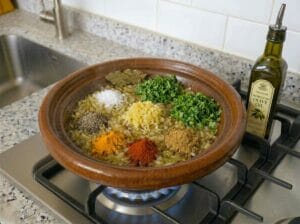
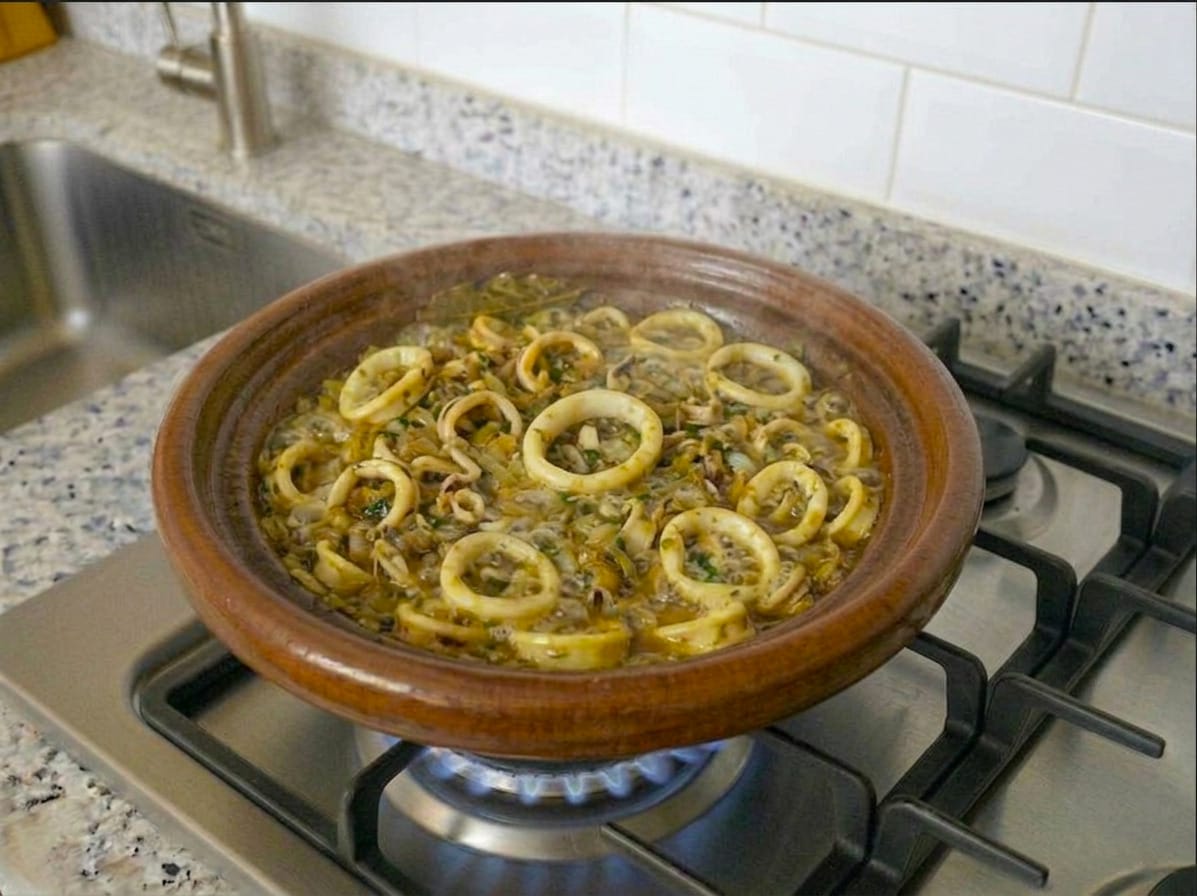
- Cooking: Stir the ingredients well until the calamari is coated with the seasoned onions. Cover the tajine and let it simmer on low heat, stirring occasionally.
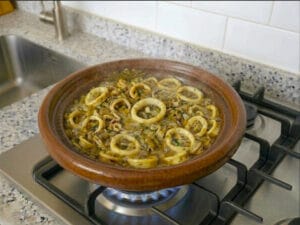
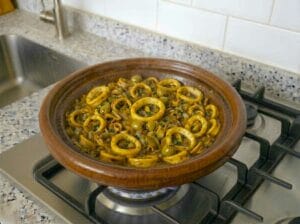
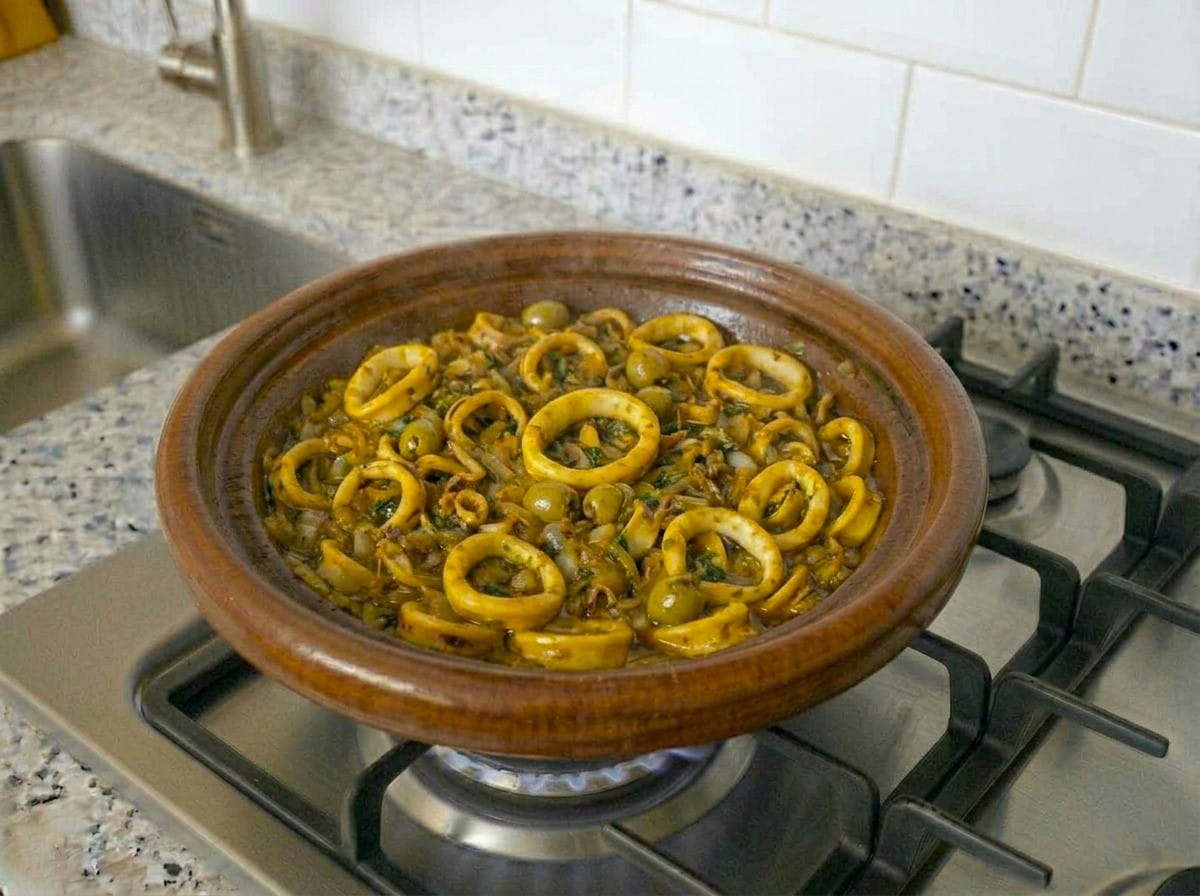
- You will notice that the calamari has released its natural juices, so never add any water. After 15 minutes, it will be ready to serve.
💠3-Serving Suggestions
- Serve the hot tajine alongside traditional Moroccan bread. It pairs beautifully with a mixed rice salad featuring corn, potatoes, and peas.
- You can also serve it with french fries (or oven-baked potato wedges), a side of olives, and your favorite refreshing beverages.


Notes
- Freshness matters: Always ensure the calamari is fresh, as this directly and significantly impacts the final flavor of the dish.
- Flavor twist: You can add a pinch of fish seasoning blend as a tasty variation to change up the flavor profile.
- Alternative sides: This dish can also be enjoyed over a bed of plain white rice instead of the traditional bread.
- Watch the clock: Do not forget to stick strictly to the recommended cooking times; overcooking calamari will make it tough and rubbery.