Morkovcha Salad – Soviet Korean Carrot Salad
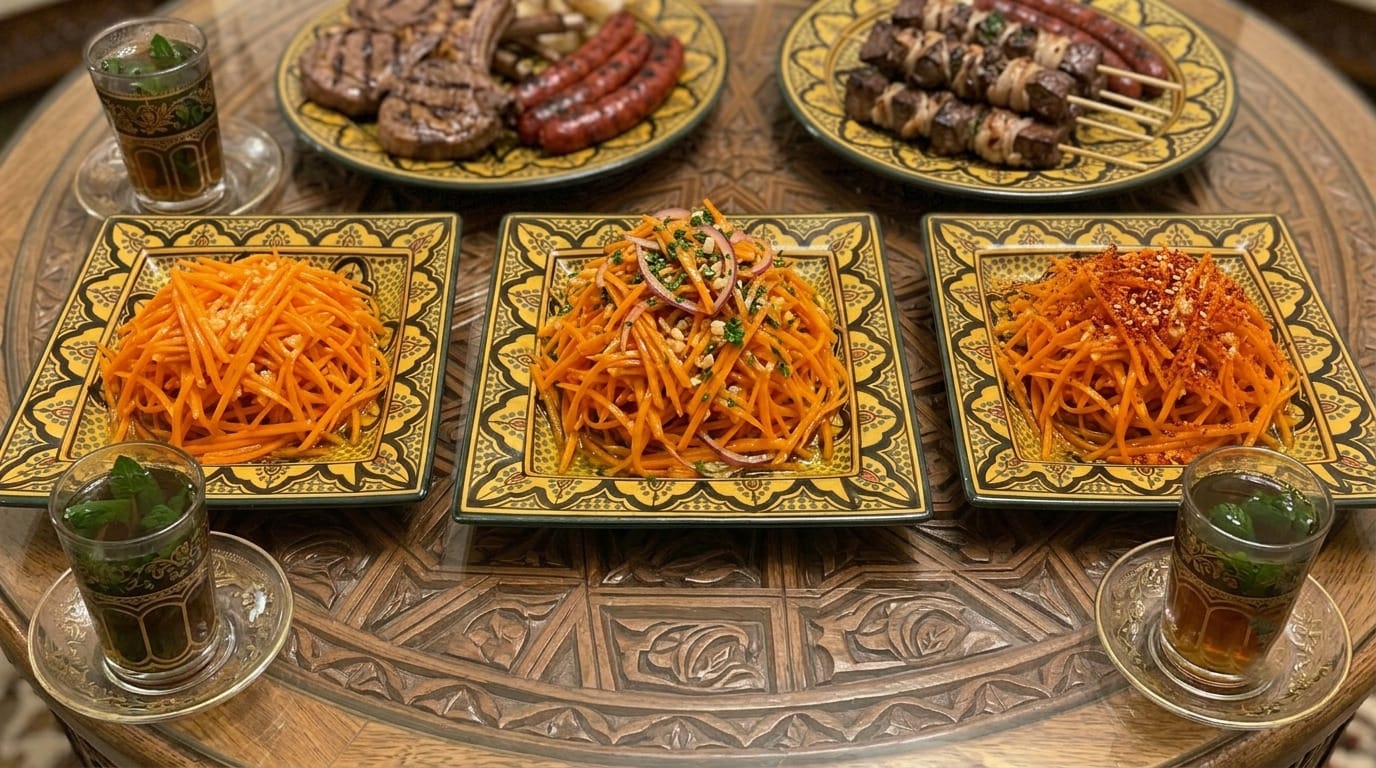
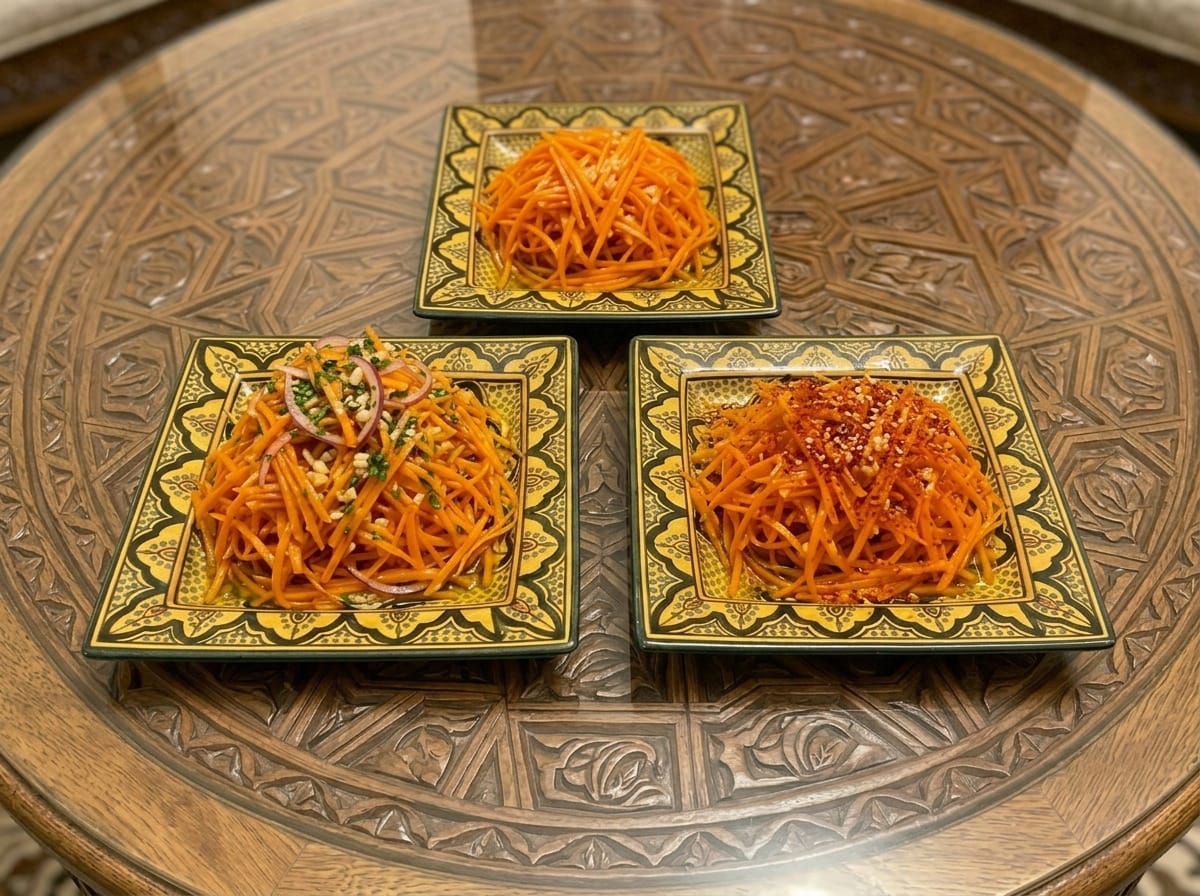
A Korean-style Carrot Salad Popular in Central Asia
Morkovcha, or Korean-style carrot salad, originated in Central Asia when Koreans adapted their traditional kimchi methods using locally available carrots.It combines Korean pickling techniques with regional ingredients, creating a flavorful and iconic hybrid dish.The recipe exists in different versions, including a classic style and an enhanced version with added onion flavors for extra depth.
Ingredients
Equipment
Method
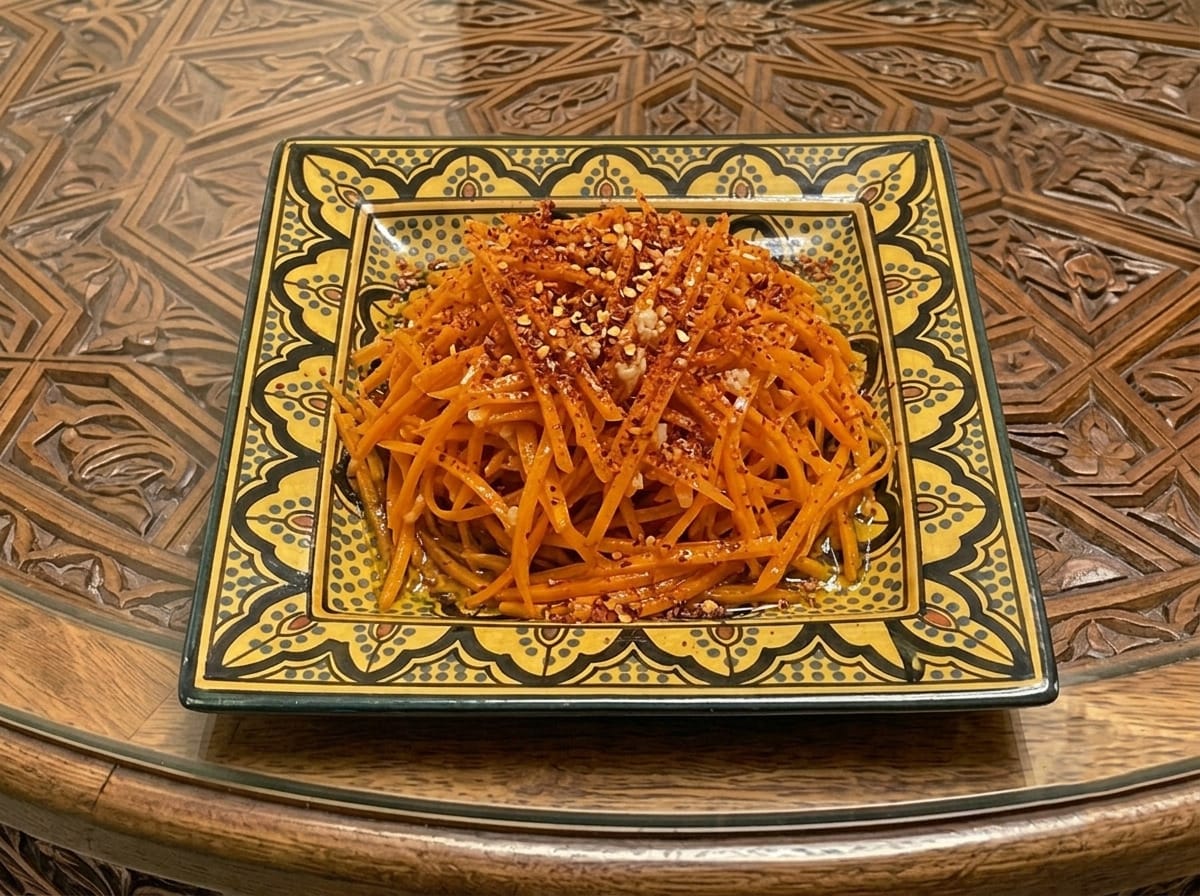
💠1-Morkovcha Korean Salad The Classic Version
- Grate the carrots: Choose sweet carrots, wash and peel them, then cut them into julienne strips using a mandoline, or you can cut them into diagonal slices, then take four slices and cut them thinly to get a julienne shape.
- Draw out the moisture: Add salt and sugar to it and leave it for 30 minutes so that the carrots release their juices

- Squeeze and drain: Then squeeze it gently with your hand to get rid of this excess carrot liquid because it contains a high percentage of water.
- If you add oil and vinegar directly without draining the water, the salad will float in a pale liquid and the oil and spices will not stick to the carrots This step ensures the salad stays crunchy and the dressing adheres perfectly.
- Add aromatics: Then add a teaspoon of coriander powder, garlic, and hot pepper.
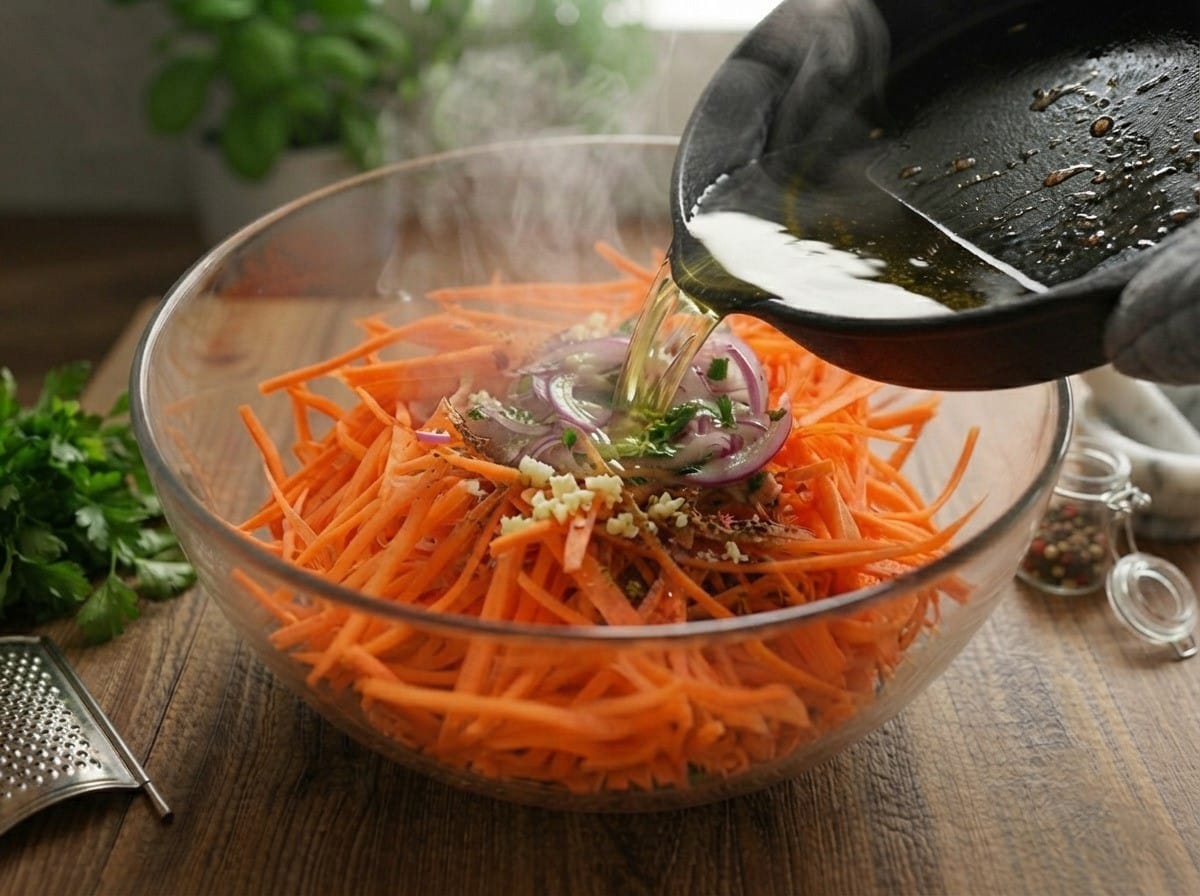
- Heat the oil: Heat the oil until a little smoke appears and pour it over the garlic, coriander, and hot pepper until we hear the sizzling sound. This step brings out the flavor of the garlic and coriander.
- The Sizzle: Or you can heat the oil and throw the garlic, coriander, and hot pepper in it for 5 seconds and remove it, this is just an idea.
- Final seasoning: And pour the oil over the carrots, then add the vinegar and sesame oil and mix the ingredients well. Put them in the refrigerator for 2 to 12 hours.
- Storage: This salad is best enjoyed after the flavors have melded together and can be kept in the fridge for up to a week


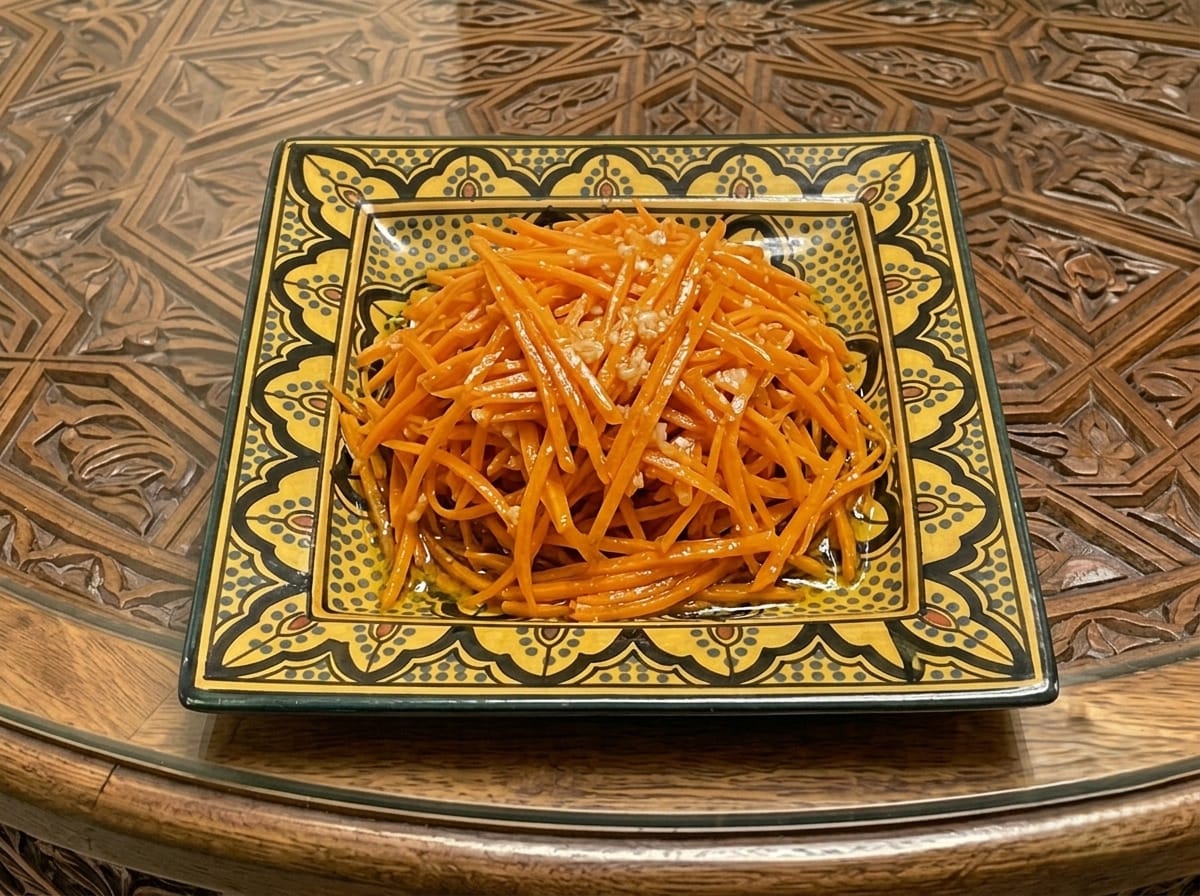
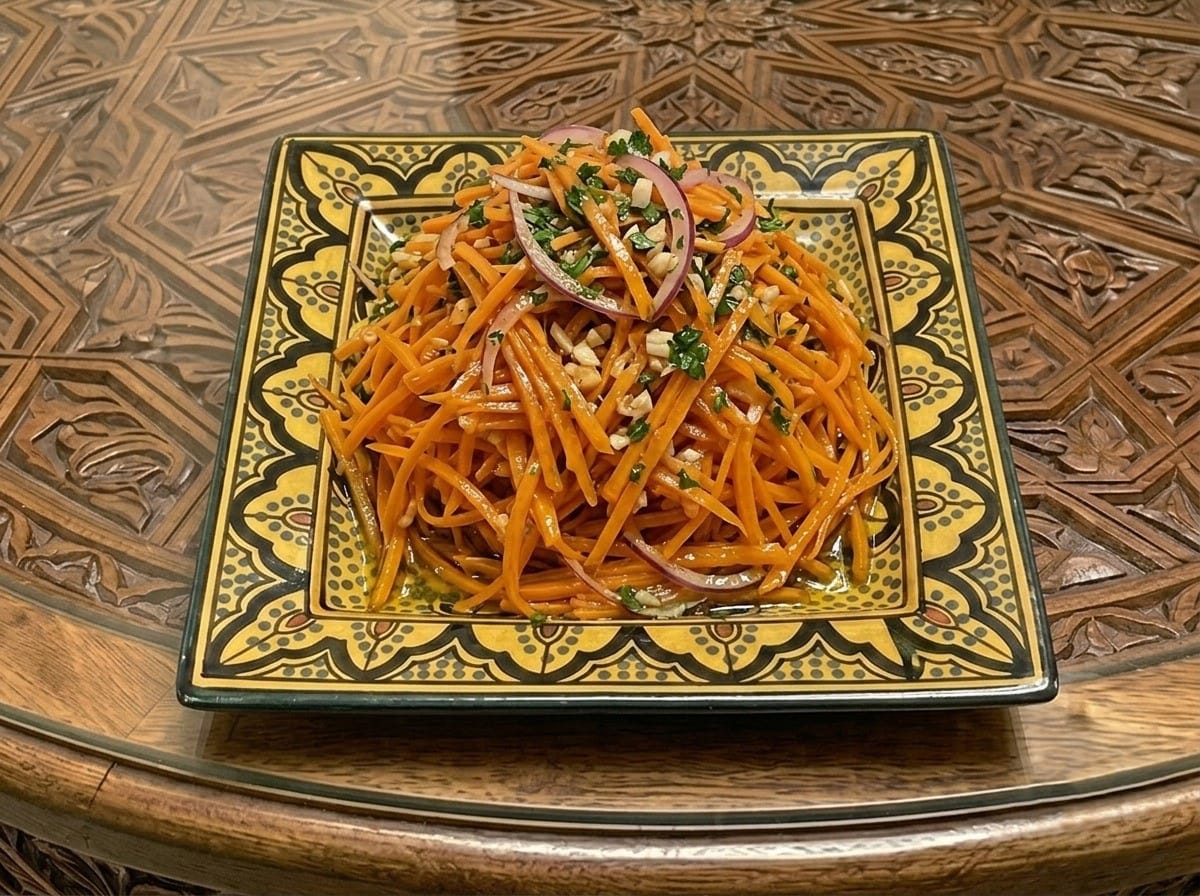
💠2- The second method: Carrot salad with onions (Morkovcha style)
- 1-To prepare it with fried onions
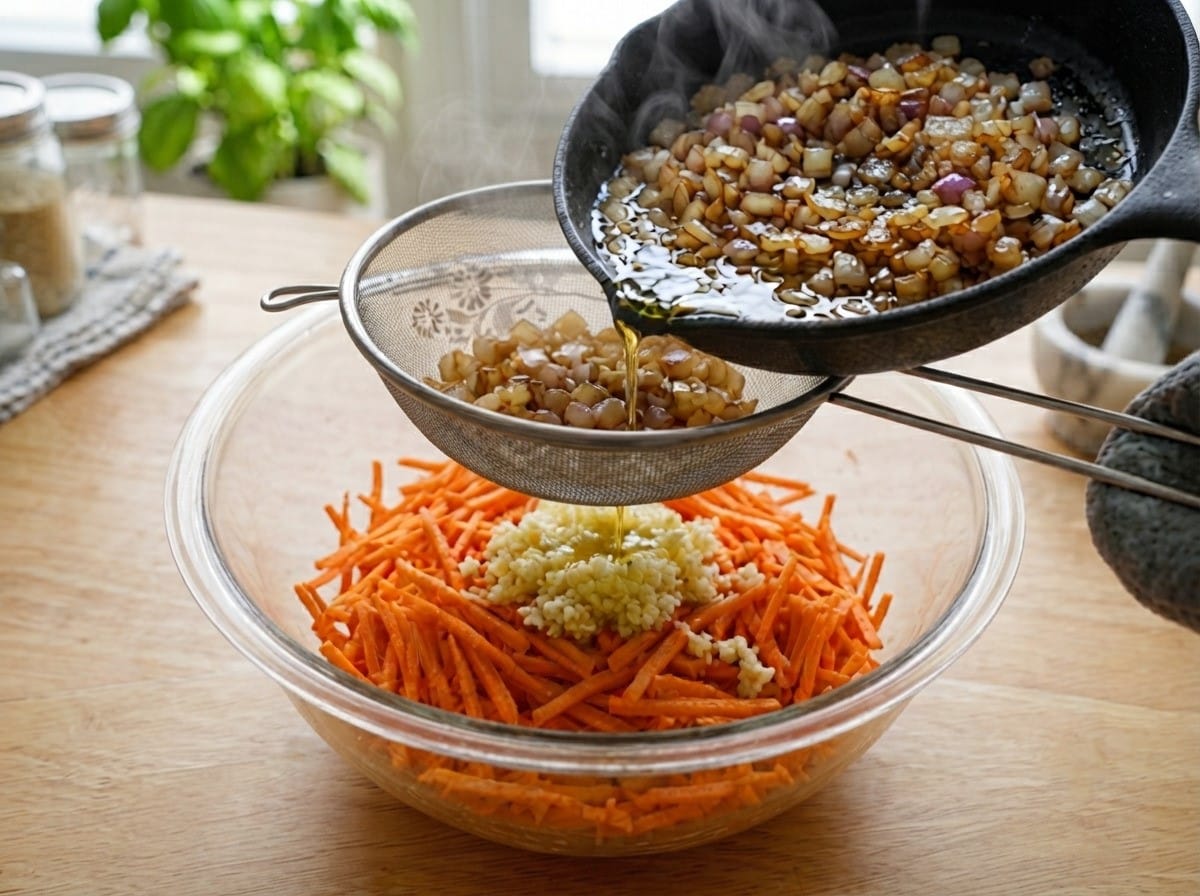
- In a pan, place a medium-sized onion cut into small squares with half a cup of vegetable oil, and leave it on medium heat until it becomes golden and the oil is infused with the onion flavor.
- Cut the carrots into julienne strips, add salt and vinegar, and leave them for 30 minutes to wilt
- After 30 minutes, add the spices—coriander, pepper, garlic, and paprika—over the carrots.
- Strain the onions from the oil using a metal strainer over the carrots.
- Add only the onion oil and pour it over the spices.
- Use the onions in another recipe such as a sandwich.
- Then mix everything together and let it sit for at least two hours, and the salad is ready.
- 2- To prepare it with raw onions
- Cut the carrots into julienne strips, salt them, and leave them for 30 minutes (as explained in the first method) until tender and slightly wilted.
- Then cut the red onion into very thin slices and add them to the carrots.
- Add a tablespoon of rice vinegar, sugar, a pinch of salt, a quarter teaspoon of black pepper, finely grated garlic, green onion, and beef bouillon powder.
- Heat the oil in a pan and pour it directly over the onions and spices.
- Mix everything together and let it rest in the refrigerator for at least two hours before serving.
Notes
Dishes to pair with the salad
Morkovcha salad is usually served with grilled or simply cooked dishes to balance the flavors, such as:
- Grilled meat skewers
- Grilled beef steaks
- Grilled or roasted chicken
- Grilled lamb
Serving Suggestion
- Lightly toast a sheet of nori with a little oil, then cut it into 4 squares.
- Place a spoonful of sushi rice on each square.
- Top with a slice of avocado, 1 tablespoon of Morkovcha salad, ½ teaspoon of gochujang, and a small piece of kimchi.
- Fold the nori around the filling and enjoy it in one bite
Morkovcha Salad

🍽️Additional Insights
- The roots of this salad date back to the 1940s, when Koreans (Koryo-saram) were deported to regions in Central Asia (such as Uzbekistan and Kazakhstan). Due to the unavailability of Napa cabbage (the essential ingredient for traditional Kimchi), they replaced it with carrots, which were abundantly available there. They applied Korean pickling and seasoning techniques to it, resulting in this hybrid dish that combines the Korean spirit with Soviet ingredients.
- Morkovcha (Korean-style carrots) is considered an iconic dish that originated among Koreans in Central Asia. The original version relies on the “hot oil” technique to release the flavor of the spices. Here are the full details of the most important versions and professional preparation methods:
- The Classic Version: This is the most widespread version and relies on the balance between acidity, garlic, and coriander.
- The Enhanced Version: An upgraded version where onions are used either raw or by utilizing onion-infused frying oil, with simple changes that add elegance to the recipe.
One Comment
Comments are closed.